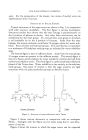
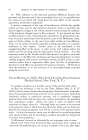
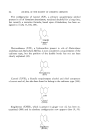
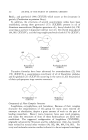
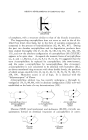
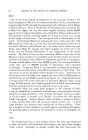
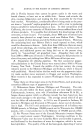
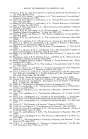
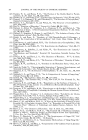
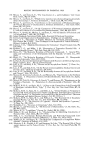
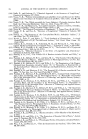
1955 SEMINAR DISCUSSION Summary of Discussions on the Use of Radioactive Isotopes in Cosmetic Research, Morning of September 15, 1955 PAUL NUMEROF (The Squibb Institute for Medical Research, New Brunswick, N.J.) In listening to the presentations this morning I have the impression that it is possible to obtain a considerable amount of information from the judi- cious application of radioactive isotopes. However, I would like to express some words of caution against going overboard in the application of this technique. As powerful a tool as radioisotopes are, they are still no sub- stitute for good experimental technique, and I should like to enter a plea in that direction. Radioactive isotopes still do not permit one t6 become sloppy in the design of his experiments, in the way in which they are carried out and in the manner in which the results are interpreted. I should like to illustrate these comments with a few remarks that came to me as the members of the symposium were presenting their discussions. The use of isotopes will, of course, tell you where what you have goes and how much of it gets there. However, what one measures is really only radioactivity and, while this may suffice for the determination of inorganic radioactive materials, this need not be the case with fairly complex organic products. For example, with inorganic materials such as the ions of sodium, Dr. White in measuring sodium 22 knows that this is the only material that he is rneasuring--that's all there could be. The same comments apply to the absorption of inorganic materials through the skin. However, this does not apply to experiments in which certain labile groups are radio- active. For example, take the esters of organic acids. If one is studying the stability of fats in different formulations, etc., one might run into trouble. For example, if one were to prepare a compound in which this group out here were labeled, one might find that this labile group might be removed during some stage of the experiment. For exam- 268

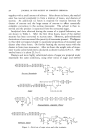
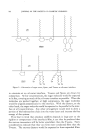
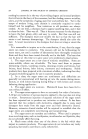
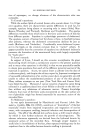
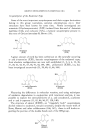
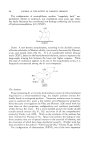
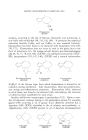
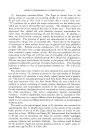
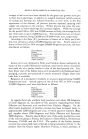
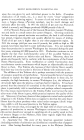
1955 SEMINAR DISCUSSION 969 ple, take Dr. Nelson's work in which he used radioactive bromoacetic acid with a label done in the carboxyl group. If during the experiment some of the material is hydrolyzed and this effect is not examined closely, one could easily be misled by the measurement of gross radioactivity. As simple as this appears, it had been overlooked in some cases in the past. The thing that I should like to stress here is that measuring radioactivity as such is not sufficient on which to base a valid conclusion. One has to know what the activity is, what it represents and then determine it quan- titatively by the radioactivity determination. The same considerations apply to labile positions in other compounds. For example, in the steroid field •)ne could obtain a material such as this. Here we have a ketone and it is not much of a job to carry out an exchange reaction with radioactive hydrogen. In addition to the substitution here at the labile position, substitution in other parts of the chain and nucleus of this compound would be possible. In experimental work with these compounds it is important to realize that this radioactive hydrogen can come off of this molecule from this position alpha to the carbonyl group merely by equilibrating the compound with alkali. This procedure should be done before the material is used experimentally, and this process is known as "washing out." Another illustration of the importance of making certain of the radio- activity which one is measuring is in some biological work with thyroxine. The thyroxine can be labeled easily with radioactive iodine. However, under acidic pH and in the presence of oxygen the iodine in the thyroxine is exchanged very easily. In experiments with this compound one could be misled very easily, if only gross radioactivity were determined and if the activity were not assigned to a specific and particular molecular entity. These illustrations point out some of the pitfalls in the use of the tracer technique. Radioactive isotopes are still just a tool and will provide infor- mation only to the extent that they are used intelligently. One thing more which ! should like to point out is the question of con- tamination as highlighted by Mr. O'Toole and Dr. Nelson. Dr. Nelson pointed out that he carried out his syntheses at the millicurie level, while the actual experimental determinations were made at the microcurie level. This difference is of considerable importance. You have 1000 microcuries, for example, to one millicurie. In carrying out the experiments at con- tamination of the order of one part in one thousand of the original synthetic level of activity would be activity of the same order of magnitude as the actual experiment. Contamination of this sort could easily vitiate the experimental results. These two points then, the actual designation of the radioactivity with a molecular entity and contamination, are two of the really important as- pects of work in this field that I should like to stress.
Purchased for the exclusive use of nofirst nolast (unknown)
From: SCC Media Library & Resource Center (library.scconline.org)