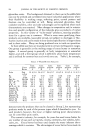
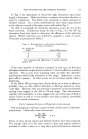
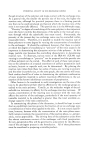
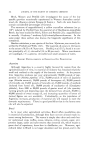
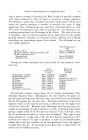
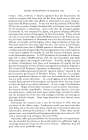
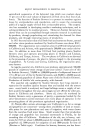
230 JOURNAL OF THE SOCIETY OF COSMETIC CHEMISTS glycerides exists. The background obtained in their use in the edible field can now be utilized and correlated into many industrial applications where their flexibility in melting range, softening point, crystal pattern and fracture can be controlled at will. Being saturated glycerides, their oxidative stability, color and odor advantages can be exploited where such characteristics are required. Mere changes in composition and/or orienta- tion and specific configuration of the molecule give us products of varied properties. In this variety of "tailor-made" products, meeting specifica- tions for a given use is common. What is even more gratifying, these products are available, reasonably priced, not subject to shortages or fluc- tuation in price and can be made toyour desired specification in largevolume and in short order. Many are being produced now in tank car quantities. In their edible use they are manufactured in certain melting point ranges. One group is generally at the melting range of cocoa butter or somewhat higher. A second group is generally at body temperature or somewhat higher, and still a third group which is definitely above body temperature and is utilized for summer heat and torrid zone use. Table 1, for example, TABLE 1--HARD BUTTER ANALYSIS Corn- Corn- Corn- Com- Corn- Corn- Cocoa position position position position position position Butter A B C D E F Color Pale 35.0/3.8 20.0/2.7 20.0/3.7 15.0/2.0 15.0/2.0 15.0/2.5 yellow ffa 0.5 0.05 0.05 0.05 0.02 0.01 0.08 I.V. 35-40 3.0 1.3 3.0 2.4 2.3 1.9 Sap. No. 190-200 234.0 240.5 242.4 239.0 235.4 239.0 M.P. w., øF. 82-96 112.3 100.0 102.9 108.3 109.8 104.0 I.F., øF. 82-89 94.6 90.0 89.6 90.0 94.6 90.3 S. P., øC. 29-31 34.3 29.6 30.5 29.5 32.7 31.4 M.P., cc., øF. 92-96 116.0 101.8 103.5 112.0 113.0 105.5 Caproic, % .. 0.15 0.18 0.12 0.11 Caprylic, % .. 13177 3.16 5170 3.86 4.31 3.89 Capric, % .. 1.62 3.66 3.72 3.19 3.73 5.72 Lauric, % .. 41.89 40.43 44.13 48.10 3&. 18 33.43 Myristic, % 18.87 19.45 16.02 14.06 15.40 13.44 Palmitic, % 2414 14.08 13.52 12.52 6.15 11.43 18.07 Stearic, % 35.4} 22.77 19.63 19.91 24.46 31.83 25.44 Unsat., % 40.2f demonstrates the products that can be classed in Group 2, but representing products made by each of the process types which I described to you. In each product, however, the lower or higher melting point characteristics can be controlled quite easily. The cosmetic industry, for example, for years has used cocoa butter for any number of uses such as lipstick, creams, ointments, dye vehicles, lubri- cants, etc. Cocoa butter has been used despite the many inherent short- comings which it contains. The advantages of cocoa butter have made its

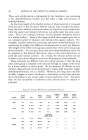
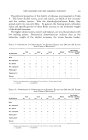
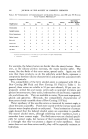
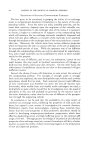
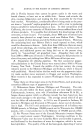
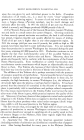
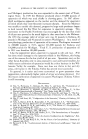
FATTY ACIDS AND DERIVATIVES IN COSMETICS 231 use desirable since waxes and other solid fats left a great deal to be desired. The Hard Butters, however, should be able to give not only the desired properties of cocoa butter, but add a number of their own advantages while eliminating the disadvantages of cocoa butter. They have good color, flavor, they are odorless, possess oxidative stability and can be kept in- definitely without developing any rancidity. Here at our disposal we have infinite possibilities of any melting range, any softening point we wish to consider. If we wish narrow, sharp plastic range or a wide, broad plastic range, we merely have to specify. Products can be made that have snap and shattering properties right down to prod- ucts having soft, elastic properties. In such a variety at our disposal it is safe to predict that some of your requirements are going to be met. In recent years various industrial laboratories, as well as the Department of Agriculture, notably the Southern Regional Laboratory, have been de- veloping still another group of products which also suggest many new possi- bilities and applications. Feuge (24-27) and his colleagues, Lange, Baur and others (28-31) have given impetus to the development of aceto glycerides which lend themselves to products from plastic solids to liquids. Their characteristics are being investigated and their edibility is being con- sidered in evaluations which have been going on for more than two years. Industry is watching closely the progress they are making since they too can appreciate the new possibilities which can develop with the character- izing of the numerous compounds which can be prepared. Several products have already found commercial possibilities. Many more must necessarily follow since unique properties can be obtained from these glycerides that lend themselves to specific needs. It will take time, however, until a clear picture can be obtained and a sober evaluation made. In contrast to the solid glycerides, such as the Hard Butters which we discussed, glycerides of some unusual properties can be secured which are not only liquid, but liquid to sub-zero temperatures. The cosmetic indus- try is familiar with castor oil and other liquid oils which will remain fluid at low temperatures, but all have suffered from the instability be that in color, odor, flavor, etc., since their unsaturation in the fatty acid molecule would contribute materially to those undesirable characteristics. If we could obtain an oil, however, which is essentially a saturated triglyceride, liquid below zero and stable to oxidation color, odor or flavor reversion, certainly such a product would be useful. If the oil also had high sol- vency and even solubility in alcohol, that would increase its uses still further. The above properties are nonexistent in glycerides customarily found in nature, but can be obtained when we attempt to improve on nature. For comparison I have listed in Table 2, the typical ß constants on the oils customarily considered and two products which we may say have been improved over what nature provided. The same
Purchased for the exclusive use of nofirst nolast (unknown)
From: SCC Media Library & Resource Center (library.scconline.org)