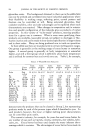
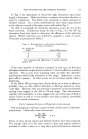
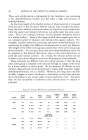
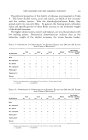
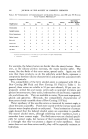
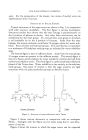
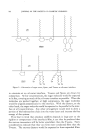
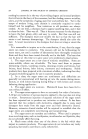
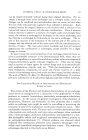
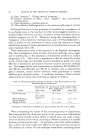
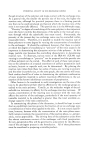
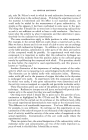
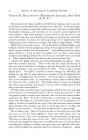
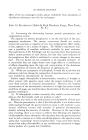
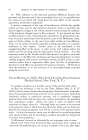
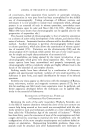
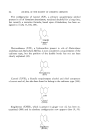
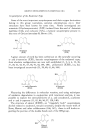
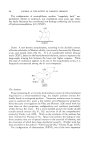
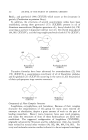
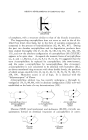
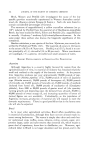
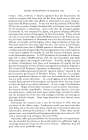
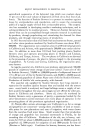
298 JOURNAL OF THE SOCIETY OF COSMETIC CHEMISTS The configuration of eremophilone, another "irregularly built" ses- quiterpene related to eudesmol, was established some years ago (144), but lately Geissman has contributed new findings confirming the structure of hydroxyeremophilone (61) (XXIV). OH i i I I Hydroxyeremophilone (xxlv) Iresin: A new ketonic sesquiterpene, occurring in the alcoholic extract oflresine celosioides (a Mexican shrub), was recently discovered by Djerassi, et aL, and named iresin (50, 51). It is of considerable interest because iresin (XXV), based on the bicyclofarnesol skeleton, seems to represent the long-sought missing link between the lower and higher terpenes. While this type of cyclization appears to be rare in the sesquiterpene series, it is frequently encountered among the di- and triterpenes. • / C---O HO%I , ItOH•C CH• Iresin (xxv) The .4zulen e s These interesting bi- or tricyclic hydrocarbons consist of a five-membered ring fused to a seven-membered ring the simpler azulenes contain five double bonds in conjugated position. Numerous azulenes occur in nature, some in essential oils quite a few exhibit anti-inflammatory properties. Since the early investigations by Pfau and Plattner (128) much work has been done on their properties, configurations and synthesis, particularly within the last five years. For a more detailed picture the reader should consult several surveys (63, 67, 132) and most of all the comprehensive review by Treibs, et aL (180). Work on the synthesis of the azulenes has been reviewed by Thomas (174). Space here permits the listing of only those azulenes that are of special interest to the essential oil chemist, and the structures of which have been elucidated recently. (Earlier work has been described in the author's "The Essential Oils," Volume II, pp. 127 if.) The configuration of chamazulene (XXVI), one of the most important

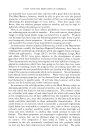
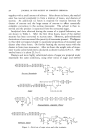
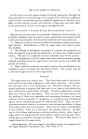
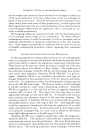
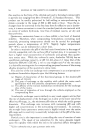
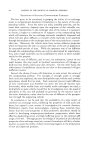
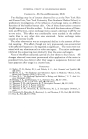
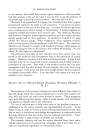
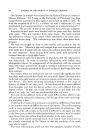
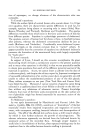
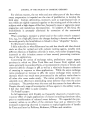
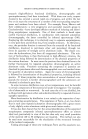
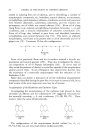
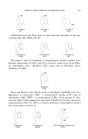
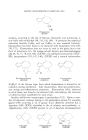
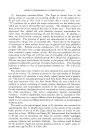
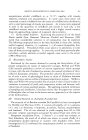
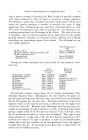
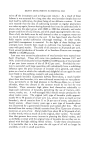
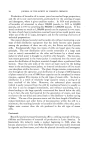
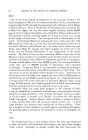
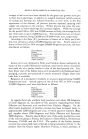
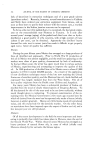
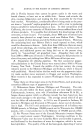
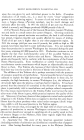
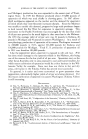
RECENT DEVELOPMENTS IN ESSENTIAL OILS 299 I CH• % CH• Chamazulene (xxvi) azulenes, occurring in the oils of German chamomile and wormwood, is now fairly well established (98, 111, 156, 169). It possesses the empirical molecular formula C•4H•0, and not C•5H•8, as was assumed formerly. Chamazulene has been found to be identical with lindazulene (153, 169, 170, 171). Chamazulene does not occur as such in the plant, but in the form of precursors, viz., the orange-colored lactone pro-chamazulenogene (28, 29, 76, 77, 78, 163, 164) (XXVII), the aidehyde lacartoviolin (XXV- III), lactarazulene (131, 147, 148), (XXIX) and a natural hydrocarbon Lactaroviolin Lactarazulene (XXVIII) (XXIX) (C•t-I207) of the fulvene type, from which chamazulene is formed by air oxidation during distillation. Like chamazulene, these pro-azulenes pos- sess strong anti-inflammatory properties. Elemazulene (145), observed in oil of demi, was found to be identical with vetivazulene, the structure of which has been established for some years. Another well-known sesquiterpene is guaiazulene (152). Quite a num- ber of important azulenes belong to the guaiazulene group, for example, guaiol (144) occurring in oil of guaiac wood (Bulnesia sarmienti Lor.) b-guaiene (150) (XXX) identified in oils of calamus and patchouly a- chigadmarene (136) (XXXI) present in oil of Lansium annamalayanum &Guaiene a-Chigadmarene Partheniol (xxx) (xxx•) (xxxH)
Purchased for the exclusive use of nofirst nolast (unknown)
From: SCC Media Library & Resource Center (library.scconline.org)