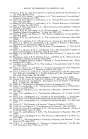
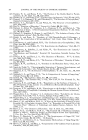
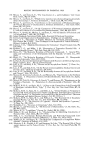
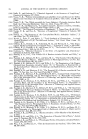
312 JOURNAL OF THE SOCIETY OF COSMETIC CHEMISTS Haiti One of the most striking developments in the essential oil field is the recent emergence of Haiti as an important producer of oils, a development made possible chiefly through the pioneering work of Senator Louis Dejoie in Port-au-Prince. Prior to World War II the production of essential oils in Haiti was slight, but now the island supplies annually almost 90,000 pounds of oil of Atmyris balsamifera, also called West Indian sandalwood oil. The quantity could be increased largely for at least ten years, i.e., as long as the supply of wood lasts. The tree grows wild in several parts of the island. Furthermore, Haiti now produces per year a little more than 100, 000 pounds of vetiver oil, i.e., more than the entire production of the rest of the world (R•union, Java, Brazil, etc). In other words, within the past fifteen years Haiti has become the largest supplier of vetiver oil in the world, and the Western Hemisphere is now independent of the earlier sources. The Haiti oil has an odor somewhat different from that of the R•union or Java oils, but it is an excellent source for the isolation of vetiverol. Another oil produced now in Haiti in substantial quantities is lemongrass. Average annual figures have been 90,000 pounds, but existing distilleries could take care of 200,000 pounds, if plantations were expanded accordingly. In general, Haiti is not interested in producing lemongrass oil unless prices of the oil are at least $1.35 per pound c.i.f. New York. For this reason no oil was produced within the past two years. Aside from the above-mentioned oils, Haiti now supplies per year about 25,000 pounds of distilled lime oil and 10,000 pounds of petitgrain oil. Experimental work is being conducted on the cultivation of geranium (R•union type), ylang ylang, Mentha arvensis and Mentha piperila, all of which seem promising. The first experimental lots can be expected in one to two years. Altogether Haiti has made great progress in the essential oil field. Crops are supplied by a number of small growers, and processed in Senator Dejoie's two large distilleries. One of these, the largest and most mode?n 'in all the tropics, is located in St. Michel its twenty-two stills process chiefly lemongrass. Senator Dejoie's other distillery is located in Ducis it holds twenty-three stills and processes mainly vetiver root. A third large distillery has recently been constructed in Port-au-Prince. There are a number of other distilleries of small capacity distributed throughout the growing regions, serving for the production of lime oil, petitgrain oil, etc. Italy The dreaded mal secco, a virus disease, which a few years ago threatened to wipe out Sicily's old established lemon groves, has lately been brought under control. Although no specific remedy has been discovered, the

RECENT DEVELOPMENTS IN ESSENTIAL OILS 313 ravages of mal secco have been checked by the great care growers now give to their lemon plantings in addition to surgical treatment (which consists of cutting and burning any infected branches, or even trees, at the first appearance of the disease), all planters practice repeated spraying with copper salt solutions in the autumn. Within the last few years the acre- age devoted to lemon plantings has increased slightly. While the average for the period 1936 to 1939 was 22,000 hectares in Italy, the average for the last three years is up to 24,000 hectares. Fruit production has not shown any great variation, being 326,000 and 314,000 metric tons, respectively. According to La Face (87), production of lemon oil in Sicily and Cala- bria now amounts to about 325,000 kilograms per year. Yearly exports of lemon oil from 1952 to 1954 averaged 290,000 kilograms per year, and were distributed as follows: Great Britain ........... 37% France ................. 14% United States ........... 12% U.S.S.R ................. 10% Western Germany ....... 8% Other countries .......... 19% Lemon oil is now obtained in Sicily and Calabria almost exclusively by means of the so-called Sfumatrice machines, small motor driven oil presses that yield oils of a quality similar to that of the hand-pressed oils. Less than 10 per cent of the Italian lemon oil is produced by old fashioned hand- sponging, a process now practiced in remote mountain villages where only little fruit is available. Bergamot oil is produced in Calabria in amounts approximating 160,000 kilograms per year. Annual exports of the oil from 1952 to 1954 averaged 135,000 kilograms, and were distributed as follows: France ................. 23% Great Britain ........... 17% United States ........... 16% Western Germany ....... 10% U.S.S.R ................. 10% Other countries .......... 24% As regards floral oils, southern Italy produces only about 100 kilograms of neroli bigarade oil, two-thirds of this quantity originating from Sicily (Messina and Syracuse) and one-third from Calabria (Reggio). On the other hand, production of jasmine concrete has been increased lately to approximately 2200 kilograms per year, of which quantity Calabria (Reg- gio) supplies about 1200 kilograms and Sicily (Messina and Syracuse) 1000 kilograms. Exports absorb 90 per cent of the entire production, most of the concrete going to France, the balance to Great Britain, Switzerland, Germany, U.S.S.R. and the U.S.A. The quality of the Italian jasmine concrete has occasionally been criticized as being somewhat inferior to the product from the Grasse region (Southern France), a result, perhaps, of
Purchased for the exclusive use of nofirst nolast (unknown)
From: SCC Media Library & Resource Center (library.scconline.org)