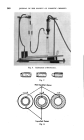
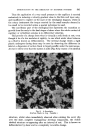
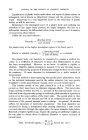
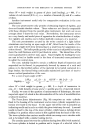
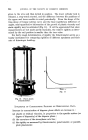
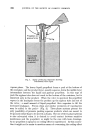
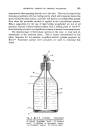
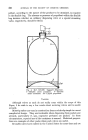
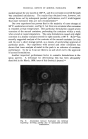
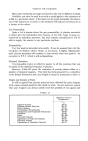
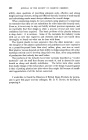
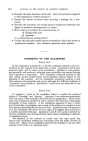
352 JOURNAL OF THE SOCIETY OF COSMETIC CHEMISTS FOAM PACKS Aqueous products such as hand cream, shampoo, shaving cream and tooth paste are examples of aerosol foams. A special foam head must be fitted to the valve (Fig. 3) and the presence of the syphon tube is optional. If the latter is omitted then the container is inverted during use. In foam packs the propellent does not usually amount to more than 10 per cent, andit is emulsified with the product. When the valve is operated the emulsion is forced out of the nozzle, whereupon the particles of liquid propellent change into gas within the emulsion, whipping the whole into a thick foam of innumerable particles. By varying the amount and type of propellent one• can obtain practically any type of foam quality desired. POWDER PACKS Aerosol powders consist of dispersions of the powdered product in the propellent, and in the not too distant future it may be possible to market REAM SPOUT MOUNTING DOMED GROMMET STEM ASKET ,I SPRING. • : 11 i• VALVE • ,, HOUSING ,. •[ /l :, SYPHON "" (optional,) ','" ,,,, I? iii I //, je •1 I BODY ',' ' ,? END Fig. 3. "Beer-can" type dispenser showing closed Precision valve with cream spout for foam dispensing.

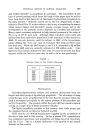
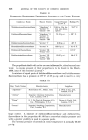
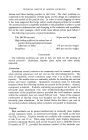
TECHNICAL ASPECTS OF AEROSOL PACKAGING 353 talcum and'-0•her dusting powders in this form. The chief problems en- countered in the formulation of these packs are the design of a satisfactory valve and control of the particle size. In order to avoid clogging of valves it has been suggested that large and/or needle-shaped particles be avoided. The material must be completely insoluble in the propellent in order to avoid agglomerative sedimentation and clumping in the container and crystalliza- tion in the valve passages, which would cause almost certain pack failure. n The following represents a typical formulation. Talc (50-70 microns) .... 10 per cent by weight High boiling additive (to reduce loss of powder during spraying and increase • adherence to skin) .... 0.5 per cent by weight Propellent ........ 89.5 per cent by weight CONTAINERS The following materials can and, in fact, are used for the packing of aerosol products: aluminium, tinplate, glass, nylon and other plastic materials. Aluminium Aluminium aerosol containers are commonly used for cosmetic products when external appearance and not cost are the determining factors. The sizes of aluminium aerosol containers range from 1 oz. to 20 oz. nominal capacity. The smaller sizes are eminently suitable for handbag-size sun-tan lotions and insect repellents. Aluminium containers must be internally lacquered when the following alcohols are present in the product: ethanol, n-propanol, n-butanol. Products containing iso-propanol can be packed in internally plain aluminium even with trichloromonofluoromethane as a constituent of the propellent mixture provided the total moisture content within the container does not exceed 0.05 per cent. Some of the common constituents of shaving cream and shampoo can also cause corrosion of internally plain aluminium. In the United States less than 1 per cent of the aerosol products utilising metal containers are packed in aluminium. Tinplate Most materials can be packed satisfactorily in internally plain tinplate aerosol containers which, as mentioned previously, are based on the beer can (Fig. 3 above). Tinplate aerosols are available with nominal capacities of only 6 oz. and 12 oz. When using internally plain tinplate dispensers, products containing ethanol, such as hair lacquers, have a shelf-life of 12 to 15 months at 77 ø F., provided the moisture content of the alcoholic con,-
Purchased for the exclusive use of nofirst nolast (unknown)
From: SCC Media Library & Resource Center (library.scconline.org)