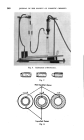
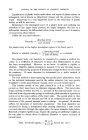
354 JOURNAL OF THE SOCIETY OF COSMETIC CHEMISTS centrate is kept to a minimum and does not exceed 1.5 per cent. Tinplate cans can also be internally lacquered. Glass Glass aerosols made their d•but in the U.S.A. within the last three years, and there is very little doubt that they play a very important role in the packing of cosmetic aerosols, particularly with corrosive packs such as anti- perspirants and with perfumed packs where even the slightest traces of metal may be fatal. These containers may be protected with metallic, plastic or composite outers. Sometimes they are unfortunately sold without any outer protection, when they must be considered as very dangerous packs indeed and their use is already proscribed in some of the North American States. I am fully convinced of the dangerous aspects of these packs, and there is no exaggeration in Wells's recent description • of the shattering of uncoated glass aerosols, as I have myself witnessed. The bottles contained 50 per cent by weight of ethanol and 50 per cent by weight of dichlorotetrafluoro- ethane with an internal pressure of 0.9 ats. excess. On shattering, pieces of glass were hurled as far as 40 feet. It is often argued that filled beer bottles have internal pressures which exceed 40 p.s.i.g. and yet such bottles are not considered as dangerous. Comparison between these two packs is not really fair, for in a beer bottle we are dealing with a dissolved gas, only a limited amount of which is available at the time of breakage of the bottle, whereas in an aerosol all the liquid propellent changes almost instantaneously to a gas which, after all, is the very principle of aerosols. The tremendous increase in volume which will occur on breakage (1 g. mol. liquid = 22,400 c.c. gas) will therefore be realised. An American glass manufacturer TM has stated that fragments from a shattered glass aerosol were propelled in a horizontal plane only, seldom travelling upward more than approximately 18 inches from the point of impact. Even such qualifications do not lessen the dangers of these packs, because there is no guarantee that breakage will occur on the ground. Supposing such breakage occurs on top of the dressing- table ? That these dangers are fully appreciated is shown by the fact that the biggest contract packer in this country is refusing to pack uncoated glass aerosols that a leading U.K. glass bottle manufacturer will not supply uncoated glass aerosol containers and that my company will not supply valves if they are to be fitted to uncoated glass aerosols. MEANS OF PROTECTING GLASS AEROSOLS As has already been stated above, the protection of glass aerosols can be achieved in three ways. 1. Metallic outers. Aluminium extrusions are normally used for this purpose and the packs look very attractive. In the U.S.A. this type of pack

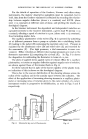
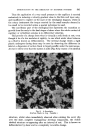
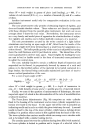
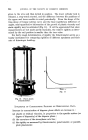
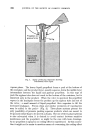
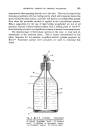
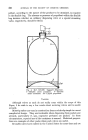
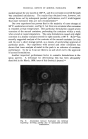
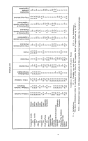
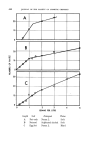
TECHNICAL ASPECTS OF AEROSOL PACKAGING 355 is used for expensive handbag perfumes and the aluminium is gold lacquered externally. There is no doubt that such protective outers enhance the external appearance and sales appeal of the pack. 2. Plastic Coatings. Glass aerosols coated with plastic material are other examples of "safe" glass dispensers. It is, however, necessary to ensure that the plastic coating is of an adequate thickness, that it does not embrittle on ageing and that the valve is securely anchored to the plastic coating. When these conditions are fulfilled and a bottle is accidentally dropped, the plastic outer will retain all glass splinters. Plastic coatings do not impair the appearance of glass aerosols. On the contrary, the various pastel-coloured plastic envelopes decoratively printed in multi-colours are considered an added attraction. •4 3. Composite outers are normally used for domestic products, such as glass cleaners, and are no less effective than the materials mentioned above. PLASTIC AEROSOLS Plastic aerosol containers have already made their appearance in the United States."." Diffusion of part or all of the product through the container is one of the problems encountered, and it is hoped to report on progress with British plastic aerosol containers on another occasion. TAGGART'S AEROSOL CONTAINER A patent for an aerosol container which might be described as a combina- tion of a metal container and a plastic container utilising a three-phase system has recently been granted." The metal can, as illustrated in Fig. 4, is fitted with the usual aerosol valve to which a flexible inner container is attached. The propellent-resistant flexible inner contains the product, and a small amount of propellent is filled into the space between the metallic outer and the flexible inner containers. When the valve is actuated the propellent vapour exerts pressure on the flexible inner and the product will be expelled from the latter. One of the advantages of this method is that only a small amount of propellent is necessary. Another, that the product and propellent are not in contact with each other, in fact, they might not even be compatible. Corrosion of the metallic container is avoided. Hair cream, cold waving solution and conventional tooth paste are examples of packs which could probably not be packed satisfactorily in any other way. So, of course, are food products, to which reference has already been made elsewhere. •8 If it is desired to atomise the product rather than to make it flow, a small quantity of a suitable propellent would be mixed with the product in the flexible bag. Since the sole purpose of the propellent within the flexible container is to facilitate atomisation and is not to provide the propellent force for effecting dispensing, only a very small quantity of pro-
Purchased for the exclusive use of nofirst nolast (unknown)
From: SCC Media Library & Resource Center (library.scconline.org)