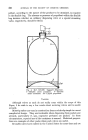
358 JOURNAL OF THE SOCIETY OF COSMETIC CHEMISTS same product cold filled, several pounds under the pressure obtained when the conventional evacuation method is used.•0 Pressure filling is not restricted to water-based products. This method is also used for products which are sensitive to low temperatures for instance, some emulsions might break down irreversibly on cooling. Also whenever the amount of the product exceeds the amount of propellent pressure filling is called for. Glass aerosols are nearly always filled by this method. Pressure filling is completely anhydrous, whereas with cold filling elaborate precautions are necessary if the introduction of traces of moisture is to be avoided. FORMULATIONS Perfuming of products is considered an important aspect of the work of cosmetic chemists, and more care than ever has to be taken in the perfum- ing of aerosol products. Errors made in this respect, even if they do not render the product altogether unserviceable, will make them sufficiently offensive to be unsaleable. Perfume compositions consist of several, some- times very many, components, generally fairly complicated chemical com- pounds with widely divergent properties, and each of these compounds is subject to the influence, over a protracted period, of the active ingredient, propellent, container and the interaction between these items. A complete change of character in a number of commonly used aromatic ingredients or their complete degradation may be brought about by traces of hydrochloric acid created, say, as the result of hydrolysis of the propellent. Each individual perfume component may well present difficul- ties in itself, and it will therefore be obvious that a combination of a large number of these components renders the whole picture considerably more complicated. Innumerable reactions may take place, such as the formation of acetals from aldehydes and alcohols, the interchange of other radicals between various esters, dehydration, condensation, cyclisation, etc., all of which are capable of modifying the aromatic character of the composition beyond all recognition. As an example I will quote the experience of a European manufacturer who had been purchasing eau-de-cologne concen- trate from one of the leading perfumery houses for some years. Being enter- prising, he decided to market an aerosol cologne, and without informing his suppliers he proceeded to pack his standard perfume concentrate into glass aerosols. The result was commercial disaster for this line because the particular blend just was not suitable for atomisation. A few months ago, a sample of perfume was sent to our laboratories with a request that it be packed in an aerosol container as a room deodorant. The result was a very irritating spray, and it was quite clear that the customer had no idea of the problems involved. The selection of an appropriate perfume composition, therefore, does not

TECHNICAL ASPECTS OF AEROSOL PACKAGING 359 only depend on the personal opinion of the aerosol manufacturer and the taste of the consumer, but is also bound up with the various conditions within the pack. The conditions prevailing in a shaving cream aerosol containing water and alkaline constituents differ considerably from those in a room deodorant in which an inert active ingredient and the solvent are the only determining factors, and each and every aerosol product presents a separate problem so far as the perfume is concerned. The propellent, inert in certain circumstances, may be highly activated in other cases so far as the unwanted effects on the perfume are concerned. It will now be clear that a great deal of research and co-operation between chemists and perfumers is necessary in order to develop a varied series of perfumes the stability of which can be guaranteed under aerosol conditions. The problems attending the perfuming of aerosols may be conveniently summarised as follows: 1. Incompatibility of the perfumes, propellents or other ingredients. 2. Poor solubility of the odiferous substances. 3. Corrosion. 4. Irritation of skin and/or mucous membrane. More extensive discussions of the problems involved in aerosol perfuming may be found in recent publications by leading perfumery houses 'o-" and in a recent paper by Pickthall.'• HANDCREAMS The following handcream formulation, developed in conjunction with W. J. Bush & Co., Ltd., has been found to be satisfactory for packing even in internally plain aluminium aerosol containers: Stearic acid 160.0 g. Lanette wax 11.2 g. Lanolin 32-0 g. Triethanolamine 64.0 g. Glycerol 160.0 g. Sorbirol 70 per cent 96.0 g. Sodium benzoate 1.6 g. Distilled water 1056.0 g. The aerosol container is charged with 90 parts by weight of the above cream and 10 parts by weight of dichlorodifluoromethane propellent. SHAMPOOS Our experience to date with shampoo formulations has shown sodium lauryl sulphate to be satisfactory in internally plain aluminium dispensers, even when using a propellent mixture containing trichloromonofluoro-
Purchased for the exclusive use of nofirst nolast (unknown)
From: SCC Media Library & Resource Center (library.scconline.org)