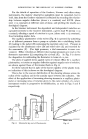
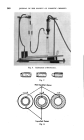
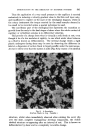
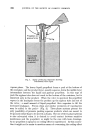
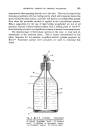
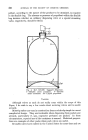
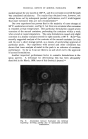
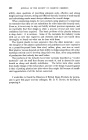
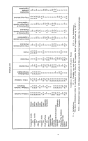
•$6 JOURNAL OF THE SOCIETY OF COSMETIC CHEMISTS pellent, according to the nature of the product to be atomised, is required in the flexible bag. The absence or presence of propellent within the flexible bag dictates whether an ordinary dispensing valve or a special atomising Valve, respectively, should be fitted. Fig. 4. B.P. 740,635. Taggart's Dispenser. 1--Metallic outer container. 5--Flexible inner container. 24--Liquid propellent. VALVES Although valves as such do not really come within the scope of this Paper, I do wish to say a few words about metering valves and re-usable aerosols. Metering valves can vary in construction from a relatively simple to a most complicated design. They are invaluable when dispensing from pocket-size aerosols, particularly if, sa•, expensive perfumes are packed. In these circumstances, repeated use of the containers is assured. Medicinal prepara- tions are examples of other packs where such valves are useful. Re-usable valves have existed in the United States for some time and are

TECHNICAL ASPECTS OF AEROSOL PACKAGING 357 now also available in this country. The cost of these valves is considerable and, in the long run, there is very little saving. In the United States these valves have failed to make very much headway. FILLING OF AEROSOLS There are two methods for the filling of fingertip dispensers, i.e., low temperature or cold filling and normal temperature filling, also known as pressure or injection filling. Cold filling is the method most commonly used in the United States. It might be well to point out that the propellents commonly used in the aerosol industry were developed as refrigerants, and as such it has been a natural thing to apply refrigerating machinery to this industry. Filling by this method is speedy, but the equipment necessary is fairly expensive. Pressure-filling equipment is relatively cheap but the filling speed is slower because the propellent has to be forced through a small orifice (in the valve) whereas in cold filling the propellent is filled through an opening at least 1 in. in diameter. Even to-day cold filling predominates in the United States because American fillers are obviously loath to dispense with expensive installation. Speed alone does not, however, dictate the choice of either method, and while it is true to say that all packs can be pressure filled it is not always economical to do so. To begin with, not all valves are suitable for pressure filling. The Precision valve, illustrated in Fig. 3, is amongst those valves which can be filled in this manner, while the Continental valve (Fig. 1) is not suitable. Cold filling is normally carried out in the following way: The cooled product is filled into the can, the cooled propellents are added and the can is sealed. The boiling off of a small amount of propellents sweeps out most of the air prior to the sealing of the can. It is impossible to cool water-based products prior to filling and in such cases cans containing the products would have to be cooled, a process which is laborious and definitely uneconomic. A further complication arises in such cases when the cans are immersed in hot water for leakage testing immediately after sealing. Because the contents are solidly frozen this immersion is equal to heating the propellents to 130 ø F. If the propellent consisted solely of dichlorodifluoromethane, as is often the case with shampoo and shaving cream, an internal pressure capable of deforming or even bursting the can would be generated. In pressure filling, the product is filled into the can, which is then sealed. The most common method of removing the air trapped is to connect the container to a vacuum line prior to the injection of the propellent through the valve. A better, more efficient and yet simpler way of removing this air is to purge the can with heavy propellent vapour introduced at the bottom of the can. Any air left in the containers will increase the final pressure of the pack, but pressures in cans purged as described approximate those of the
Purchased for the exclusive use of nofirst nolast (unknown)
From: SCC Media Library & Resource Center (library.scconline.org)