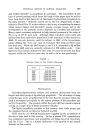
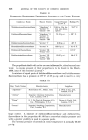
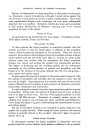
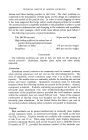
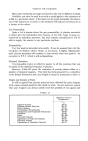
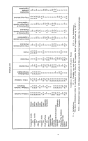
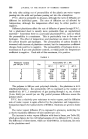
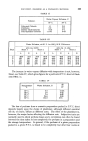
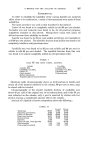
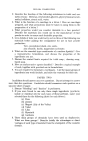
PLASTICS FOR PACKAGING 381 Most odour molecules are large and therefore the rate of diffusion is small. Solubility can often be used to provide a useful guide to the resistance of a film to a particular odour: if the odour can be typed chemically the behavi- our of the material as a barrier to the chemical will indicate its behaviour as a barrier to the odour. Gas Permeability Quite a lot is known about the gas permeability of plastics materials. I cannot give the information here because of the wide range of gases en- countered in industrial processes, but most plastics manufacturers will be able to supply the answer to any particular problem. Flammability Very few plastics materials burn readily. It can be assumed that with the exception of cellulose nitrate which, as you know, is highly inflammable, most plastics materials will continue to burn slowly when once ignited. An exception is P.V.C. which is self-extinguishing. Chemical R•sistanc• It is impossible to give an effective answer to all the questions that can be posed on the chemical resistance of plastics. However, Table III gives the resistance of certain plastics films to a number of chemical reagents. This table has been prepared by a committee of the British Federation and I am obliged to them for permission to show it. Shapes and Designs of Packs It will be agreed that plastics materials have afforded the pack designer with a most versatile material with which to work. Do not, however, expect that your designer can always satisfy both the problem of eye appeal and TABLE II Cellulose Acetate Cellulose Acetate Butyrate Ethyl Cellulose Polyethylene Terephthalate Polystyrene and Toughened Polystyrene Polythene Nylon Polyvinyl Chloride Copolymers of Polyvinyl Chloride Polyvinyl Alcohol Copolymers of Vinylidene Chloride Maximum Service Temperature øC. 55-70 60-75 70-80 160-180 74-85 70-80 130-150 50-60 50-60 90-110 55-70

382 JOURNAL OF THE SOCIETY OF COSMETIC CHEMISTS utility, since questions of providing adequate seals, effective and strong hinges and snap closures, strong and efficient threads, location of trade marks and advertising marks must always influence the overall design. When considering designs for new products using plastics it is important to remember that they are not substitutes for other materials formerly used. Even so, it is not easy to step out boldly without previous experience, and we inevitably find that design is often a process of trial and error until confidence has been acquired. The basic problem of the plastics industry is deep down: it is newness. Some of the materials the industry works with are so new that engineers and chemists still have not tested them thoroughly or found out what can be done with them. The typical plastic is more expensive than the older materials even the cheapest of the plastics (polystyrene and polythene) are more expensive on a pound-for-pound basis than steel, rubber, glass, cast iron or wood. Most plastics' success depends on their ability to dodge competition with other materials entirely and to develop along their own lines, often using methods of production that nobody has used before. The products of the industry have been variously described as "wonder materials" and the stuff that dreams are made of, and in almost the same breath as cheap and shoddy substitutes. The latter term often results from faulty design of the end product, and one of the things to guard against is that of putting plastics into jobs where they might fail because of insuffi- cient appreciation of all the factors concerned. I would like to thank the Directors of British Resin Products for permis- sion to give this paper and my colleague, Mr. D. N. Davies, for his help in preparing it.
Purchased for the exclusive use of nofirst nolast (unknown)
From: SCC Media Library & Resource Center (library.scconline.org)