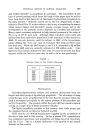
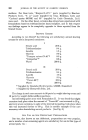
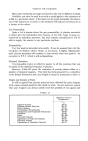
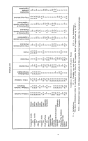
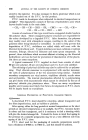
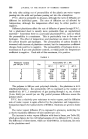
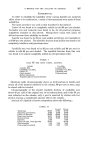
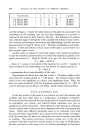
PLASTICS FOR PACKAGING 379 forming, and off-cuts and scrap may be ground and fed directly back to the extruder. DiP MOULDING Dip moulding consists of dipping a former into a fluid plastic material and removing the former when the plastics shell so formed has set. Threads may be formed in the moulding and caps can be cemented in place. Wall thicknesses from 0.003 in. upwards are obtainable. Colour possibilities very good. PLASTIC FILM There are many processes used for the production of packs from plastics matehal and those making use of plastic film cannot be omitted. Basically the production of bags from plastics film involves cutting of patterns of the required size, folding to shape and sealing the edges together. In the cutting of patterns use is made of the fact that plastics films are sold in reel form. The film may, therefore, be built up in lays and guillotined or stamped out. The most suitable methods of sealing to form the pack may vary accord* ing to the type of plastics film being used and the form of pack required. Table I gives the more common methods used for sealing the various films. HIGH FREQUENCY SEALING This method requires that the surfaces of the two or more plastics films to be joined should be brought into intimate contact and at the same time be subjected to the influence of a high frequency alternating electric field. By this means heat is generated within the films, which become soft and are welded together. TABLE I Cellulose Acetate Cellulose Acetate Butyrate Ethyl Cellulose Polyethylene Terephthalate Polystyrene and Toughened Polystyrene Polythene Nylon Polyvinyl Chloride Copolymers of Polyvinyl Chloride Polyvinyl Alcohol Copolymers of Vinylidene Chloride High Frequency Se• Seali t Solvent xg Welding x x x x x x Adhesive Sealing

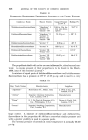
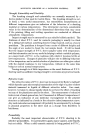
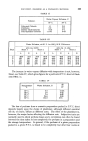
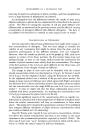
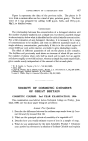
380 JOURNAL OF THE SOCIETY OF COSMETIC CHEMISTS HEAT SEALING Heat sealing requires that the surfaces to be joined shall be melted when in contact with each other. SOLVENT WELDING Consists of wetting the two surfaces of a plastics film with a solvent which will soften the film and then by applying pressure to bring the two softened surfaces into co•tact. ADHESIVE BONDING Consists o[ cementing two surfaces together with a suitable bonding agent. A FEW REMARKS ON THE PROPERTIES OF PLASTIC I•IATERIALS Dimensional Stability Some special purpose grades of thermosetting materials have been designed to give satisfactory service at high temperatures, in some cases as high as 200 ø C., but it is unwise to use the general purpose materials at temperatures in excess of 100 ø C. By their nature thermoplastic materials will soften at elevated tempera- tures. A guide to the temperatures that these matehals will stand will shortly be published as part of Part Seven of the Packaging Code being prepared by British Standards Institution Table II gives similar information. Water and Water Vapour Permeability The water and water vapour permeability of a plastic is easy to measure and it is possible to classify materials according to the amount of water that will pass through a given membrane in a given time. Generally it is sufficient to establish from published data whether or not a particular plastics material offers an effective barrier to water or water vapour and to carry out an ad hoc test. Most plastics offer very good resistance to the passage of water, the notable exception being, of course, poly~vinyl alcohol, which dissolves in water and is used for the manufacture of water soluble sachets to contain shampoo, medicines, etc. Odour Permeability The transmission of a vapour through a material takes place by a process of solution of the molecules of vapour at one surface followed by diffusion in the body and subsequent evaporation at the other surface.
Purchased for the exclusive use of nofirst nolast (unknown)
From: SCC Media Library & Resource Center (library.scconline.org)