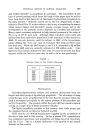
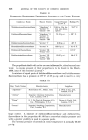
POLYVINYL CHLORIDE AS A PACKAGING MATERIAL 385 need to keep the polymer free from heavy metals which cause decomposition if present in quantities as low as a few parts per million. • Polythene sheeting is used to a certain extent for packaging cosmetics. Polythene is a general term for polymerised ethylene, the molecular weight of which can be varied according to the pressure in the polymerisation vessel. It is a typical hydrocarbon with a low specific gravity (0.92) and a melting- point of 115 ø C. No plasticiser is required with polythene, so that migration problems do not occur. The sheet is quite strong, with an exceptionally high tear-strength, but it is not possible to weld polythene by high frequency heating, and this is a disadvantage. The selective permeability of polythene is also a great disadvantage, the resistance to water and water vapour being high, but the permeability to gases and oils is unfortunately also high. Consequently any cosmetic preparation containing oil and water will preferentially lose this oil, changing its own composition and causing the external surfaces of the pack to become soaked in oil. The high permeability to gases allows them to pass into a pa. ck containing an aqueous liquid, especially at elevated temperatures, resulting in an increase in volume and the development of pressure inside the pack. 2 There is also a variety of laminated materials available consisting of two or more very thin sheets. Probably the most useful and widely used plastic sheet for the packaging of cosmetic materials is polyvinyl chloride. There are many factors, however, which affect the suitability of the P.V.C. sheet for any particular preparation and it is some aspects of the suitability of P.V.C. sheet that are discussed. CONSTITUTION OF POLYVINYL CHLORIDE Straight polyvinyl chloride is a hard, horny material with a melting-point of about 180 ø C. It is fairly rigid and has to be plasticised with ester-type plasticisers, which have the effect of giving pliability to the material and reducing the melting-point. After plasticising, it can readily be callendered in the form of sheets which are translucent and weaker than sheets made from unplasticised or rigid P.V.C. The sheet material is very sensitive to temperature effects, being very soft and difficult to handle when warmed and very hard and brittle if cooled below room temperature. There are several plasticisers in general use and these include dibutyl phthalate, di-2-ethylhexyl phthalate, di-2-ethylhexyl adipate, some sebacic acid esters, tetrahydrofurfuryl oleate, which gives pliability at low temperatures, tri- cresyl phosphate, which imparts flame resistance, and certain chlorinated hydrocarbons. The choice of plasticiser is very essential as they affect several properties of the P.V.C., including strength, pliability, brittleness at low temperatures, ease of welding, resistance to the passage of gases, water vapour, perfume, etc. Certain plasticisers can affect the odour of products

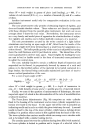
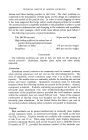
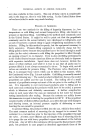
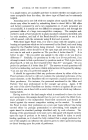
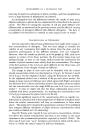
386 JOURNAL OF THE-SOCIETY OF COSMETIC CHEMISTS stored in the material. It is also necessary to find a plasticiser which is not readily leached out of the P.V.C. by ,the product. P.V.C. tends to decompose when subjected to elevated temperatures or sunlight.' This degradation consists of th? loss of hydrochloric acid, which leaves double bonds in the resin chain. -- CH, -- CH = CH -- CHC1 -- CH• --CHC1 -- --•-- CH• --CH = CH--CH=CH--CHC1-- +HC1 A series of reactions of this type would leave conjugated double bonds in the polymer chain. These conjugated polyene structures are responsible for the colour developed by a degraded P.V.C. After formation, the polyenes may readily react with atmospheric oxygen, resulting in the colour of the polyenes either being bleached or intensified. In order to help prevent this degradation of P.V.C., stabilisers are added which will react with the liberated hydrochloric acid. Typical stabihsers are lead, cadmium or calcium stearates, litharge, dibutyl tin dilaurate and some epoxy compounds. In general, those stabilisers which are anost efficient at taking up the liberated hydrochloric acid are the best for prevention of discoloration of the plastic, but there are some exceptions. A typical commercial P.V.C. supplied in sheet form consists of about 60 per cent polymer, 35 per cent plasticiser and 2 to 5 per cent stabiliser. The softening of po]yvinyl chloride may also be achieved by co-polymer- is[ng. Vinyl chloride toohomer is co-polymerised with another monomer, the rates of polymerisation of the two monomers being similar. Suitable secondary components are vinyl acetate, vinylidene chloride, acrylic esters and acrylonitrile. The internal plasticisation afforded by co-polymerising can give sheets with characteristics which cannot be obtained by the use of polyvinyl chloride plus plasticisers alone. There are many co-polymers possible and it seems most likely that future developments in P.V.C. sheets will be largely based on co-polymers. GENERAL PROPERTIES OF POLYVINYL CHLORIDE SHEETS A plasticised P.V.C. sheet should be colourless, almost transparent and free from imperfections, such as bubbles or pin_holes. After ageing, either for long periods at normal temperatures or for short periods at elevated temperatures or in sunlight, the P.V.C. becomes darker in colour and less transparent, and it is necessary to find a sheeting which will give the desired storage life. It should be borne in mind that ageing in the presence of a cosmetic preparation may be at a very different rate from ageing of the P.V.C. alone. P.V.C. sheet used for the packaging of cosmetic preparations usually has a thickness of 0.005 in. to 0.015 in., and this should be uniform.
Purchased for the exclusive use of nofirst nolast (unknown)
From: SCC Media Library & Resource Center (library.scconline.org)