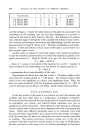
404 JOURNAL OF THE SOCIETY OF COSMETIC CHEMISTS schedule of experimental work to be carried out covering, so far as his experi- ence and imagination will allow, the possibilities of an unsatisfactory end- product to a number of his experimental formulae. If time is of no impor- tance-and this rarely occurs•one formula may be fabricated and followed through but should at a later stage unforeseen reactions occur, then a fresh start may have to be made and much time may be taken in arriving at the desired end-product. In my opinion, it is better to start with more than one basic type of formula and subdivide each into variations within itself, 'so that testing may proceed in several directions at the same time. The probability of obtaining the desired end-product in a relatively short period is then good. As a simple illustration of what I mean, let us assume our end-product is to be a water-in- oil emulsion of such viscosity that it will pour slowly from a neck opening of, say, 12 mm. i.d. We might lay down two basic formulae to start off: Formula A: Based on white oil, natural waxes, alkali and water. Formula B: Based on white oil, isopropylmyristate, ethylene oxide condensation product and water. Six variations of both formulae might then be laid down as follows: Formula A 1. Basic formula. 2. Variation ot white oil and water ratio. 3. Variation of ratio of waxes used in (1). 4. Variation of ratio of waxes used in (2). 5. Variation of alkali used in (1). t•. Variation of alkali used in (2). .Formula B 1. Basic formula. 2. Variation of white oils and isopropylmyristate ratio. 3. Variation of fat and aqueous phase ratio. 4. Reduction of ethylene oxide chains linked to hydrophobic molecule. 5. Increase of ethylene oxide chains linked to hydrophobic molecule. 6. Variation of hydrophobic molecule linked to ethylene oxide chains. If we started off with these twelve formulations, using ingredients drawn from the same bulk where such ingredients are common to more than one formula, we should, when adverse reactions occurred under test conditions, obtain a reasonably clear picture of the cause of the trouble and might see the way in which our problem could be overcome. Further, the picture presented to us from a study of the behaviour of all samples might well show, not only the weak links in our formula, but also the good points, and allow us to improve our end-product with relatively small formula adjustments.

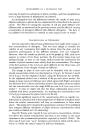
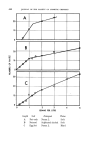
DEVELOPMENT OF A NEW PRODUCT 405 1. Sample 2. Sample 3. Sample 4. Sample 5. Sample 6. Sample 7. Sample 2,000 p.s.i. You will, I have little doubt, appreciate that the method of manufacture employed in our laboratory batches can often seriously affect the end-product. I refer, of course, to such things as conditions of stirring, rate of cooling, conditions of homogenisation, etc., and not only is it necessary to keep accurate records of the conditions employed so that these are available for study when later carrying out first pilot plant, and subsequently full-scale, plant production, but it is e. qually necessary for the conditions of manufac- ture employed in all variations of Formula A to be the same. Likewise with variants in Formula B, although these conditions will not necessarily be the same as those employed in the manufacture of Formula A. Bearing in mind the large effect the manufacturing conditions can often produce in the end-product, I would strongly recommend that the twelve samples I have already referred to be manufactured under varying conditions, each variation of formulae being treated as follows: cooled naturally. cooled rapidly. cooled slowly. stirred down to 45 ø C. stirred down to 30 ø C. stirred after homogenisation down to 30 ø C. homogenised at varying pressure, i.e. 500, 1,000, 1,500, Now you may well think that all this means a lot of unnecessary work, but I can assure you that development work planned on these lines will save a good deal of both work and time in the long run and give little room for latent formulae problems to develop after marketing. Further, you will obtain such a complete picture of the affects of the variants employed that you will be much more competent to carry out any subsequent formulae adjustments which may be necessary. Let us pause for a moment and see just how much work in the laboratory is involved in getting to the stage when we have our complete range of samples ready for shelf-life tests. The first step is to compound small laboratory batches, say, 500 grams of each formula and variants of same, and, assuming no obvious instability, we then proceed to make five kilograms of each, dividing each sample into ten parts and treating each 500 grams in the following manner: 3 x 500 grams into three beakers and record temperature against time, varying the cooling conditions. 2 x 500 gram samples one stirred down to 45 ø C., the other down to 30 ø C. Balance into homogeniser hopper, 500 grams withdrawn at 500 p.s.i., adjust pressure withdraw 2 x 500 grams at 1,000 p.s.i., adjust pressure
Purchased for the exclusive use of nofirst nolast (unknown)
From: SCC Media Library & Resource Center (library.scconline.org)