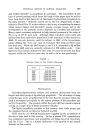
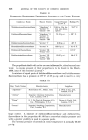
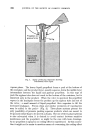
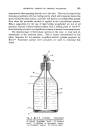
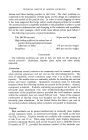
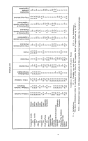
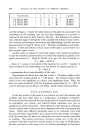
406 JOURNAL OF THE SOCIETY OF COSMETIC CHEMISTS withdraw 500 grams at 1,500 p.s.i., adjust pressure to 2,000 p.s.i. and with- draw the balance. Treat one of the samples withdrawn at 1,000 p.s.i. by stirring down to 30 ø C. After treating the other five variants of Formula A, and Formula B with its five variants in a similar manner, we have 120 samples each of approximately 500 grams and are in the position to commence shelf-life tests of the complete range, although it must be borne in mind that, in practice, a number of our samples will be eliminated from these tests because they have already shown defects and have been rejected. It could be argued that the only true shelf-life tests are those which involve the product under conditions of storage and for the length of time to which the product will normally be submitted, but I think that an accelerated shelf-life test, carried out in the proposed manner, will show whether the product under test can be expected to withstand a normal shelf life of, say, 12 to 18 months. An accelerated shelf-life test cannot, of course, give information as to just how long a product will stay in sound condition, if only because of the fact that storage conditions will vary to a large degree in different localities. If, however, the product will withstand the following conditions, there is little doubt that deterioration in the retailer's store and shop window will be avoided. Test 1. Subject the sample to 30 days at 50 ø C., examine and report every 7 days. Test 2. Subject the sample to 30 days at 40 ø C., examine and report every 7 days. Test 3. Subject the sample to -2 øC. for 30 days, examine and report every 7 days. Test 4. Subject the sample to alternating temperatures of -- 2 and 40 ø C., cycle every 24 hours. Examine and report every 7 days. Test 5. Subject the sample to carbon arc light for 100 hours' continuous exposure with controlled temperature. Examine and report at 20, 50, 70, 80 and 100 hours. Test 6. Subject the sample to storage in natural light and sunlight for 30 days. Examine and report every 7 days. Test 7. Control samples to be stored at 55-60 ø F. in the dark. The above tests should be carried out on the samples packed in the container in which they are intended to be ultimately sold and, if such containers are not transparent, duplicate samples, packed in white flint glass, should be subjected to the same test conditions to enable physical changes to be observed at seven-day intervals without disturbing the contents of the non-transparent containers. At the end oi the 30-day tests, the samples which have been proved satisiactory can be considered suitable for

DEVELOPMENT OF A NEW PRODUCT 407 evaluation for pourability, absorption or dispersion effects on the skin or hair, preservation of original perfume, stability to pH value change, etc. The most satisfactory product considered from all angles can be put forward for evaluation by an independent panel of consumers. A thorough examina- tion of the marketing package in which the successful sample has been stored should take place and, if any adverse defects are observed, arrange- ments should be made to rectify faults and new containers tested and packed with the chosen formula. If slight defects on the container are observed, such as etching on the internal surface of tubes, the samples may be tested for a further period to evaluate the progressive action likely to occur over a period of time. The samples used for tests under natural light and sunlight should remain under test for as long as possible, and evaluation on any change recorded every seven days for a period of, say, four months. The evaluation of the finished product for consumer acceptance may be carried out in various ways, but I believe that the final evaluation should be made on the Blind Technique principle by an independent Panel consisting of a minimum oi 400 people fully representative of a cross-section of the potential purchasers. It is dangerous practice for one or two enlightened individuals to say that the product produced will be acceptable to the public. Consumers do not always readily accept a product which to the cosmetic chemist is the ideal. The consumer has many reasons for buying or not buying and many for not re-purchasing once bought, and these reasons may not always be logical. Buying habits are sometimes based on preference for no apparent reason, and the product or presentation may be accepted almost in the same manner as a child will naturally accept sweets. The sample, identified only by a code number and in a plain standard container, may first be offered to a regular Panel of 12 to 20 people chosen for their integrity. These Panellists are requested to use the product as directed and submit their report in writing in 10 to 14 days. Samples of a similar product are then submitted to the Panel and reported upon. The original sample, in a different container and under a different code number, is then again submitted to the Panel and their evaluation compared with their previous report. The whole process is then again repeated and the measurement of consistent acceptance or rejection taken. One must not, of course, repeat the process of alternating samples and competitive or similar products: otherwise the Panel will in time become conditioned. Three or even four strange samples may be introduced prior to the evaluation of the original sample a second time, a consistent report over a relatively long interval of time between tests being of greater validity than a similar report with a short interval between tests. If two or more samples of the finished product, which may vary only
Purchased for the exclusive use of nofirst nolast (unknown)
From: SCC Media Library & Resource Center (library.scconline.org)