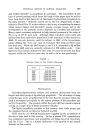
408 JOURNAL OF THE SOCIETY OF COSMETIC CHEMISTS to a small extent, are available and there is doubt whether one might prove more acceptable than the other, the above type of Panel can be extremely helpful. Assuming one is now left with two samples about equally liked, the final choice may often be made by submitting these to about 100 to 200 office and factory personnel in one's own organisation or, if such personnel are not available, it is usually not too difficult to arrange such a test through the personnel officer of a large non-competitive company. The samples sub- mitted to such a Panel should be in plain standard containers identified only by code numbers, and half of the Panel should be requested to use A first with B second, with the remainder using B first and A second. With these larger Panel tests, it is wise to issue with the samples a card bearing set questions which are to be answered by the Panel, each card being signed by the Panellist before being returned. Care must be taken in the questions asked these should be of the open type and never leading. It is not wise to ask such a question as "Do you like A better than B ?" It is better to ask: "Do you prefer one sample to the other or do you find no difference ?" Similarly, on questions as to why A or B was preferred, if an attempt is made to find a preference by questions such as "Did A give better gloss than B, or did you find A lasted better than B ?" and again, "Do you prefer the perfume of A better than B ?" The answers to such questions will tend to be misleading, and more reliable information will be gained by asking: "Can you say why you preferred sample X ?" It should be appreciated that any preference shown by either of the two Panel systems referred to will not evaluate. the potential preference of the mass consumer, as the Panellists will not represent a typical cross-section of these purchasers. For instance, the personnel mentioned in the Office and Factory Test may predominate in the younger age group. Again, if 80 per cent of the above Panellists are factory workers as against 20 per cent office workers, one is faced with a social class distinction which may influence buying habits. Having arrived at the final sample which is considered to have the best user acceptance, this sample should then be put out under the Blind Tech- nique principle to the independent Panel first mentioned and should be tested against the nearest competitor existing on the market. To enable the Panel to state their preference on a pure user basis without bias being exerted either by package presentation or advertising, both samples are again issued in standard package identified only by code reference. The framing of the questionnaire to be sent out to this panel will depend entirely upon the type of product to be tested, but care should be taken to avoid leading questions, as it should be fully realised that a single preference for one of the samples can influence the answers given to other questions having no direct bearing upon the point of preference.

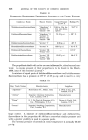
DEVELOPMENT OF A NEW PRODUCT 40• There are, of course, many other types of consumer acceptance tests which can be carried out, but time will not permit discussion of these. It may, however, be of interest if I deal very briefly with the composition of a Panel for the final product test. The Panel should be formed of individuals willing to co-operate in the test scheduled and should include correct grouping by age, sex, social class, etc. Classification into classes A, B, C and D is based upon conventional grading into social groups by experienced interviewers when making the preliminary house-to-house call for the purpose of establishing the Panel. It is estimated from statistical information available that in each 100 female adults in the United Kingdom 10 are in the A/B, 25 in the C and 65 in the D classes. Panellists should be drawn from areas over the United Kingdom, the number signed up in each area being calculated from the density of female adult population known to live in those areas, so that a balanced Panel representative of the adult female population by area in the United Kingdom is obtained. When considering a Panel of women for our test, the percentage of each group in the Panel should be roughly as follows: A/B Class .... 10% c ...... 25ø./0 D ...... 65% Aged 16/24 ...... 20% ,, 25/34 ...... 32% ,, 35/44 ...... 26% ,, 45/55 ...... 225/0 The number of married women in the Panel should be approximately 77 per cent, and the number of single women 23 per cent the number of housewives being 60 per cent and of occupied women being 40 per cent. The number of Panellists drawn from large urban areas should be about 42 per cent of the Panel, from medium urban areas 20 per cent, and from small urban areas 30 per cent. During initial signing UP of the Panel, various characteristics of the Panellists should be recorded by the interviewers, such as length of hair, whether this is oily or greasy, the texture, quantity and colour of same, complexion characteristics such as shade and type of skin, etc., as this information will be required when results of the Panellists' preferences are analysed and tabulated. It might also be helpful to obtain certain information about each Panel- list's buying habits, as such information can be of value in evaluating their preference of your samples against those products usually used. During the time that the above consumer tests are being carried out,
Purchased for the exclusive use of nofirst nolast (unknown)
From: SCC Media Library & Resource Center (library.scconline.org)