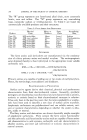
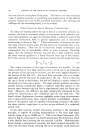
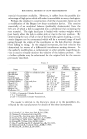
278 JOURNAL OF THE SOCIETY OF COSMETIC CHEMISTS The "R" group represents any fatty-based alkyl chain, more commonly lauric, coco and tallow. The "M" group represents any neutralizing base, commonly sodium or triethanolamine. In Table I are listed the commercially available products and their structures. TABLE I--FATTY AMINO ACID DERIVATIVES Phvsical Mono- or Fatty Neutralizing Product lfform Diadduct Chain Base Type 170 98% active flake Mono- Lauryl Sodium Type 170B 50% (aq.) solution Mono- Lauryl Triethanolamine Type 180 98% active flake Di- Lauryl Sodium Type 151 98% active flake Mono- Coco Sodium Type 157 98% active flake Mono- Tallow Sodium Type 154 98% active flake Di- Tallow Sodium Type 152 98% active flake Mono- Stearyl Sodium SYNTHESIS The fatty amino acid derivatives are manufactured via the condensa- tion of a fatty primary amine and methyl acrylate. The aminopropionic ester obtained thereby is then hydrolyzed to the appropriate water soluble carboxylic salt. RNH2 + CH2 = CHCOOCH.• -• RNHCH•CH.oCOOCH, jCH,zCH•COOCH.• RNH• -3- 2 CH• = CHCOOCH• -+ RN "'XCH•CH•COOCH.• Primary amines are capable of adding one or two moles of methylacrylate. Hence, the terminology, monoadducts and diadducts. ELECTROCHEMICAL PROPERTIES Surface active agents derive their chemical, physical and performance characteristics from their electrochemical nature. Generally, synthetic detergents are described as monofunctional and are characterized as anionic, nonionic or cationic based on their electrochemical structure in solution. It has only been in the past few years that the terms ampholytic or ampho- teric have been used to describe a new class of surface active materials. Amphoteric surfactants are polyfunctional and can exhibit anionic, cati- onic or nonionic characteristics depending on whether the system is alka- line, acidic or neutral. The fatty amino acid derivatives are almost classically simple examples of amphoteric surfactants. They contain the fatty amine functionality and the carboxylic acid functionality and as such are capable of fatty amine salt characteristics in acid systems, carboxylic acid salt characteristics in alkaline systems, and inner salt (zwitterion) or nonionic characteristics in neutral systems.

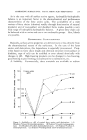
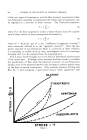
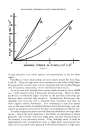
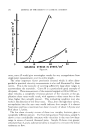
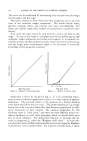
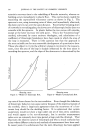
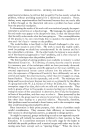
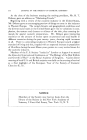
AMPHOTERIC SURFACTANTS: FATTY AMINO ACID DERIVATIVES 279 As is the case with all surface active agents, hydrophilic-hydrophobic balance is an important factor in the electrochemical and performance characteristics of the fatty amino acids. The availability of a wide variety of fatty chains (obtained readily through fractionation of natural products) and of monoadduct and diadduct forms makes possible a very wide range of hydrophilic-hydrophobic balance. A given fatty chain can be balanced with an amine and one or two carboxylic groups. Also, blends are possible. PERFORMANCE CHARACTERISTICS Basically, surface active properties are derived more or less directly from the electrochemical nature of the surfactant. In the case of the fatty amino acid derivatives, this dependence is especially pronounced. Prop- erties based on fatty chain length and chemical structure (monoadduct or diadduct, type of salt) can be modified or even altered drastically with changes in pH. High-foaming products can be changed to low-foaming, good wetting to poor wetting, nonsubstantive to substantive, etc. ,4. Solubility. Commercially, these materials are available as sodium i o •0 o o o •-•x (c) = (D) 50- 0 ppm •ater 30øC. 40 X / /i/•'x \ /I I 30 (A) [ , xx x ,/•X---•- X /• •-• ß '½x" zo- (B) •,• •,//• I i I i 2 4 6 8 I0 12 pH = (E) Figure 1.---Solubility vs. pH of typical fatty amino acid derivatives. (A) Disodium N-lauryl g-iminodipropionate. (B) Sodium N-lauryl g-aminopropio- nate. (C) Disodium N-tallow/%iminodipropionate. (D) Sodium N-tallow aminopropionate. (E) Sodium N-hydrogenated tallow/%aminopropionate.
Purchased for the exclusive use of nofirst nolast (unknown)
From: SCC Media Library & Resource Center (library.scconline.org)