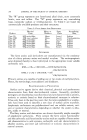
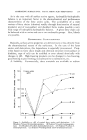
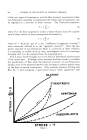
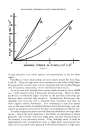
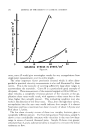
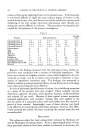
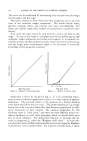
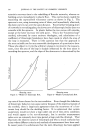
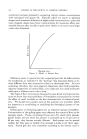
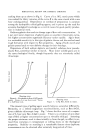
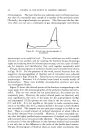
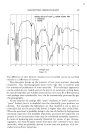
280 JOURNAL OF THE SOCIETY OF COSMETIC CHEMISTS salts (flaked solids) or triethanolamine salts (aqueous solutions). The sodium salts are quite alkaline in reaction, much as are the fatty acid so- dium soaps. The triethanolamine salt solutions are highly self-buffered at a pH of about 8. The fatty amino acids, as the sodium salts, are gen- erally quite water soluble, with the dJadducts exhibiting significantly greater solubility than the monoadducts. In addition to the influence of the fatty chain and that of the monoadduct or diadduct, pH is a very impor- tant factor in determining solubility. Typical solubility characteristics are outlined in Fig. 1. B. Compatibility. By nature of their amphoterism, the fatty amino acid salts exhibit compatibility over wide ranges with most other surfac- rants. This compatibility is of special importance in the formulation of cosmetic products. The alkyl aminopropionates are compatible com- pletely with nonionic surfactants. They are compatible with soluble fatty acid soaps in all but the higher soap-to-amino-acid ratios. They are compatible with most anionic surfactants except in relatively narrow ranges at or near equal ratios of amino acid and anionic product. One of the outstanding compatibility characteristics of the amphoteric products de- scribed here is their compatibility with cationic surface active agents. The alkyl aminopropionates do not complex or precipitate cationics as do the anionic surfactants. This compatibility is not limited to physical form, but is shown in the fact that the substantive nature or germicidal effectiveness of the cationic is not interfered with even in formulations con- taining as much as a 15 to 1 ratio of fatty amino acid salt to cationic. Hence, it is possible to formulate products exhibiting specific cationic prop- erties containing quite low concentrations of cationic surfactant. C. Foam. Sodium lauryl •5-aminopropionate represents a very high foaming synthetic detergent ideally suited to the formulation of all types of shampoos. This product, either as its sodium or triethanolamine salt, exhibits a high degree of hard water stability (clear solutions and unim- paired foaming in 300 ppm. water). Foam volume is maintained over a wide range of concentration and pH. The corresponding diadduct, di- sodium lauryl •5-iminodipropionate, is an excellent foaming agent, although exhibiting a somewhat lower overall •)aming power than the monoadduct. The coco and tallow derivatives evidence proportionately less foaming power as might be expected from their longer fatty chains. D. Substantivity. Of very great interest in the realm of cosmetic chem- istry is the affinity of the fatty amino acid molecule for the skin or hair. This affinity is most likely attributable to the similarity in amphoterism of the epidermis and the fatty amino acid. This affinity is manifested in a series of interesting and useful properties. These products exhibit sub- stantivity to the hair, thereby imparting manageability or softness. By virtue of being substantive and because of their ability to exhibit cationic

AMPHOTERIC SURFACTANTS: FATTY AMINO ACID DERIVATIVES 281 Iproperties, these amphoterics exhibit some degree of bacteriostatic action. lAirhough exhibiting a relatively high degree of substantivity to the skin, Ithe fatty amino acid derivatives are essentially innocuous to the skin. lThis mildness probably is a result of their general chemical relationship Ito the amphoterism of the skin. E. Hydrotropic Properties. The alkyl/5-iminodipropionates (diadducts) lexhibit definite solubilizing action on certain organic and inorganic ma- Irerials. The chlorinated germicides, for example, can be solubilized at •neutral pH's with the iminodipropionates. This suggests the solubiliza- ition of other poorly soluble organic materials as additives to specialized Icosmetic products. In the field of inorganic materials, considerable success Ihas been had in formulating liquid heavy duty detergent formulations •containing concentrations of polyphosphates well in excess of the normal •solubility and compatibility of polyphosphates and syndets. F. Emulsification. In general, single component surfactant systems are •not considered optimum for emulsification. Hence the fatty amino acid I derivatives are of interest in emulsification in two ways. They, being am- Iphoteric in nature, offer promise because of their inherent polyfunctionality. I In addition, their compatibility with a wide range of other products offers •multicomponent systems heretofore impossible. The coco and tallow- I based amino acids are particularly interesting in emulsification problems. G. General Properties. Aside from the specific properties discussed so far, the versatility of these amphoterics extends to the surface active properties of detergency, wetting, surface and interfacial tension lowering, etc. Combinations and judicious use ofmonoadducts, diadducts and vari- ous fatty chains, coupled with pH control, allow selection of virtually any degree of effectiveness desired. Controlled cleaning and controlled wet- ting are possible. Surface or interfacial tensions can be adjusted. Another somewhat unusual property of interest to cosmetic chemists is corrosion inhibition. These amphoterics have demonstrated their ap- plicability as corrosion inhibitors in aqueous oil systems at concentrations as low as 5 ppm. Even at relatively high aqueous concentrations (such as encountered in a typical cosmetic formulation), these products are vir- tually noncorrosive, attacking iron only very, very slowly Hence, the fatty amino acid derivatives are suggested as prime ingredients in aerosol formulations. AP P LICATION s By virtue of its extreme versatility, the amphoteric molecule offers po- tential applicability to virtually any cosmetic formulation wherein specific surface active properties are required. The family of products possible through the various fatty chain lengths, the monoadducts, and the di- adducts, allows the selection of a particular product to perform a specific
Purchased for the exclusive use of nofirst nolast (unknown)
From: SCC Media Library & Resource Center (library.scconline.org)