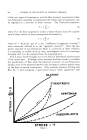
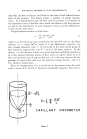
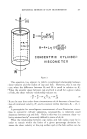
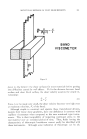
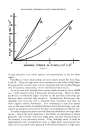
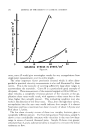
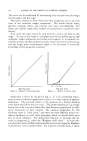
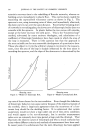
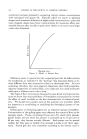
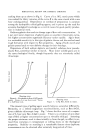
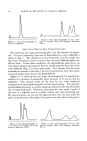
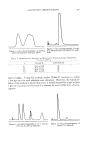
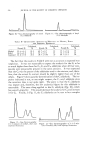
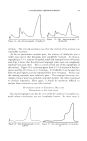
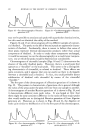
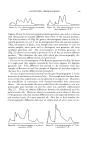
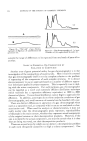
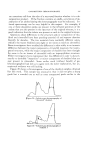
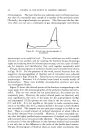
RHEOLOGICAL REVIEW FOR COSMETIC CHEMISTS 31I to all types of bodies having plastic flow without regard to a specific defini- tion. Where a need exists for knowledge of the time-recovery factor in a commercial product, an instrument which is capable of controlled variation of rates of shear must be employed and the double curve is required to de- fine the rheological change during shearing. tseudoplasticflow starts out like Newtonian flow and then becomes more plastic in nature, as shown in Fig. 4. Notice that there is no "yield value" concept in this case, since flow begins at a very small shearing stress. The class of pseudoplastics includes mostly resinous materials and compounds having long chain molecules, either alone or in solutions of sufficiently high concentration. The following explanation of the pseudoplastic behavior in resinous products has been suggested (3). The long chain molecules are in a random state of orientation at rest. At low shear rates there is little or no tendency to align themselves in the direction of flow which corresponds to the lower portion of the curve. As the rate of shear increases, however, a regular alignment of molecules starts which reduces the frictional resist- ance between parallel chains. The curve begins to turn upward as the resistance to increasing rates of shear diminishes. This is, of course, a speculative type of explanation rather than strictly factual. Consider- able evidence has been advanced to show that the lower part of the curve is actually non-linear and therefore non-Newtonian. Another note of interest is that at high rates of shear, some resinous materials have been shown to give hysteresis loops in the upper portion of the curve only, though the up- and down-curves coincide over the rest of the range. There is one other generally recognized type of flow which is not New- tonian. Materials which tend to become more viscous when they are sheared and to revert to a flowing state at rest are called all/atari/. A dilat- ant flow curve is shown in Fig. 5. The consistency curve at first glance appears to be the reverse of a pseudoplastic one. The original use of the term dilatancy was based on the dilation and increase in rigidity of closely packed masses of fine particles, such as sand, when disturbed. The famil- iar example is wet sea sand. When it is disturbed by stepping on it, the area appears to dry off. The explanation is postulated that the particles of a dilatant system settle to a state of minimum voids, and agitation causes them to rearrange to a larger void volume, causing any free suspending liq- uid to be drawn into the mass. Actually, the dilation of the mass on shear- ing is not considered a primary requirement today, since it is considered likely that materials exist with consistency curves of this type which do not show volume changes (4). Dilatancy occurs most frequently at relatively high pigment volume con- centrations and usually with small particle sizes. Aging of pigment dis- persions has a strong effect, though the change in dilatancy with aging time is not predictable for different cases. Particle shape is important, and good

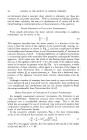
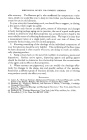
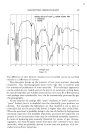
312 JOURNAL OF THE SOCIETY OF COSMETIC CHEMISTS correlation has been obtained in comparing critical volume concentrations with calculated void spaces (4). Particles which are nearer to spherical shapes reach maximum dilatancy at higher solids concentrations cubes and more irregular shapes have lower concentrations for maximum effect, pre- sumably because they are able to pack down closely at rest and create larger voids when disturbed. Shearing stress Figure 5.--Model of dilatant flow, Dilatancy seems to require that the suspended particles be deflocculated the mechanism, as indicated in the "packing" idea discussed above, is en- tirely different from that assumed tk)r plastic or thixotropic flow. It is not surprising, therefore, that some pigment dispersions show both properties. Aqueous suspensions of carbon black, zinc oxide and iron oxide are known which give a dilatant curve with a loop. The types of flow we have just discussed in some detail are important be- cause we know that many problems of formulation and production involve the effect of small variables on the flow characteristics of industrial prod- ucts. We should next consider some of the common raw materials which are important in establishing or modifying the rheological pattern of our products. Gelling agents or thickening agents are an important group of modifiers. Concentration of the gelling agent may influence the nature of flow, as for example starch. Pastes containing 10 per cent dry starch form pseudo- plastic bodies and yet when the amount is increased up to 35 per cent or 40 per cent, they become entirely dilatant. Such pastes can be poured readily, but they seem to solidify if an attempt is made to stir them vigor- ously. Starch gels also vary somewhat according to the history used in
Purchased for the exclusive use of nofirst nolast (unknown)
From: SCC Media Library & Resource Center (library.scconline.org)