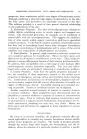
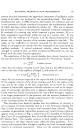
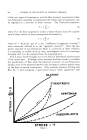
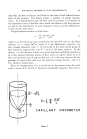
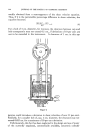
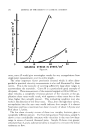
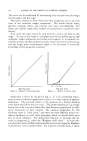
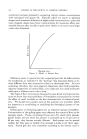
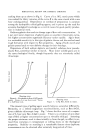
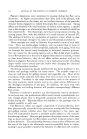
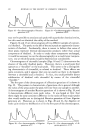
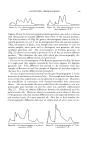
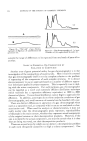
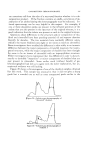
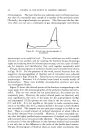
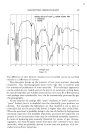
RHEOLOGICAL REVIEW FOR COSMETIC CHEMISTS 313 making thein up as shown in Fig. 6. Curve ,q is a 10% starch paste which was cooked for thirty minutes, while curve B is the same starch with a one hour cooking period. Dependence on method of preparation is common among the hydrophilic colloid gelling agents, and it points up the need for accurate theological knowledge as a control means for good quality produc- tion in industrial work. Ordinary gelatin also tends to change type of flow with concentration. A 4 per cent water dispersion of gelatin gives an excellent thixotropic curve, but higher concentrations approach dilatancy rather rapidly. Again there is a noticeable sensitivity in the type of gelatin chosen and the method used in gel formation with respect to flow properties. Aging of both starch and gelatin pastes leads to very definite changes in their theology. Dispersions of both sodium alginate and methyl cellulose show pseudo- plastic flow, somewhat similar to starch. Most water soluble gums are in the same theological family, though frequently they are mistakenly called thixotropic. Sheanng stres Figure &--Pseudoplastic flow of 10% starch pastes. Curve .4 = one hour cook. Curve B = half hour cook. Shearing stress Figure 7. 2.5% Ben-A-Gel in water. The mineral type of gelling agent usually behaves somewhat differently. Bentonite, or a refined magnesium montmorillonite, such as Ben-A-Gel, gives a definite thixotropic loop. Fig. 7 shows the flow curve of a suspen- sion of 2.5 per cent Ben-A-Gel in water. There is no evidence of any other type of flow at higher concentrations up to a virtually solid gel. Assuming the proper minimum work is done initially to forin the gel, no effect is no- ticed from variations in temperature or milling times on the theological properties. Stability on standing is a remarkable feature since duplicate measurements can be obtained after extremely long periods of time.

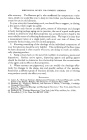
314 JOURNAL OF THE SOCIETY OF COSMETIC CHEMISTS Pigment dispersions were mentioned in passing during the flow curve discussion. At higher concentrations they often tend to be dilatant, with strong dependence on the shape, size and surface character of the particles. At lower levels of pigment to vehicle thixotropic flow is often noted. Strong effects are obtained with small amounts of surface active agents a specific case is the change in an ultramarine blue dispersion in mineral oil which has been reported (4). The thixotropic curve lost its loop almost entirely, be- coming plastic flow, with the addition of a small amount of Aerosol OT. The addition of lecithin to a suspension of quartz in water which is origi- nally nonthixotropic changes it to a plastic and thixotropic material (5). These examples are useful to illustrate the powerful nature of such addi- tives. They are double-edged weapons, and we suspect that at times an undesirable consequence in flow properties, especially with aging, which was not foreseen has caused many headaches in industrial cosmetic products. Our own reason for advocating agents, such as Ben-A-Gel where modifica- tion of flow properties or the state of pigment flocculation is desired, is based on their inert behavior they do not affect surface tension, and any in- fluence on pigment fiocculation seems to be a mechanical matter of holding larger vehicle layers around particles rather than changing the character of the vehicle-particle in terrace. Thickening nonaqueous liquids satisfactorily has posed problems in uni- formity and package stability for many years. The metallic soaps as a class are well known for gelling mineral and vegetable oils. Most of the anomalous results obtained with them from time to time can be traced to two sources. Variables in the soaps themselves, such as the amount of free acid, moisture, metal content and so on, cause serious differences in the rheological properties of the gels. In addition, the same soap with different heat and milling histories will produce correspondingly different flow curves. Resinous or polymeric products are also frequently used as thickeners. As we have seen, the predominant effect tends toward a pseudoplastic sys- tem, though plastic flow is frequently associated with such polymers as bodied drying oils. Reproducibility and stability in the package must be studied carefully in each case. The Bentones, which are organic compounds of montmorillonite, have been phenomenally successful in the protective coating field for thickening and gelling various vehicles since their introduction a few years ago. They will undoubtedly become a similarly useful adjunct to the cosmetic formulating industry. Bentone gels produce thixotropic curves of the same type as shown previously for Ben-A-Gel, and there is special value in their uniform behavior. The relationship between concentration of Bentone and the area of the loop in the thixotropic curve is essentially linear in nature, making it quite possible to predict the behavior of a Bentone with comfort-
Purchased for the exclusive use of nofirst nolast (unknown)
From: SCC Media Library & Resource Center (library.scconline.org)