J. Soc. Cosmetic Chemists, 19, 159-162 (Mar. 4, 1968) Antibacterial Synergism in Comprised of Halogenated Bisphenols and Substituted Systems Ureas* ROBERT E. CASELY, B.S., JAMES BROWN, JR., M.S., and DAVID TABER, Ph.D.t Synopsis--Several antibacterial agents currently are being used in toilet soaps to inhibit the growth or bacteria on skin. The major brands of soap contain binary or ternary germicide systems which exhibit synergistic activity. This paper reports the finding of similar en- hanced activity for combinations of hexachlorophene with a number of substituted ureas other than the trichlorocarbanilides. INTRODUCTION A previous publication (1) described the enhancement of anti- bacterial activity by combining halogenated bisphenols with halogenated aromatic anilides or with halogenated earbanilides. Specifically, syn- ergism was found for both 3,4,4'-triehloroearbanilide and 3,3',4-tri- ehloroearbanilide with hexaehlorophene, the sulfur analogue of hexa- chlorophene, tetraehlorophene, bithionol, and 2,2'-thiobis(4-ehloro,6- methylphenol). Other synergistic combinations comprised 2-hydroxy- $-chlorobenzoie add 3',4'-diehloroanilide and 2-hydroxy-5-ehlorobenzoie acid 4'-ehloroanilide in mixtures with hexaehlorophene, the sulfur ana- logue of hexaehlorophene, tetraehlorophene, and bithionol. These syner- gistic pairs comprising soap-active germicide systems with enhanced activity are covered by a U. S. and other patents (2). Subsequently, other patents have been issued in this area claiming synergistic activity in soap for •0mbinations 6f WelI-kfiown 6ommercially availab16 germi-- cides. Such issued patents cover binary mixtures of 4,4'-diehloro-3- * The term synergism as used in this paper means an antibacterial effect greater than the sum of the antibacterial effects of the separate components. t Armour Grocery Products Company, 100 S. Wacker Drive, Chicago, Ill. 159

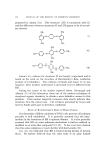
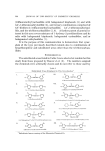
160 JOURNAL OF THE SOCIETY OF COSMETIC CHEMISTS (trifluoromethyl)carbanilide with halogenated bisphenols (3) and with 3,4',5-tribromosalicylanilide (4), and ternary combinations comprised of 4,4'-dichloro-3-(trifluoromethyl)carbanilide, 3,4',5-tribromosalicylani- lide, and the trichlorocarbanilides (5, 6). A further patent of general in- terest in this area covers mixtures of 1-hydroxy-2-pyridinethione and its salts with halogenated bisphenols, halogenated carbanilides, and/or halogenated salicylanilides (7). It is the purpose of this communication to demonstrate that syner- gism of the type previously described extends also to combinations of hexachlorophene and substituted ureas other than the trichlorocarban- ilides. EXPERIMENTAL The substituted ureas listed in Table I were sdected at random for this study from those prepared by Beaver et al. (8). The numbers assigned the chemicals were arbitrarily chosen and do not refer to those used by Table I Substituted Ureas Employed in This Investigation a I. CI, • •CI CI--•---NHCNH---• 3,3', 4-Trichlorot hioca r banilide '3,4,4' -Trichlorothiocarba nilid e III. Clx • CI-•NHCNH-• 3, 4-Dichlorocar ba nilide IV. C,,• • •C, CI • •--•NHCNH---•x• x C1 3,3 4,4'-Tetra chlorocarbanilide V. 0 .CI C1 CNH CI CzH• 1-(4- Chlorophenyl)- 1-et hyl'3,(3,4-dichlorophenyl) urea VI. CI,• • ,Br 3.'-Br omo-3,4- dichlorothioca rbanilide 3'-Bromo-3,4-dichlorocarbanilide VIII. CI, 0 II CI- ---•NHC NH--•0CH, 3, 4-Dichloro-4'-methoxycarbanilide CH0 3-(4-C hlorophenyl)q-formyl-l-(3,4-dichlorophenyl) urea X. 0 •CI 4-(3,4-Dichlorophenylcarba moyl) morpholine CH2CH=CH 2 1-Allyl-3-(4-chlorophenyl)-l-(3, 4-dichlorophenyl) urea XII. C1 x 0 0 /CI CI • •X•NH CN H NHCN H•C1 1,6-Bis (3,4-dichlorophenyl) biurea Substituted ureas courtesy of the Monsanto Chemical Co.
Purchased for the exclusive use of nofirst nolast (unknown)
From: SCC Media Library & Resource Center (library.scconline.org)