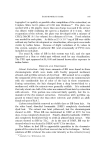
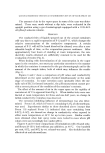
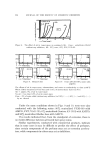
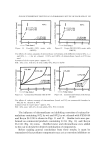
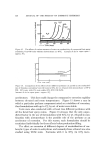
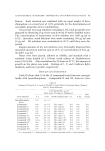
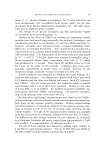
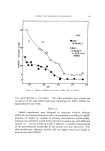
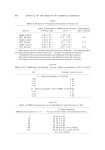
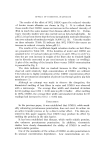
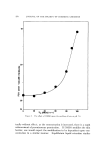
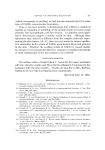
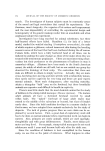
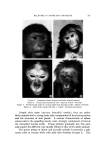
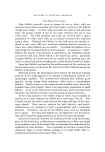
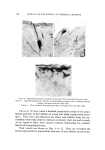
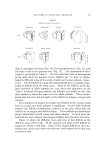
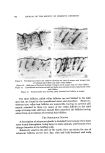
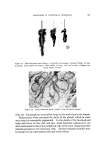
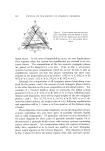
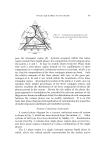
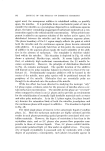
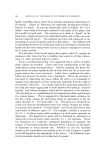
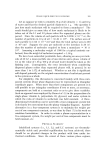
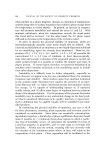
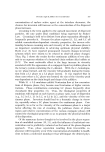
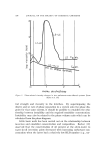
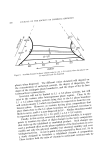
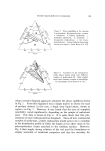
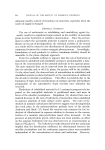
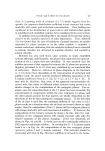
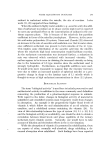
BALDNESS IN NONHUMAN PRIMATES 181 Table I NUMBER AND LENGTH OF HAIR FOLLICI-E Above eyebrow Forehead (bold) Trans•honal Ha*ry pormtal 19 O5 • 0 __ Above eyebrow Forehead (Nonbald) Hairy parielal (Fig. 9) and upper forehead (Fig. 10), the transitional area (Fig. 11), and the hairy scalp in the parietal area (Fig. 12). The summation of these results is presented in Table I. The first and third sets of trichograms in the table show the number of hair follicles per 1.6 mm 2 of surface found in different areas of the scalp of adult and young animals, respec- tively. The foreheads of young and adult animals have a scantier popu- lation of follicles than the other areas. Most of the follicles in the alo- pecic forehead of adult animals are very short and quiescent in the "hairy" forehead of young animals, the follicles vary widely in size, but their number is about the same as in the adult animals. These tricho- grams also show the actual lengths of the follicles in telogen, anagen and catagen. The proportion of anagen to telogen hair follicles in the various scalp areas in young and adult animals is significant. In the bald forehead telogen hair follicles predominate, whereas in the area about half the follicles are in anagen and half in telogen. These follicles are distributed almost identically in both young and adult animals. In both cases the forehead has more telogen than anagen follicles than the other two areas. Figure 13 shows the different types and sizes of hair follicles in the different areas of the scalp. In the parietal area most of the follicles in anagen are about 2 mm long. Some of the anagen follicles in the tran- sitional area, in the area above the eyebrow, and in most of the bald area are about 1 ram.

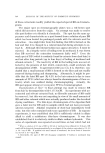
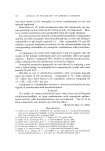
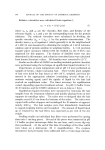
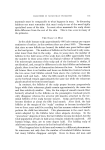
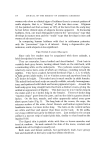
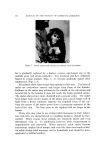
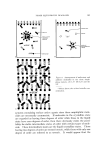
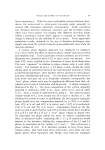
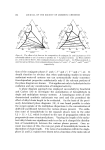
182 JOURNAL OF THE SOCIETY OF COSMETIC CHEMISTS .- •X%• •'.•%-5'•E,:' '&½• •: •-&•r '"' %.- ...... Fifure 9. •orehead just above the eyebrow sho•ing one each of anagen and telogen type of terminal hair follide &nd so•e yellus fMlides Figure 10. Bald area of forehead showing 3 telogen and 2 &nagen type of vdlus follicles Fifure 11. Tr•sitional •ea between bald &nd haiw areas show•g 2 each of guard and vellus hair follicles Fi½ure 12. Parietal haiw area showing many termi. al hair follicles in The short follicles, called veilus follicles, are not limited to the bald area but are found in the transitional areas and elsewhere. However, whereas true vdlus hair follicles are nonerectile, having no arrector pill muscle attached to them (4), many of the vellus follicles in the bald scalp of stump-tails still have muscle fiber attached, the follicles having arisen from an involution of terminal hair follicles. THE SEBACEOUS GLANDS A description of sebaceous glands is included here because they show some sexual dimorphism, being larger in male animals, and because they change character in the balding scalp. Rdatively small in the skin of the trunk, they can attain the size of sebaceous lollides on the face, lips, chin and bald forehead, and scalp
Purchased for the exclusive use of nofirst nolast (unknown)
From: SCC Media Library & Resource Center (library.scconline.org)