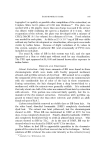
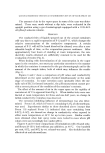
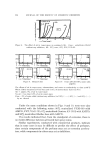
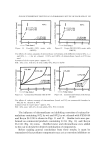
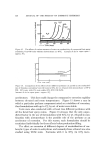
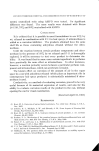
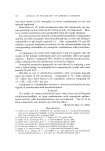
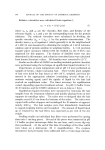
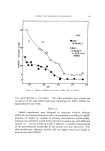
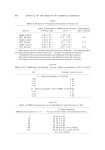
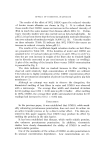
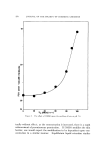
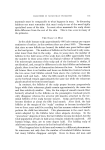
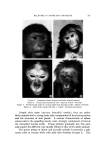
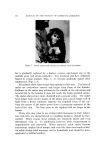
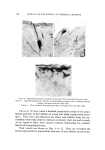
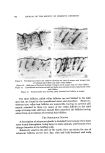
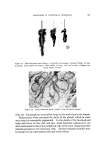
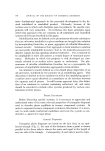
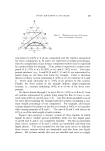
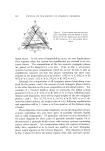
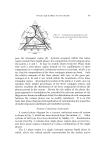
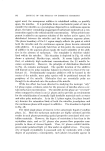
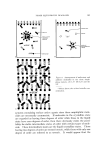
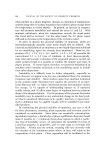
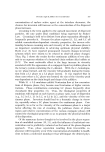
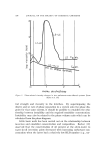
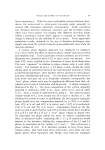
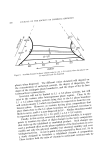
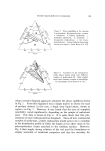
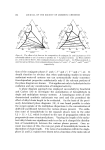
BALDNESS IN NOXHUMAN PRIMATES 183 Figure 13. Microdissected hair follicles: on the left is an anagen, terminal follicle, 2.2 mm in length in the middle an anagen, yellus follicle, 1.2 ram and on the right a telogen, ter- •ninal follicle, 0.8 mm Figure 14. Large sebaceous gland "follicle" from the bald forehead (Fig. 14). The glands are everywhere larger in the male than in the female. Melanocytes often surround the ducts of the glands, which in some areas may be remarkably pigmented. In the glands of the forehead and scalp and those on the chin and lips, small dendritic melanocytes are often insinuated between the peripheral cells of the acini, imparting some melanin granules to the sebaceous cells. Distinct melanin granules may be found even in some mature cells and in the sebum.

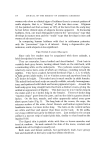
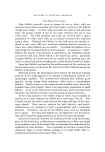
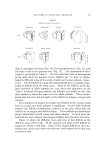
184 JOURNAL OF THE SOCIETY OF COSMETIC CHEMISTS DISCUSSION Since there is no structural demarcation between the forehead and the scalp, even in man, except for the presence of terminal hairs, a "naked" forehead indicates that alopecia has occurred. When the hairline re- cedes, as it does in most human beings, there is no way of differentiating between what was originally forehead and what was scalp. Thus, every human being and every adult stump-tail is partially bald. Stump-tails, even in those scalp areas with an apparently dense pelage, have an appreciable number of vellus hair follicles. Further- more, in some males, probably older animals, baldness advances to the occiput and beyond. The presence of naked expanses of skin on the anterior axillary border and the inguinal folds, the sparse pelage of the ventral areas and the presence everywhere of vellus type follicles, cou- pled with the development of true alopecia, suggest that the stump- tailed macaques may be undergoing a general loss of hair cover. The luxuriant growth of hairs on the occiput, nape, back and shoulders, and the goatee are no doubt protective devices, but they are also definitely ornamental. These phenomena may be comparable to those that might have taken place in man as he evolved from a heavily furred crea- ture. Aside from theoretical implications, the gradual diminution of the size of the follicles of the forehead and scalp in stump-tailed macaques is similar to what takes place in human infants at the "hair line" and later when pattern alopecia develops. Another similarity between the bald human scalp and the bald scalp of the stump-tails is the presence of special nerve end-organs underneath the epidermis. These are identical with those described by Montagna and Giacometti in man (5) and may arise from the follicle end-organs released when the follicles became atrophied. These structures are not present in young animals. It is significant that the distribution of hair follicles in the scalp is almost identical in young nonbald animals and in adult ones. In both groups, hair follicles are normally least numerous in the forehead. Since baldness is the result of a transformation of terminal hair fol- licles to vellus ones, something must be said about these follicles. No- back (6) identified vellus hairs as those that grow from follicles having no erectile tissue. Danforth (7) believed that the vellus hair follicles from the forehead undergo no changes from childhood to old age. During the development of baldness and with the onset of old age, however, vellus hair follicles vary greatly in size, depending on their location (8, 9, 10).
Purchased for the exclusive use of nofirst nolast (unknown)
From: SCC Media Library & Resource Center (library.scconline.org)