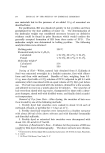
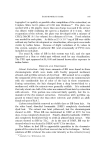
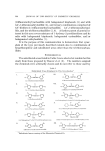
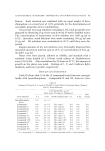
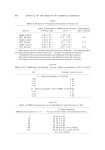
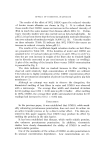
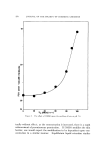
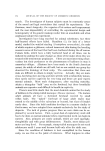
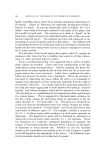
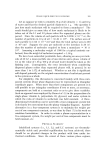
ANTIBACTERIALSYNERGISM BISPHENOLSAND SUBSTITUTED UREAS 161 Beaver. Each chemical was combined with an equal weight of hexa- chlorophene at a total level of 1.0% germicide for the determination of synergistic properties of the combinations. Ten percent test soap solutions containing 1.0% total germicide were prepared by dissolving 10 g of test soap in 90 ml of sterile distilled water. The concentration of bacteriostat in this solution was 1000 ug/ml or 0.1% thereafter, serial dilutions were made containing 100/•g/ml and 10/•g/ml. All solutions were maintained at (•0 øC until they were dis- pensed. Aliquot amounts of the test solutions were tt,•oroughly dispersed into measured amounts of nutrient agar at 50 øC at concentrations of 0.05 ug/ ml and 0.1 •g/ml. Plates were then poured, allowed to solidify, and streaked with a standard 4-ram loopful of a 24-hour broth culture of Staphylococcus aureus FDA 209. After incubation for 24 hours at 37 øC, the amount of growth on the plates was rated. Ratings of 1, 2, and 3 indicate light, moderate, and heavy growth, respectively. RESULTS AND DISCUSSION Table II shows that 10 of the 12 compounds tested interact synergis- tically with hexachlorophene. Compounds X and XI, however, have Table II Amount of Growth of S. aureus FDA 209 on Agar Plates Containing Equal Aliquots of 0.1% Soap Solutions Total Germicide, ug/ml Basis Agar (Platings in Duplicate) a Syn- Test chemical I). 1 0.05 50/50 Combinations 0.1 0.05 ergism Hexachlorophene 0-0 lq- lq- (Hex.) Compound I 0-0 I q- l q- Hex. plus I 0-0 0-0 Yes Compound II 0-0 lq- lq- Hex. plus II 0-0 0-0 Yes Compound Ill 0-0 lq- lq- Hex. plus III 0-0 0-0 Yes Compound IV 0-0 24- 2q- Hex. plus IV 0-0 0-0 Yes Compound V 0-0 2q- 2q- Hex. plus V 0.0 0-0 Yes Compound VI 0-1q- 3q- 3q- Hex. plus VI 0-0 0-0 Yes Compound VII 0-0 3q- 3q- Hex. plus VII 0-0 0-0 Yes Compound VIII 0-1q- 2q- 2q- Hex. plus VIII 0-0 0-0 Yes Compound IX 0-0 l q- l q- Hex. plus IX 0-0 0-0 Yes Compound X 0-0 24- 2q- Hex. plus X 0-0 2q-2q- No Compound XI 0-0 lq- lq- Hex. plus XI 0-0 2q-lq- Xo Compound XII 0-0 lq- lq- Hex. plus XII 0-0 0-0 Yes '• 0 = no growth 1 = light growth 2 = moderate growth' and 3 = heavy growth.

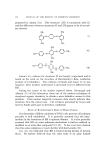
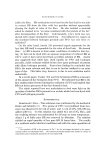
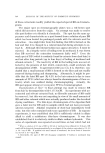
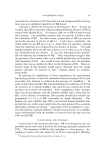
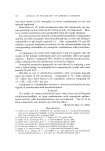
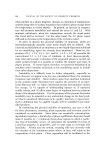
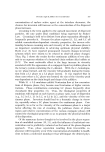
162 JOURNAL OF THE SOCIETY OF COSMETIC CHEMISTS not been shown to be synergistic in these combinations by the test method employed. Since Beaver's (8) work encompasses some 200 compounds, one can- not generalize on the results of the testing of only 12 compounds. How- ever, certain conclusions seem permissible from the results obtained. It is obvious that the isomeric trichlorothiocarbanilides (compounds I and II) are both synergistic with hexachlorophene, as were the trichloro- carbanilides as previously reported (1). Also, compounds VI and VII indicate a general similarity in activity for the thiocarbanilides and the corresponding carbanilides in synergistic combinations with hexachloro- phene. A comparison of results with compounds I and VI suggests that the nature of the halogen substituents does not materially affect synergistic activity. Further, compound VIII, which is a (dichloro)methoxycarba- nilide, indicates that all substituents need not be halogen. Synergistic properties apparently are not altered by replacing a urea with a biurea bridge, as exemplified by comparing the results with com- pounds IV and XII. Whether or not N-substitution interferes with synergism depends upon the nature of the substituent: compounds V (N--C2Ha) and IX (N--CHO) have been shown to be synergistic, whereas compound XI (N--CH2---CH•CH•) has not. Compound X, a morpholine derivative, also was not found to be syn- ergistic in combination with hexachlorophene. SUMMARY The ability of various substituted ureas (other than the well known trichlorocarbanilides) to form combinations with synergistic antibac- terial activity with hexachlorophene was investigated. Ten of 12 of these compounds were found to provide this effect. (Received May 31, 1967) REFERI•NCES (1) Noel, D. R., Casely, R. E., Linfield, W. M., and Harriman, L. A., Antibacterial synergism between the halogenated biphenols and the halogenated aromatic anilides and carbani- lides, Appl. Microbiol., 8, 1-4 (January 1960). (2) Casely, R. E., and Noel, D. R., U.S. Patent 3,177,115 (April 6, 1965). (B) Reller, H. H., and Jordan, W. E., U.S. Patent 3,084,097 (April 2, 1963). (4) Reller, H. H., and Jordan, W. E., U.S. Patent 3,256,200 (June 14, 1966). (3) Procter and Gamble Co., Belgium Patent 618,630 (September 28, 1962). (6) Procter and Gamble Co., British Patent 1,009,032 (November 3, 1965). (7) Judge, L. F., and Kooyman, D. J., U.S. Patent 3,281,366 (October 25, 1966). (8) Beaver, D. J., Roman, D. P., and Stoffel, P. J., The preparation and bacteriostatic activity of substituted ureas, J. Am. Chem. Soc., ?9, 1236-1245 (March 1957).
Purchased for the exclusive use of nofirst nolast (unknown)
From: SCC Media Library & Resource Center (library.scconline.org)