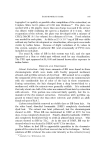
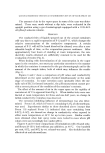
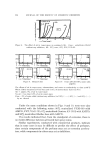
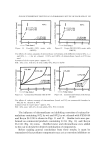
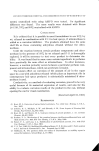
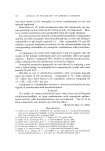
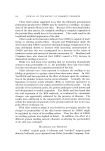
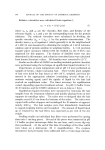
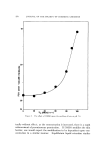
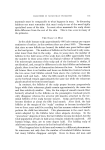
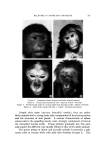
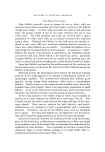
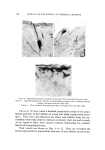
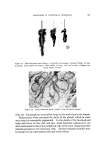
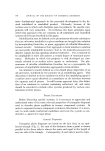
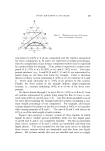
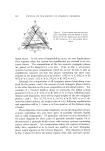
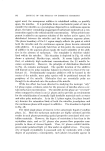
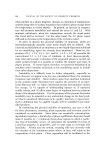
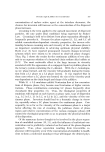
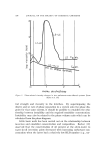
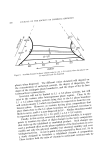
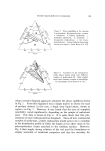
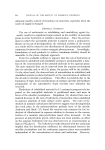
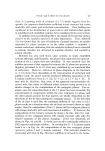
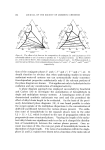
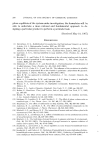
BALDNESS IN NONHUMAN PRIMATES 177 ß i i'*•'• '' '-• ' .., .. :.. '•,. •: •. . ': .• .- :: * ::.... .:?5.:.: '::?' '2 •'• 1 ..... ,•'? . : • -.•.2 •, 2?" ..... o F•gure 1. Immature female animal with fully haired forehead Figure 2. Young nmle stump-tail with "sparsely haired" forehead F, gure 3. Forehead and scalp of a young adult male showing nearly "naked" forehead Figure 4. Adult male stump-tail with a "naked" forehead and muzzle Despite their name (speciosa, beautiful, comely), they are rather filthy animals with a strong body odor compounded of fecal encrustation and the secretion of skin glands. A curious characteristic of infant stump-tails is the appalling musky odor, strongly reminiscent of that of the unwashed human axilla. Young animals gradually lose this aura and acquire the different, but equally offensive odor of the adult animals. The sparse pc!age of infant and juvenile animals is generally a pale russet color or creamy white with pink skin showing through it. This

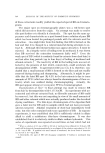
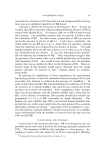
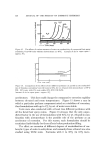
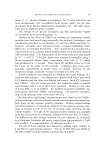
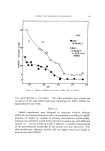
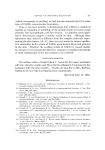
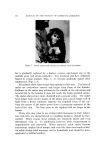
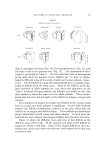
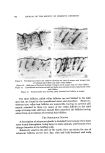
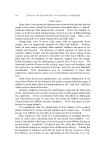
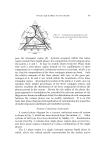
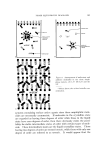
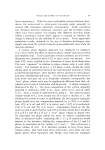
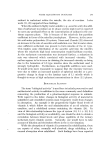
178 JOURNAL OF THE SOCIETY OF COSMETIC CHEMISTS Figure 5. Docile young male enjoying an embrace from his handler fur is gradually replaced by a darker, coarser, and longer one as the animals grow and attain maturity. The forehead and face, definitely haired in young animals (Figs. 1, 2), become gradually naked after adolescence (Figs. 3, 4). All animals show some sexual dimorphism in their hair. The hairs of males are everywhere coarser and longer than those of the females. Baldness in the males may advance to the middle of the calvarium and beyond but in the females it does not reach the fronto-parietal suture. The males always have more dandruff and a greasier scalp. The males have longer hairs on the tragus of the pinna and a much longer tuft of hairs from a fleshy eminence opposite the scaphoid fossa of the ear. Only the goatee of the males grows from a caruncular eminence at the base of the chin. The bare areas in the inguinal fold are larger in the female. Those who may plan to use stump-tailed macaques in their labora- tory but who are inexperienced in handling monkeys should be fore- warned. When young, these animals are relatively docile and even affectionate (Fig. 5). In adulthood, however, their temperament is unpredictable and mercurial. When annoyed, adult males become treacherous, display fits of temper, and even bite their own hands or feet. An adult stump-taled macaque can be formidable and should be man- aged only by skillful handlers.
Purchased for the exclusive use of nofirst nolast (unknown)
From: SCC Media Library & Resource Center (library.scconline.org)