J. Soc. Cosmetic Chemists, 19, 149-158 (Mar. 4, 1968) Conductometric Testing and Corrosion Study of Nonanhydrous Ethanol Systems for Hair Spray STANLEY BOHAC, M.S.* Presented before the Midwest Chapter, April I l, 196'7, Chicago Synopsis---It was found that nonanhydrous ethanol in cmnbination with nitromethane gives the same life stability in most hair spray products as anhydrous ethanol. Formulations with different resins, various amounts of air in the cans, and various concentrations of nitromethane with nonanhydrous (95 and 90% by wt) and anhydrous ethanol are compared at elevated (48øC = 120øF) and at room temperatures. A conductometric method, which is very useful for testing in the hair spray field, is used for evaluation of this broad corrosion study. INTRODUCTION The purpose of this study was to clarify certain pertinent questions and to verify the possible use of nonanhydrous ethanol with nitromethane in aerosol hair spray in combination with Freon 11. From the standpoint of corrosion, different resins (PVP/VA E-735, } Resyn 25-1310, :• VEM, õ Gantrez AN-3152, [I shellac base, • and also ethanol alone) were compared. Ethanol (40-A) and Freon 12/11 as a solvent and propellent, respectively, * Barr-Stalfort Co., Div. Pittway Corp., Niles, Ill. 60648. t PVP/VA, Antara Chemicals, Division of General Aniline and Fihn Corp., New York, N.Y. :• Resyn is a registered trademark of National Starch and Chemical Corp., Resin Division, New York, N. Y. õ VEM is a registered trademark of Barr-Stalfort Co., Div. Pittway Corp., Niles, Ill. [I Gantrez AN, General Aniline and Fihn Corp., Dyestuff & Chemical Division, Ne•v York, N.Y. 41Shellac Base, The Mantrose Co., Division of Millmaster Chemical Corp., New York, N.Y. 149

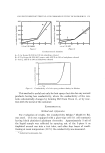
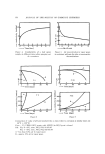
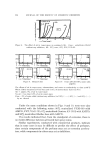
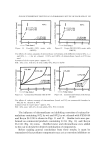
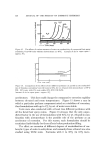
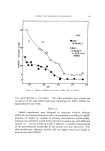
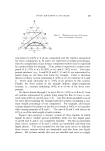
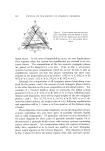
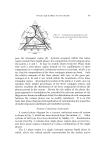
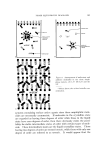
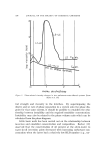
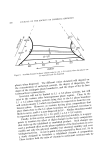
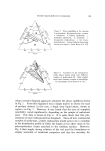
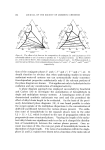
150 JOURNAL OF THE SOCIETY OF COSMETIC CHEMISTS were used. Each of these formulas was tested with various amounts of air in 8-oz, three-piece tinplated cans. Results of these combinations of variables were then compared with those obtained with the same for- mulations containing nitromethane as a corrosion inhibitor. The very same tests were also performed with nonanhydrous ethanol, both with and without nitromethane, to determine the effect of a certain amount of water on free radical reaction between Freon 11 and ethanol. For- mulas with a different amount of nitromethane, as well as formulas with perfumes, were also employed. To accelerate the reaction, elevated temperature (48øC = 120øF) was used. Certain formulas were also tested at room temperature for shelf life comparison. Earlier studies related to corrosion are listed in the references (1-14). CONDUCTOMETRY The prindple of this method is to measure conductance as the re- ciprocal of resistance using a Wheatstone Bridge. Conductometry, a useful analytical tool in aerosol technology, was found adequate to evaluate the systems given below. The acid numbers of unneutralized as well as neutralized, carbox- ylic-type, hair spray resins can be determined (Fig. 1). The purity of an amine, or the amount of it, used for neutralization of hair spray resin, can also be determined (Fig. 2). By titrating two iden- tical samples of neutralized resin, one with NaOH and the other with HC1, the degree of neutralization of carboxylic groups can be calculated. If the slope of the line before neutralization is negative (in titration of the sample of neutralized carboxylic-type resin with HC1), it shows a strong base was used for neutralization. Can corrosion of a hair spray product which has ethanol and Freon 12/11 is caused by HC1 formed by decomposition from Freon 11. This is indicated by increased conductivity of the solution (Fig. 3). The amount of HC1 could be titrated conductometrically, but, for practical purposes, measuring the conductivity of samples at certain time inter- vals is preferable. One advantage of this method is that small samples (approximately 3 ml) can be used each time and contents of the same can may be tested repeatedly, providing a chronological evaluation of the condition of the product over a required period of time, without opening the container. Another, even greater, advantage of conductometry is that the corrosion results are expressed in numerical values, which other known methods do not provide.
Purchased for the exclusive use of nofirst nolast (unknown)
From: SCC Media Library & Resource Center (library.scconline.org)