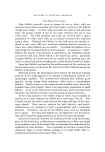
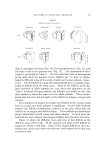
BALDNESS IN NONHUMAN PRIMATES 175 mammals must be comparable to what happens in man. In discussing baldness one must remember that man's scalp is one of the most highly specialized areas of his skin. In most other mammals the scalp shows little difference from the rest of the skin. This is true even in many of the primates. THE SCALP OF MAN In the adult human scalp approximately 600 hairs emerge per square centimeter of surface in the newborn there are about 1000. This means that since no new follicles are formed, the initial ones grow farther apart as the head grows. The number of follicles on the forehead is only some- what lower than that in the scalp. Also, in young men, the number of follicles in the bald areas of the scalp does not differ appreciably from the number in those areas where no clinical evidence of baldness exists. The microscopic anatomy of the scalp and of the forehead is similar, if not identical, and, except for differences in the hair follicles and sebaceous glands, there is no line of demarcation between the two. In four-month old fetuses there is no hairline and hence no distinctive feature between the two areas hair follicles extend from above the eyebrows over the cranial vault and back. After the fifth month of fetal life, the follicles on the forehead remain approximately the same size while the sebaceous glands attached to them become larger. In contrast, the follicles of the scalp proper become progressively larger while their sebaceous glands remain approximately the same size and thus relatively smaller. Also, the few wisps of smooth muscle fiber formerly attached to the follicles on the presumptive forehead practi- cally disappear whereas the arrector pili muscles attached to the ter- minal follicles of the scalp become stouter. Scalp and forehead, then, become distinct at about the fifth fetal month. After birth, the hair follicles at the margin of the "scalp" continue to become involuted for two or three years until the receding hair line assumes whatever familial pattern the child has inherited. This phenomenon is the exact mech- anism adapted by the follicles later when alopecia develops. In the "precocious" alopecia of men, the hair follicles become involuted, but the total population of hairs in bald areas remains relatively unaltered. All human beings, then, are to some degree bald. The balding scalp of adult men repeats the process in the forehead of infants. What happens later in old men and women is a different phenomenon. In senescence not only does the number of involuted follicles increase but many follicles disappear outright. Even in those old men and

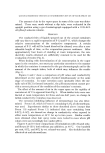
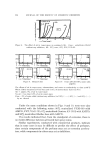
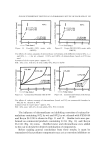
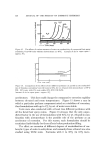
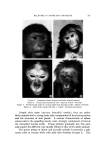
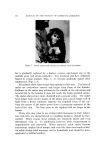
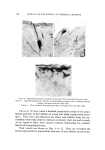
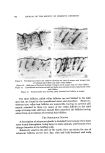
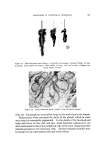
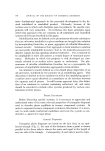
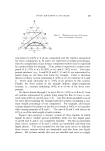
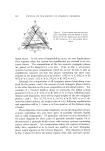
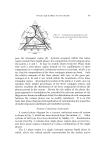
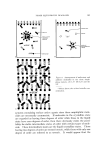
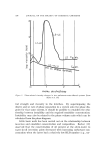
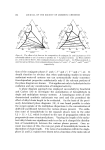
176 JOURNAL OF THE SOCIETY OF COSMETIC CHEMISTS women who show no clinical signs of baldness there is a mosaic pattern of senile alopecia, that is, a "thinning" of the hair does occur. Kligman (2) has pointed out that as many as 70% of the hairs from the scalp may be lost before clinical signs of alopecia become apparent. In discussing baldness, then, one must distinguish between the "precocious" type that develops in mature men and the "senile" type that develops in men and women of advanced years. In comparing human baldness with that in subhuman primates, only the "precocious" type is of interest. Being a degenerative phe- nomenon, senile alopecia is less significant. THE STUMP-TAILED MACAQUE Since only few readers may be acquainted with these animals, a brief description is in order. They are muscular, heavy-bodied and short-limbed. Their hair is variably dark gray-brown, turning almost black on the mid-back, with a contrasting white on the underparts. The eyebrows consist of sparse, relatively coarse hairs, some of which are vibrissae, crowding toward the midline. They have a naked, furrowed forehead (Figs. 1, 2, 3, 4) which, in'fully grown adult males, is 3 or 4 inches across and anywhere from 2• to',5 inches in height. This naked area is much smaller in adult females. The naked forehead and scalp are usually reddish, actually hemangioma- tous, and spattered with black and brown pigmented spots. Around the bald scalp grow long straight hairs that form a distinct crown, giving the animal an appearance of dignity. This hair may be 4 to 6 inches long in the males and 3 to 5 inches long in the females. Three to 4 inches long •'mutton chops" grow from the jaws, and on the chin is a goatee about 3 inches. On the face, muzzle, and other apparently naked areas grow short sparse hairs (Fig. 3). The long hairs of the crown, the nape, the extensor surface of the arms, dorsal thoracic and lumbar regions form a handsome mane, 5 or more inches long. The hairs on the ventral surface are white and finer and sparser than those on the back. In the axilla, very long reddish hairs grow in distinct rows. Just medial to the cavum axillae is a narrow strip of naked pink skin, similar to that found on the inguinal fold. The clipped skin is pinkish white with blue or brown maculae scat tered at random. In male animals the skin of the mons, scrotum and medial sides of the thighs is usually red. Both male and female animals, but particularly male, have greasy hair and dandruff on the hairy scalp but seldom elsewhere.
Purchased for the exclusive use of nofirst nolast (unknown)
From: SCC Media Library & Resource Center (library.scconline.org)