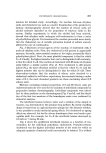
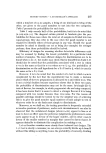
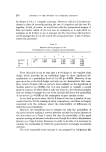
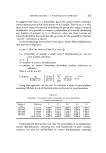
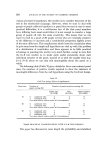
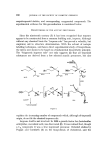
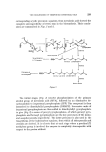
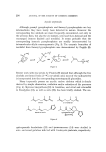
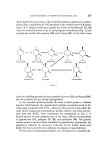
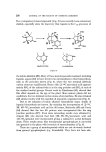
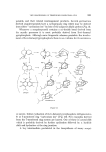
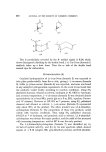
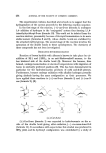
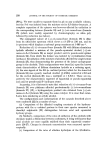
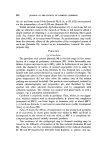
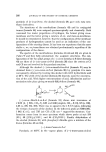
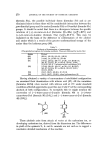
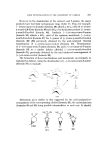
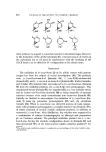
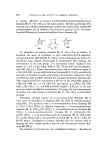
238 JOURNAL OF THE SOCIETY OF COSMETIC CHEMISTS The cyclopentanyl monoterpenoids (Fig. 8) have recently been extensively studied, especially since the discovery that loganin is the C 10 precursor of ß ••NM½' ! ncpat a la½ tone •- skyton thine Figure 8 the indole alkaloids (39). Many of these monoterpenoids examined, including loganin, appear (40) to have involved an intermediate in their biosynthesis, such as the precursor shown (Fig. 8), where the two terminal aidehyde carbon atoms are equilibrated. Hence with [2-]4C •mevalonic acid approxi- mately 50% of the radioactivity is in the ring position and 25% at each of the oxidised methyl groups. Recent work by Eisenbraun (41) showed that this effect depends on the age of the plant. More mature plants did not equilibrate the two terminal carbon atoms of skytanthine. He also obtained (42) similar results with the essential oil terpenoid, nepatalactone (Fig. 8). Due to the stimulus of indole alkaloid biosynthesis many details of loganin biosynthesis are known. By studying the incorporation of [2-] 4C, 3R, 4R-3H• lmevalonic acid and the 4S isomer, Battersby (43) and Coscia (44) showed that the two 4R protons were incorporated into the ring junction positions (H*). Even more interesting results were obtained by Arigoni (45) who showed that both [3R, 5R-3Ht]mevalonic acid and [1S-3H•lgeraniol were incorporated giving a radioactive acetal hydrogen atom. These results mean that trans-geranyl pyrophosphate is converted into geraniol in the plant with inversion of stereochemistry (Fig. 8). There are a group of monoterpenoids which are not obviously derived from geranyl pyrophosphate (e.g. lavandulol). They have not been ade-

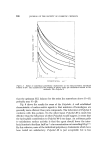
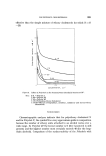
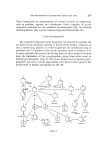
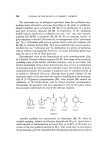
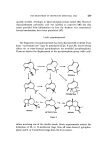
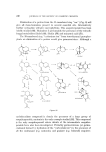
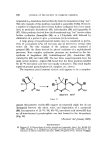
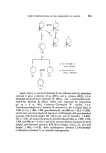
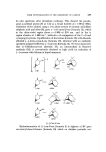
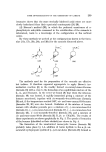
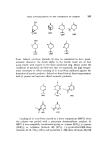
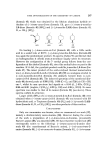
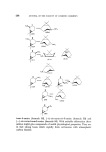
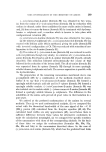
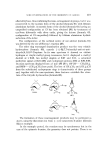
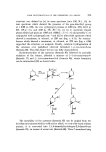
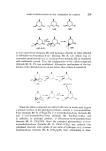
THE BIOGENESIS OF TERPENOID ESSENTIAL OILS 239 quately studied. Attempts to label artemisia ketone failed (10). However chrysanthemum carboxylic acid was labelled as expected (46) but this result provided little information on how the skeleton was constructed. Several mechanisms have been postulated {47). Cyclic sesquiterpenoids The biogenesis of sesquiterpenoids has been discussed (3) in detail. Four basic "carbonium ions" may be postulated (Figs. 9 and 10), derived from either cis- or trans-farnesyl pyrophosphate (or nerolidyl pyrophosphate). These are derived by displacement of the pyrophosphate group with cycli- bulncso1 gcrmacratrilnc .... Figur• 9 sation involving one of the double bonds. Steric requirements restrict the formation of 10- or 11-membered rings from all trans-farnesyl pyrophos- phate and 6- or 7-membered rings from the 2-cis isomer.
Purchased for the exclusive use of nofirst nolast (unknown)
From: SCC Media Library & Resource Center (library.scconline.org)