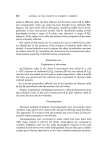
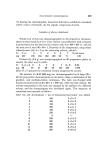
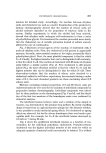
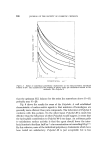
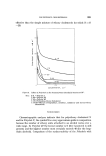
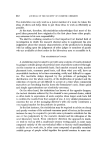
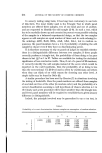
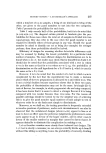
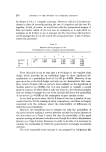
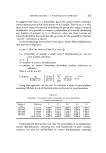
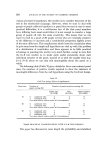
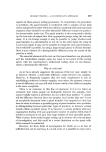
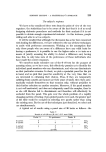
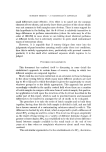
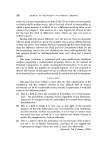
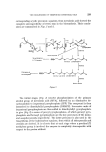
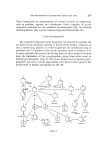
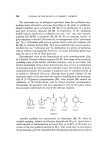
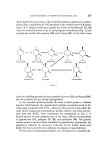
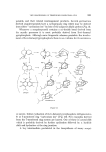
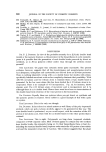
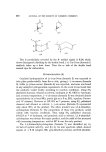
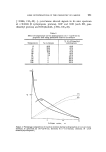
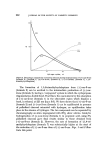
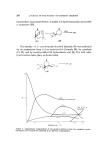
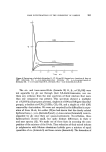
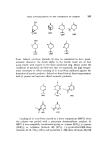
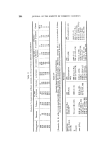
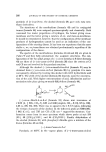
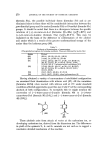
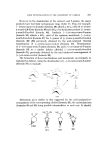
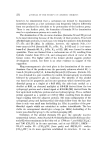
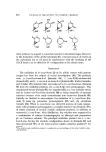
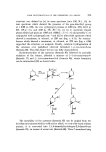
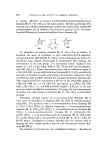
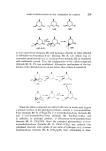
262 JOURNAL OF THE SOCIETY OF COSMETIC CHEMISTS the cis-and trans-caran-10-ols (formula 32 R, [i-, a-CH2OH) must proceed via the intermediacy of car-3 (10)-ene (formula 33). Whilst elevated temperature hydroboronation of (+)-car-3-ene did not offer an attractive route to the caran-2- or 10-ols, it did however afford a simple method of obtaining (--)-cis-caran-trans-5-ol (formula 24) in good yield. Fig. •t shows that in 10 min at 100 ø, cis-caran-trans-4- is converted into about 60% of cis-caran-trans-5-borane. Its predominance may result from the electronic effects of the polarisation of the conjugated system of car-4-ene (formula 21), formed as an intermediate, towards the cyclo- propane ring. PYROLYSIS (q-)-Car-$-ene The pyrolysis of [i- pinene (formula 34) is the first stage in the manu- facture of a range of perfumery substances (32). Under favourable con- ditions, it gives myrcene in up to 90ø/0 yield. In furtherance of our plan to study the chemistry of carene, it seemed appropriate (11) to study its pyrolysis. Liquid (q-)-car-3-ene (formula 2) was dropped into a packed, heated tube and carried forward as vapour in a current of nitrogen. The cracking took place in the vapour phase since the extent of pyrolysis at a given temperature did not alter when the surface area of the column packing was increased fortyfold. The products were condensed, isolated by column chromatography and preparative glc, and identified by their spectral and other physical characteristics, and by comparison with authentic materials. The column was packed with glass beads, or with a catalyst, e.g. a potassium aluminosilicate. Car-3-ene is relatively stable to pyrolysis. Thus, whilst, in our appar- atus, without catalyst such as aluminosilicate, [t- pinene was completely isomerised at 325øC, car-3-ene began to isomerise only at about 450øC. (q-)-Car-2-ene (formula 1) was however somewhat more readily decomposed than (q-)-car-g-ene (33). Table II shows the effects of temperature on the products of pyrolysis of (+)-car-3-ene. It shows quite clearly that whilst at 480 ø, car-3-ene is decomposed to the extent of only one third, at 560 ø it is completely de- composed giving almost entirely aromatic products. This resistance of the cyclopropyl ring to thermal cracking may be traced to the difficulty of formation of the free radicals (formulae 35 and 36). These have not the resonance stabilisation of the radicals (formulae 37, 38 and 39 respectively) derivable from [i-pinene, a- pinene, and car-

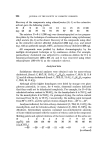
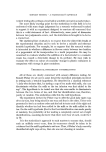
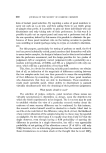
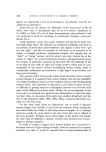
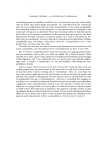
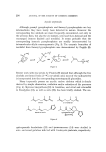
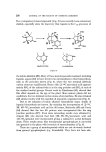
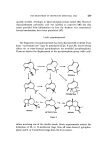
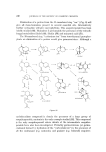
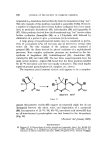
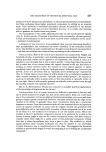
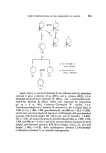
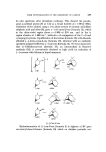
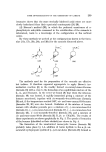
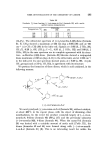
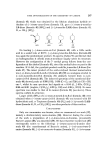
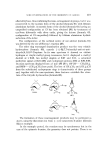
SOME INVESTIGATIONS OF THE CHEMISTRY OF CARENE 263 ($41 (35) (36) CH• ($7) ($8) ($9) 2-ene. Indeed, car-3-ene (formula 2) may be considered to have quasi- aromatic character the bonds allylic to the double bond are in fact quasi-vinylic with respect to the three membered ring. Hence under the conditions of pyrolysis and flow-rate that we employed, the high temper- ature necessary to effect cracking of (+)-car-3-ene militated against the formation of acyclic products. Indeed we found that at these temperatures both It- pinene and myrcene afford aromatic products. 7 6 2 5 3 10 10 9 (401 (41) (42) ? Cracking of (+)-car-3-ene started at a lower temperature (300øC) when the column was packed with a potassium aluminosilicate catalyst. At 400øC it was completely transformed giving m- cymene (8.2%), p-cymene (10.9%), a- terpinene (formula 40) (21%), (+)-p-mentha-2,4(8)-diene (formula 41 R, CH 3) (14%) and m-mentha-1, 3(8)-diene (formula 42) (34)
Purchased for the exclusive use of nofirst nolast (unknown)
From: SCC Media Library & Resource Center (library.scconline.org)