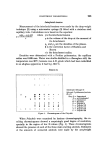
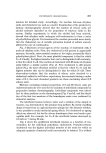
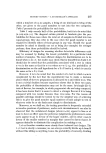
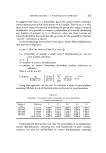
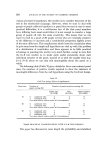
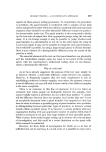
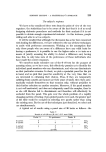
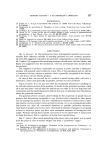
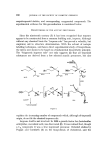
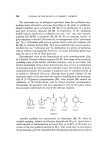
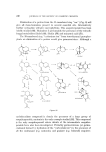
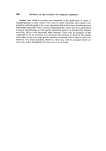
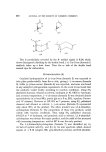
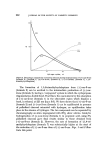
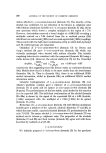
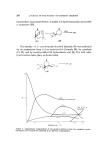
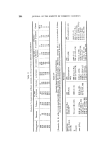
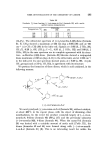
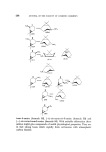
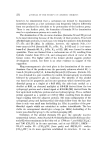
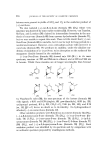
POLYETHOXY CHOLESTEROLS 205 Interfacial tension Measurement of the interfacial tensions were made by the drop-weight technique (2) using a micrometer syringe (3) fitted with a stainless steel capillary tube. Calculations were based on the equation: !x(p •--02) g • where ¾ is the interfacial tension r !x is the volume of the drop at the moment of its detachment. P 1 and 02 are the densities of the phases. • is the correction factor of Harkins and Brown r is the detachment radius. Densities were determined with a Perkins pyknometer the capillary radius was 0.626 mm. Water was double-distilled in a Barraglass still the temperature was 20øC benzene was A.R. grade which had been redistilled in an all-glass apparatus it had b.p. 80.1øC. RESULTS L 0 C H o b Substrate: Silicagel G Solvent: Cyclohexane/acetone ß . . (9+1) ß ' Key: L-• Lanostenol ß . O = •-Octadecanol C = Cholesterol H----- Hartolan ! ' . -•- a = Polychol l• • :• • b = Polychol 10 • m c = Polychol II• c O e d = Polychol 20 e = Polychol •0 Chromatogram of the Polychols Figure 1. When Polychols were examined by laminar chromatography, the re- suiting chromatograms showed a surprisingly good degree of resolution, specially in the region of low N-values (Fig. 1). These chromatograms showed the presence of each of the three main starting alcohols. Estimates of the amounts of unreacted alcohols were made by the area/weight

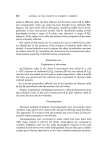
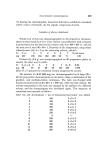
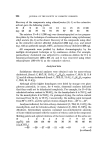
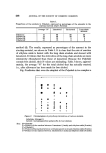
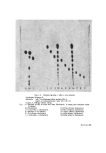
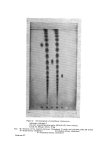
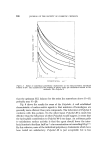
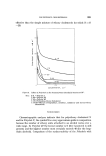
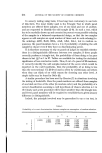
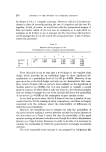
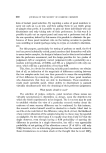
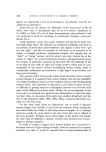
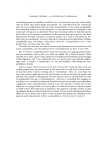
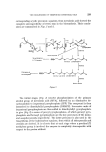
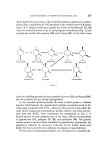
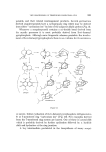
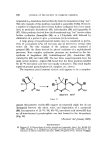
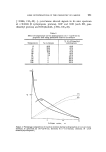
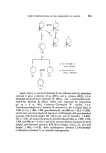
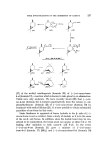
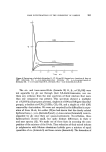
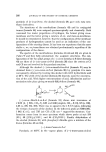
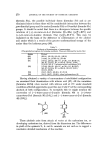
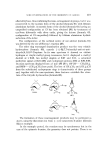
206 JOURNAL OF THE SOCIETY OF COSMETIC CHEMISTS Table I. Proportions of free alcohols in Polychols, expressed as percentages of the amounts in the staxting material (Super Hartolan) Average "N" Lanosterol Cholesterol Long-chain alcohols Polychol • 12 95 50 30 Polychol 10 14 35 20 10 Polychol 20 23 15 5 5 Polychol 40 41 15 0 0 method (4). The results, expressed as percentages of the amount in the starting material, are shown in Table I. It is dear that the rate of reaction of ethylene oxide is fastest with the long chain alcohols and slowest with lanosterol. It follows that the derivatives of the long-chain alcohols are more extensively ethoxylated than those of lanosterol. Because the Polychols contain free alcohol, their N-values are misleading. Table I shows, approxi- mately, the average "N" for the total alcohol that has actually reacted, i.e., after allowance has been made for free alcohol. ' Fig. oe indicates that even the simplest of the Polychols is too complex a Figure 2. Chromatogram of polyethoxy derivatives of various alcohols. Substrate: Silicagel G Solvent: Cyclohexane/ethyl acetate (9 q-1) four elutions Key: H = Hartolan L=Product of the reaction between: Lanostenol (1 mole) and ethylene oxide (5 moles) P =Polychol I• O = Product of the reaction between: n-Octadecanol (1 mole) and ethylene oxide (5 moles) C=Product of the reaction between: Cholesterol (1 mole) and ethylene oxide (5 moles)
Purchased for the exclusive use of nofirst nolast (unknown)
From: SCC Media Library & Resource Center (library.scconline.org)