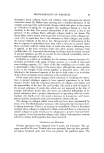
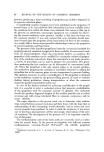
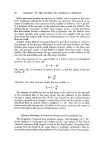
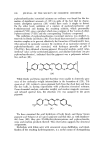
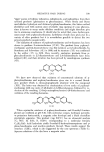
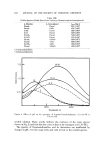
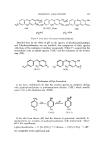
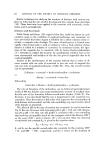
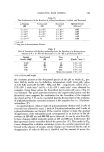
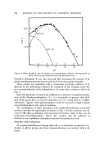
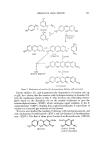
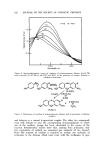
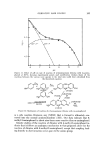
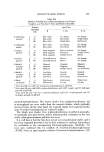
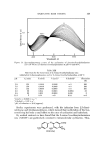
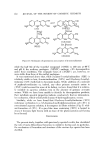
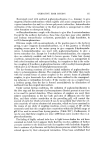
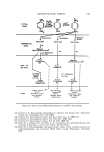
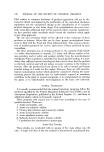
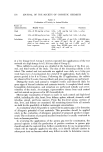
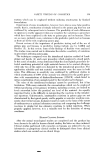
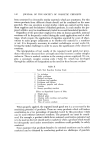
124 JOURNAL OF THE SOCIETY OF COSMETIC CHEMISTS rates decrease tenfold for each unit increase of pH). It can be seen that C- methylation of the m-diamine increases the reactivity by a factor of 3.8 +- 0.8 while C-methylation of the diimine decreases the rate of reaction by a similar factor. Of all the m-diamines examined, the anisole derivatives are, by far, the most reactive and can therefore be expected to be the most efllcicnt for form- ing blue aminoindamine dyes in any given oxidation dye mixture. Diimines and m-Aminophenols The formation of the 2-aminoindoaniline in aqueous buf[er solutions can be followed spectrophotometrically. For kinetic studies stoichiometric reactant concentrations were used, according to the equation p-diamine + m-aminophenol + 4 ferricyanide -• aminoindoaniline + 4 ferrocyanide The rate of dye formation follows a second-order rate law and studies using nonstoichiometric conditions indicated that the reaction is first order with re- spect to both diimine and m-aminophenol concentration. The effect of pH on the rate of reaction (Fig. 11) is typical of that for the reaction of a diimine with a monohydric phenol (47). Thus, the observed rate constant is given by the equation where ka and kb are the specific second-order rate constants for the reaction of the conjugate acid of the diimine (DH +) with the phenolate ion (P-) and the neutral phenol (PH), respectively, and the a-values are the fractions of the reactants existing as the designated species at the pH to which kob• per- tains. Figure 11 compares the experimental values of kob• with the theoretical curve generated from the above equation using values of ka = 1.04 x 10" 1 mole-•min -• and kb = 1.63 x 10⁶ 1 mole-•min -• and pK• values of 5.75 and 9.90 for diimine and m-aminophenol, respectively. These results support the reaction mechanism shown in Fig. 12. This involves an initial rate-controlling electrophilic attack of the conjugate acid of the diimine on the phenolate ion and/or the neutral phenol (depending upon the pH) to give the leuco-ami- noindoaniline (XXIX) which is then rapidly oxidized to the dye (XXX). Similar results were obtained for the reaction of diimine with 6-methyl-3- aminophenol although the detailed kinetics are more complex due to the ap- parent reversible formation of what is probably a pseudoquinoneanil (XXXI), H,•N H NH (XXXl)

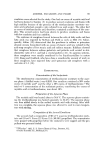
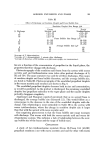
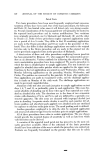
OXIDATIVE ttAIR DYEING 125 6 7 8 9 10 11 pH Figure ii. Effect of pH on rate of reaction of p-benzoquinone diimine with m-amino- phenol at 300C, showing experimental points and contribution (broken lines) of the reactions between the various ionic species to the total rate (solid line) calculated from the theoretical equation H N•"...• / H•N •'"'•.-f", O - I-I•.N OH end/or • / xxx) /+ di-irn inc H•N•'OH ( rest)/ or •2 [o] •i)p-diamine ••••• p-diamineorHzOz (XlV) (ii) Ox •N O + (XXX) Figure 12. Mechanism of reaction of p-benzoquinone diimine wifi• m-aminopheno1 as a side reaction. However, any (XXXI) •at is {ormed is ultimately con- verted into •e normal aminoindoaniline (XII). Our data indicate that 6- methyl-3-aminophenoI is about nine times more teacfive than m-aminopheno]. Kinetic studies of the reaction o{ diimine with 4-methyI-3-aminophenoI in- dicate •at it {ollows an analogous mechanism to that proposed above {or the reaction o{ diimine wi• 6-methyl-3-aminophenoI, except that coupling lead- ing directly to dye formation occurs para to the amino group.
Purchased for the exclusive use of nofirst nolast (unknown)
From: SCC Media Library & Resource Center (library.scconline.org)