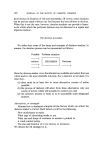
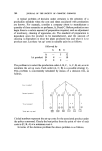
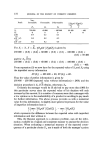
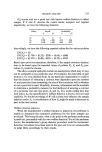
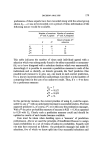
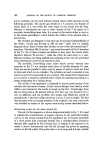
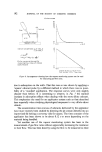
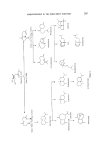
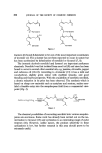
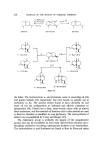
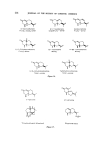
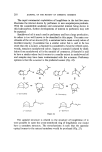
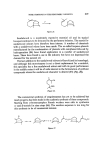
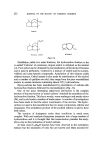
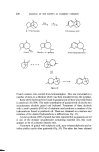
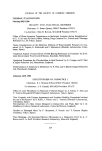
SESQUITERPENES IN THE PERFUMERY INDUSTRY 207 Farnesol occurs in several essential oils, e.g. oils of ambrette seed, neroli, rose, cyclamen, jasmine etc. (17, 18). It has a delicate sweet oily odour developing into a floral fresh-green note and finds uses in floral, oriental and chypre fragrances (13). Biogenetically speaking, this alcohol occupies a very significant position in sesquiterpene chemistry since it has been established that farnesyl pyrophosphate is the in vivo precursor of a variety of sesquiterpenes. The acid catalysed cyclization of farnesol, in a manner similar to nerolidol, gives a complex mixture of cyclic products among which bisabolane and cadinane structures are the most prominent (16). Several syntheses of farnesol have been reported in the literature but none of these is commercially attractive. Isomerization of nerolidol to farnesol in acceptable yields should have a significant effect on the usage of this alcohol which is presently restricted because of its high price. Recently, Stevens, Ludin and Teranishi (19a), isolated and characterized two isomeric aldehydes a- and 13-sinesal belonging to the farnesane group which occur in chinese orange oil (19b, c and d). Both aldehydes exist in the all trans- form and have attracted the attention of flavourists and perfumers and several commercial syntheses have been accomplished. a-Sinesal /•- Sinesal Figure 4. Several members of the bisabolane group of sesquiterpenes occur in many commercially important essential oils. The parent hydrocarbon bisabolene can have several isomers with regard to the position of double bonds, but the ?-bisabolene is the most important one and occurs in oil of bisabol myrrh, lemon, lime, bergamot, cardamom, sandalwood, etc. It is also obtained by dehydration of nerolidol during the cyclization (16). It is interesting perfumery chemical with a pleasant, warm, sweet-spicy-balsamic odour which makes it invaluable in the reconstitution of essential oils and as a perfumery material in its own right. It is a vital part of the oriental, opopanax, chypre and novelty fragrances (13). The hydrocarbons zingiberene and ar-curcumene constitute the major part of the sesquiterpene fraction of the oil of Zingiber officinale (ginger oil).

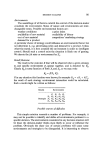
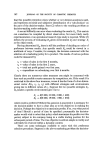
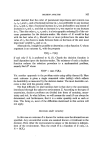
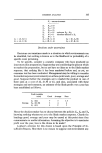
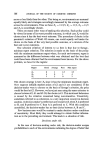
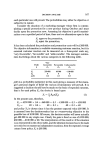
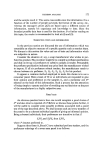
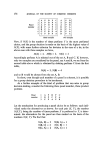
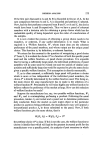
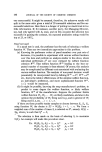
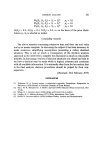
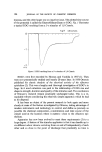
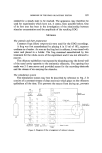
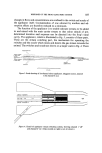
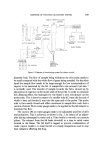
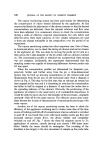
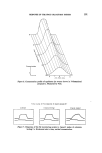
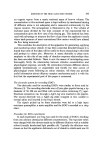
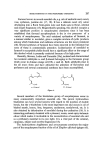
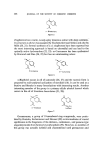
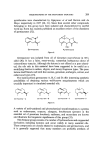
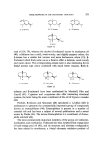
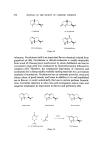
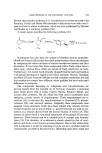
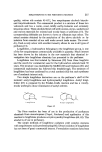
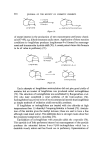
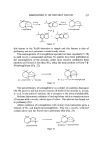
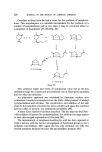
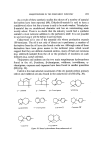
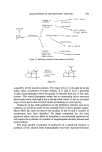
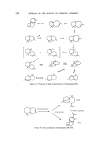
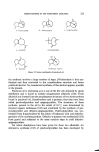
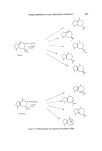
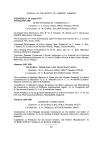
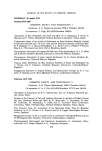
208 JOURNAL OF THE SOCIETY OF COSMETIC CHEMISTS Oisobolene Figure 5. Zingiberene has a warm, woody-spicy tenacious odour with deep sweetness.' Its structure as shown was assigned by Eischemosher and Schinz and also by Mills (20, 21). Several syntheses of (+) zingiberene have been reported but the most interesting approach is based on citronellal and can lead to' the optically active hydrocarbon (22, 23). ar-Curcumene has been synthesized by Honwad and Rao (24, 25) but has an uninteresting odour. Zingiberene ar-Curcurnene Figure 6. a-Bisabolo! occurs in oil of camomile (26, 27) and the racemic form is prepared by acid-catalysed cyclization of nerolidol (16). It can be used as a fixative and blender in many formulations with interesting results. Another interesting member of the group is a primary allylic alcohol lanceol which occurs in the oil of Santahim lanceolatum (21, 28). •- Bisobolol Lo nceol Figure 7. Germacranes, a group of 10-membered ring compounds, were postu- lated by Ruzicka, Eschenmoser and Heusser (29) as intermediates of crucial significance in the biogenesis of the elemane-, eudesmane-, and guaiane-type sesquiterpenoids from farnesyl pyrophosphate (29). However, no member of this group was actually isolated and characterized until germacrone and
Purchased for the exclusive use of nofirst nolast (unknown)
From: SCC Media Library & Resource Center (library.scconline.org)