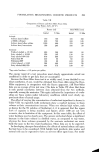
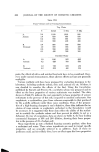
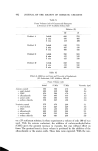
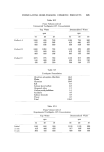
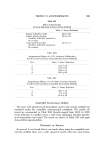
STABILIZATION OF NONIONIC AEROSOL EMULSIONS 591 plexes to stabilize the emulsions was attributed to their high water solubility. These POE fatty ethers had HLB values from 15.3 to 16.9. Whether or not the nonionic surfaetant-fatty alcohol complexes stabilized emulsions had little effect upon foam stability. This indicates a lack of rela- tionship bet•veen the properties of the POE fatty ether emulsions and their corresponding foams. The stabilization of the aerosol foams by the complexes regardless of their effectiveness as emulsion stabilizers probably results both from an increase in the viscosity of the aqueous phase due to a surfaetant-al- cobol complex and disruption of the initial stable complex by the vaporizing propellant when the product is discharged. (Received November 13, 1973) REFERENCES (1) Schuhnan, J. H., and Cockbain, E. C, Molecular interactions at oil/water interfaces. Part I. Molecular complex formation and the stability of oil-in-water emulsions, Trans. Faraday Soc., 36, 51 (1940). (2) Epstein, M. B., Wilson, A., Jakob, W. C. W., Conroy, L. E., and Ross, J. J., Fihn drainage transition temperature and phase relations in the system sodiron ]auryl sul- fate, lauryl alcohol, and water, J. Phys. Chem., 58, 60 (1954). (3) Kung, H. C., and Goddard, E. D., Studies of molecular association in pairs of long- chain compounds by differential thermal analysis. I. Lauryl and myristyl alcohols and sulfates, Ibid., 67, 1965 (1963). (4) Kung, H. C., and Goddard, E. D., Molecular association in fatty acid potassium soap systems, II, J. Colloid Interface Sci., 29, 242 (1967). (5) Kung, H. C., and Goddard, E. D., Interaction between ionized surfactants and long chain polar compounds, Soap Chem. Spec., 42, 61 (1966). (6) Sanders, P. A., Molecular complex formation in aerosol emulsions and foams, J. Soc. Cosmet. Chem., 17, 801 (1966). (7) Sanders, P. A., The relationship between aerosol emulsions and foams. I. Triethano]a- mine myristate/Freon propellant systems, Ibid., 24, 87 (1973). (8) Sanders, P. A., The relationship between aerosol emulsions and foams. II. Aqueous triethano]amine myristate/mincral oil/Freon propellant systems, Ibid., 24, 623 (1973). (9) Sanders, P. A., Complex formation in aerosol emulsions and foams. II. Nonionic sur- factants (polyoxyethylene fatty ethers) and polar compounds, Soap Chem. Spec., 43, 68 (1967). (10) Beeher, P., and De1 Veeehio, A. H., Fihn drainage transition temperatures by surface viscosity, J. Phys. Chem., 68, 3511 (1964). (11) Sanders, P. A., Molecular interactions in aerosol emulsion systems. III. Pearleseent structures, J. Soc. Cosmet. Chem., 20, 577 (1969). (12) The Atlas HLB System, 4th Printing, Atlas Chemical Industries, Inc. (13) Sanders, P. A., Stabilization of aerosol emulsions and foams, J. Soc. Cosmet. Chem., 21, 377 (1970). (14) Sanders, P. A., Principles of Aerosol Technology, Van Nostrand Reinhold Publishing Corp., 1970, Chap. 16.

I. Soc. Cosmet. Chem., 25, 593-607 (November 1974) Formulating High-Foaming Cosmetic Products IRVING R. SCHMOLKA, Ph.D. Presented December 11, 1973, New York City Synopsis-Obtaining valid comparative data on the FOAMING PROPERTIES of a multitude of SURFACE-ACTIVE AGENTS and then using these data to prepare ac- ceptable finished COSMETIC FORMULATIONS is a problem frequently encountered by the cosmetic chemist. An APPARATUS designed for MEASURING foam in the laboratory is described. The inexpensive equipment allows flexibility of operation, is simple to clean, and offers several other important advantages for objectively developing and evaluating high- foaming cosmetic products. Foam volumes are readily determined. Comparative foam data, at 38 ø C, presented for dilute aqueous solutions of some leading commercially available NONIONIC and ANIONIC foaming SURFACTANTS, show the latter group to be superior to the former class of compounds. The effects of varying the surfactant concentration are pointed out. Data are presented showing the influence of mixing time and mixing speed. Additional variables which alter foam heights are shown to include the presence of soil, thickeners, and other additives. Increasing the viscosity of aqueous suffactant solutions is shown to have an effect on foam. Finally, comparative foam data are given for commercial high-foaming cosmetic products, including a bubble bath preparation, dentifrices, and shampoos. INTRODUCTION The task of developing high-foaming cosmetic products is a problem often encountered by the cosmetic chemist. High-foaming products can encompass cosmetics and toiletries as diverse as shampoos, bubble baths, shave creams, dentifrices, skin cleansers, etc. The bench chemist who is given the important assignment of developing a new, improved high-foaming cosmetic formula- tion is faced with the formidable task of defining the term high-foaming. The formulation chemist needs objective guidelines. It should be emphasized that there are many criteria for the development of commercially successful high- foaming cosmetic products, but for the purpose of this study, attention will be focused on only one aspect, and that is "foam." *BASF Wyandotte Corp., Wyandotte, Mich. 48199.. 593
Purchased for the exclusive use of nofirst nolast (unknown)
From: SCC Media Library & Resource Center (library.scconline.org)