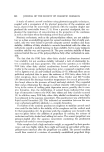
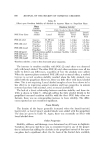
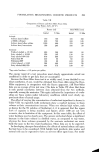
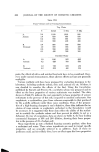
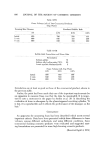
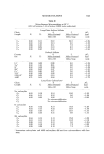
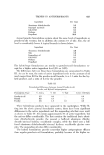
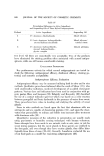
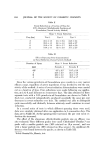
626 JOURNAL OF THE SOCIETY OF COSMETIC CHEMISTS Table IV Formulation Differences in Active Ingredients and Suspending Oils of Three Hybrid Antiperspirants Product Active Ingredients Suspending Oil 1 5% altoninure chlorhydroxide Mixed silicones 2 Mixed silicones / triethyl citrate 3 Dibutyl phthalate 5% basic aluminum hydroxychloride- zirconyl hydroxy oxychloride 5% aluminum hydroxych]oride- zirconyl hydroxychloride- glycine complex tive level. All three are cosmetically very acceptable. Two of the products have eliminated the staining problem often associated with aerosol antiper- spirants, while one still causes considerable staining. EVALUATION PROCEDURES Key performance criteria for which aerosol antiperspirants are tested in- clude the following: antiperspirant effcacy, deodorant effcacy, staining po- tential, and cosmetic acceptability. Antiperspirant E•cacy Evaluation Antiperspirant efficacy may be measured utilizing both in vitro and in vivo methods. Qualitative procedures fashioned after the work of Minor (18), who used starch-iodine indicators, involved development of so-called sweat pore patterns. Various dyes and indicators have been used in coniunction with pa- pers, pastes, films, and lacquers (19). Zaheisky and Rovensky (20) described the use of a contact indicator spot test which was based on a color reaction between pyrogallol and ferric hydroxide in the presence of water from sweat. These procedures have value in locating and studying the activity of sweat glands. Some in vitro methods are based upon the fact that aluminum salts are astringents and are capable of denaturing proteins (21), and upon the obser- vation that permeability to sodium and iodide ions increases after treatment with aluminum salts (22). Quantitative measures of the reduction in perspiration are usually made using gravimetric or humidity sensing techniques with human volunteers. Some attempts have been made to use animals, such as cats, mice, or rats for sweat testing purposes, but the sweat glands in these species are confined to the foot pads, and even though they have eccrine glands, they differ histo- logically from those of man (22-24). Recently, Lansdown evaluated the use of rat food pads as a model for examining antiperspirants (25).

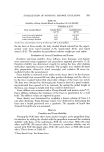
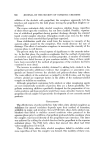
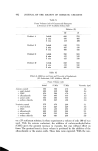
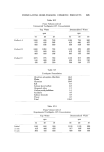
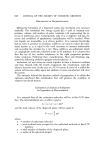
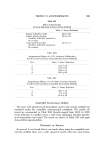
TRENDS IN ANTIPERSPIRANTS 627 In human volunteers, gravimetric measurement of the total amount of per- spiration secreted may be accomplished by the use of weighed pads or by the use of dessicant cups (26). Other types of measurement utilized resistance hygrometry, collection coils, phosphorus pentoxide cells, and electrolytic cells (27-30). Factors Affecting Sweating Rate Fredell and Read (31, 32) observed that there are differences in the amount of sweat produced from right to left axilla, but that the ratio of these dif- ferences is fairly consistent. They recommended that a ratio between treated and control axillae be used in judging effectiveness. Segar (27) demonstrated that sweating is a cyclical process and is not proportional to the number of total glands. Uttley (33) recently reviewed some of the factors influencing sweating which must be considered in a test procedure. These include: relative hu- midity, equilibrium of sweating rate, emotional or mental stimulation, posi- tion of the body during sweating, skin area being tested, skin temperature, conditioning to environment, sex differences, and metabolic rate. Based upon our studies, we agree with the observations of earlier workers (19, 32, 34) that a gravimetric method employing absorbent pads is an ade- quate procedure. Reller (19) observed that absorbent pads are more accept- able physiologically than cups. Methods of Evaluation We have tested two basic variations of the gravimetric method, the major difference being in the procedure used for stimulation and collection of per- spiration. The first method, termed "normal activity method," utilizes normal environment conditions. The second method, termed "controlled environ- ment method," employs thermally controlled environmental conditions. In both methods, a ratio of sweat produced by the left and right axilla is de- termined in a series of controlled collections. The effect of antiperspirant ma- terials on the perspiration rate of each individual is determined by comparing the post-treatment ratio to the subjects' average control ratio. For each indi- vidual, the per cent change in sweat rate is calculated as: % change in sweat rate = 100 (1 - post-treatment ratio average control ratio ) These data are statistically treated by applying the Student t distribution to establish 85% confidence limits on the mean per cent change in sweat ratio. Normal Activity Method In the normal activity method, a group of panelists are recruited who re- main together as a panel for at least 12 months. Prior to the start of
Purchased for the exclusive use of nofirst nolast (unknown)
From: SCC Media Library & Resource Center (library.scconline.org)