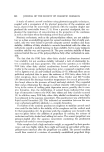
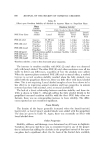
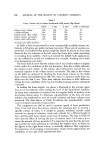
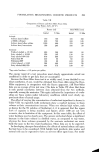
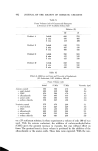
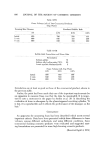
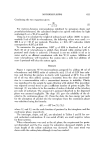
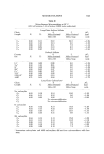
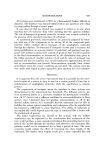
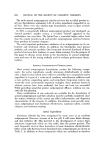
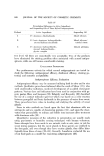
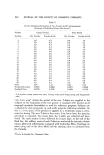
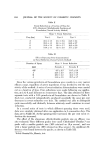
630 JOURNAL OF THE SOCIETY OF COSMETIC CHEMISTS Table V In Vive Deodorant Evaluation of Two Powder-In-Oil Antiperspirants (Summary of Individual Mean Odor Scores •) Subiect Control Period Test Period Number Dry Powder Powder-In-Oil Dry Powder Powder-In-Oil 1 4.5 4.7 2.0 1.9 2 4.0 4.3 2.8 2.4 3 4.9 4.7 1.3 1.5 4 4.1 4.1 1.8 1.8 5 5.0 5.0 1.9 1.8 6 4.8 4.8 2.8 2.4 8 2.9 3.0 2.0 2.2 9 4.0 4.3 1.5 1.5 10 3.6 3.8 1.9 1.7 11 4.4 4.6 2.9 2.8 12 4.0 3.7 2.9 2.7 14 4.4 3.9 2.3 1.5 15 4.2 4.5 2.3 2.5 16 4.5 4.5 3.6 3.2 17 3.1 3.2 2.2 2.1 18 4.3 4.3 2.1 1.9 19 3.5 3.5 2.5 2.6 20 4.6 3.6 2.4 2.0 21 4.2 4.4 3.1 2.9 22 4.3 3.2 2.0 1.9 Mean 4.16 4.11 2.32 2.16 Standard Deviation 0.5518 0.5862 0.5677 0.5008 Standard Error 0.19.33 0.1310 0.1269 0.1119 •A five-point scoring system was used, 1 being weak and 5 being strong and disagreeable oflor. only Ivory soap* during the period of the test. T-shirts are supplied to the subiects at the beginning of the test period. A standard 3.5% powder-in-oil isopropyl myristate formulation is used for reference purposes. Subiects are evaluated for stain propensity in each axilla using the following schedule. On day 1, a 3-see spray of the product is applied by a technician using a metro- nome for timing. The new T-shirt is then worn. Four hours later, the spraying procedure is repeated. Two hours later, the T-shirts are collected and laun- dered. The same routine is then followed for 2 more days. At the end of the third day, the axillary areas of each T-shirt are evaluated for intensity of stain using a photovolt reflectometer equipped with tristimulus filters. Readings are taken using cach of the three filters and the staining value is calculated from the formula: *Procter & Gamble Co., Cincinnati, Ohio.

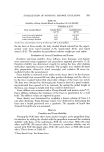
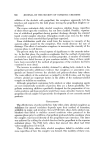
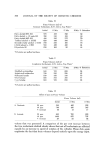
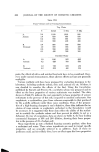
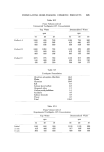
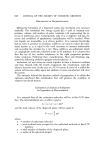
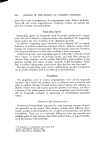
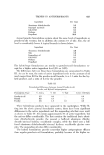
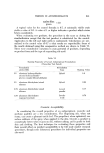
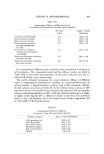
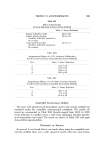
TRENDS IN ANTIPERSPIRANTS 631 amber-blue • x 10 green A typical value for the control formula is 0.7. A minimally visible stain yields a value of 0.3. A value of 1 or higher indicates a product which stains fabric considerably. When evaluating test products, the procedure is the same as during the standardization except that the test product is substituted for the conh'ol. Application to the left and right axilla is randomized. Calculations are nor- malized to the conh'ol value of 0.7 so that results are reproducible. Some of the results obtained using this comparative method are shown in Table VI. There were considerable variations in stain potential of products, depending on product form and the type of suspending oils used. Table VI Staining Propensity of Aerosol Antiperspirant Formulations (Three-Day Test Period) Formulation Formulation (Active/Oil) Type Staining Value 5% aluminum hydroxychloride- Hybrid 1.0 zirconyl hydroxychloride- glycine complex/dibutyl phthalate 5% alumimnn chlorhydrate/mixed Hybrid 0.26 silicones 3.5% aluminum ½hlorhydrate / mixed Aerosol 0.17 silicones powder 3.5% aluminum chlorhydrate/ Powder 0.70 isopropyl myristate in-oil Cosmetic Acceptability In considering the overall properties of an antiperspirant, cosmetic and perfume qualities are a key consideration. The dispensing oils, when not runny, can create a pleasant tactile feel. The propellant, when optimized, can reduce coldness of the spray when applied to the skin. Overall, a product is cosmetically better when it goes on dry, without caking, and is gentle to both skin and clothing. The best technique for evaluating these properties and their overall effect on product acceptability is by full scale market research procedures, though some laboratory procedures for individual properties are also used.
Purchased for the exclusive use of nofirst nolast (unknown)
From: SCC Media Library & Resource Center (library.scconline.org)