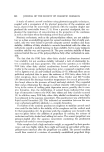
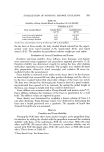
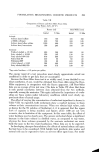
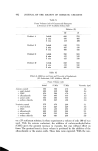
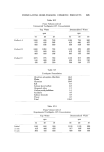
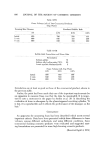
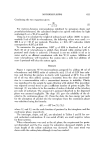
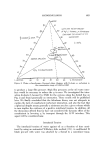
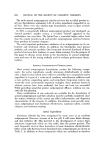
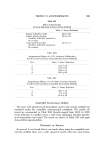
MICROEMULSIONS 615 9o •o 40/ I •oeL OH iTS AR• WFI'SHT PERC. QVT oF I-I•0 //-HFX•NoL 5 U,• FAC'Tm •,r'f Ml'CRo EMUL SIoN 5'0 40 30 %- HEX'A •oeCANE Figure 2. Water-n-hexadecane-l-hexano] phase diagram with K-oleate as surfactant in the concentration range of 0.4M to 0.2M to produce a large film pressure. High film pressures at the oil/water inter- face would be necessary to reduce the y• to zero. We investigated the inter- action K-oleate/1-hexanol by NMR for the systems along the dotted line on Fig. 2 and found practically no interaction. These results will be published later. We finally concluded that the Sehulman theory was not adequate to explain the lack of eosurfaetant/surfaetant interaction, and also the fact that a spherical droplet means generally a minimum area for a given volume which in turn implies the existence of a positive interfacial tension. In addition, all the discussions offered thus far have not considered the dynamic effect of the eosurfaetant in lowering % by transport through the O/W interface. This aspect will be considered now. Interfacial Tension The interfacial tension of water against oil as a function of time moni- tored by using an automated Wilhelmy slide method (15). A sandblasted Pt blade pre-wet with water was attached by a thread to a microforce trans-

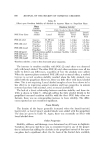
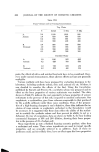
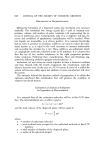
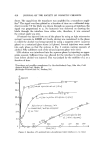
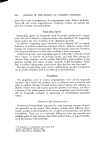
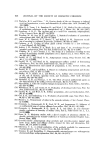
616 JOURNAL OF THE SOCIETY OF COSMETIC CHEMISTS ducer. The signal from the transducer was amplified by a transducer ampli- fier.* The signal was then plotted as a function of time on a calibrated strip- chart recorder.t If the blade was drawn through an aqueous-oil interface, the signal was proportional to y•. No hysteresis was observed on drawing the blade through the interface from either side therefore, it was assumed the contact angle was zero. 1-Pentanol was iniected into one of the phases by using an Agla micrometer syringe* accurate to 0.00005 ml. Gentle stirring was maintained in the phase in which the alcohol was being injected by using a magnetic stirrer (aqueous phase) or a motorized glass stirrer (oil phase). Several injections were made into each phase so that the systems in Fig. 3 contain varying amounts of alcohol. Fifty milliliters each of the oil and aqueous phase were used. SDS solution was introduced into the aqueous phase by injecting an appro- priate amount. Sufficient time was allowed for the interface to reach equilib- rium before alcohol was injected. This was judged by the stability of yi as a function of time. gTransducer and amplifier manufactured by Hewlett-Packard Corp., Palo Alto, Calif. ?Sargent-Welch Corp., Skokie, Ill. :t:Burroughs-Welcome and Co., Durham, N.C. LJ o ,•0,0 I0,0 y• • .T•b• • .... s'ø'k o I• /oo • • 200 •oo 4o0 o T • (sec.) Figure 3. Injection of 1-pentanol into n-hexadecane/water interface (q,, rs. time)
Purchased for the exclusive use of nofirst nolast (unknown)
From: SCC Media Library & Resource Center (library.scconline.org)