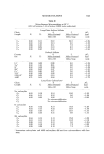
594 JOURNAL OF THE SOCIETY OF COSMETIC CHEMISTS The literature describes many methods and equipment for generating and measuring foam and also indicates that the well-known standard Ross-Miles ( 1, 2) test is still used, while other investigators have used more sophisticated apparatuses (3-5). In order to evaluate new surfactants in comparison with well-known anionics, such as sodium lauryl sulfate, an apparatus which would meet cer- tain requirements was needed. Such requisites include: (a) inexpensive, so that the smallest laboratory xvould be able to afford it (b) simple to operate, so that a great deal of operator training would not be required (c) easy to clean, so that downtime for cleaning would not keep the apparat-us tied up excessively or require extensive dismantling (d) mobile, so that it could be moved from the laboratory to a storage space when not needed (e) repro- ducible, to be able to give data reproducible from one day to the next and from one operator to the next (this could also serve to eliminate the depen- dency on one particular operator) (f) flexible, to be readily adaptable for varying concentrations of active ingredients, varying types of foaming prod- ucts, varying water hardnesses, varying temperatures, varying soils where needed, and varying energy input, such as one gets by varying the rpm of a mixer. This latter point cannot be overemphasized. When teeth are brushed with an electric toothbrush, for example, the amount of foam generated is greater than when the same teeth are brushed by hand. Similarly, consider the Ross-Miles foam test, where the only energy input is that of the potential energy of part of the liquid falling onto the rest of the liquid. Contrast this energy level with that developed by a Sunbeam Mixmaster, at a speed of 720 rpm, which xvas one laboratory method used (4) to develop foam for shampoo evaluation. Then consider the energy input which humans generate, xvho shampoo their own hair with their hands. No person has yet been encountered who massages his hair at 79.0 rpm for 1 min, much less 3 min. (g) If all these previous points are met, there is still one further criterion, and that is, the re- liability of the data. The data obtained must show good correlation with ac- tual use conditions. EXPERIMENTAL AND RESULTS Sorkin and coworkers mentioned the use of a glass cylinder with a device to revolve or agitate it, but gave no details as to its construction (6). It is sug- gested that the cosmetic industry standardize on a piece of equipment for measuring foam and possibly the apparatus described belo,v could be the standard. The instrument, which was used in these experiments, is referred to as the Bacon machine (7). The cost of all parts, exclusive of a stop-watch or a clock used as a timer, a standard mixing cylinder usually found in the laboratory, and exclusive of labor was about $150, in 1974. The essential features include: accurately mounting a mixing cylinder containing the foaming solution to rotate in a vertical plane at a fixed speed a method to stop the cylinder, by a

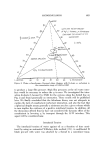
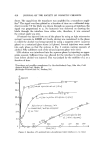
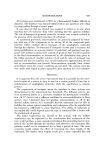
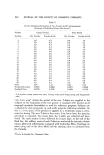
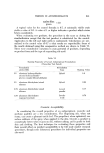
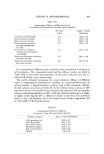
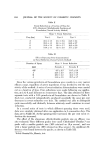
FORMULATING HIGH-FOAMING COSMETIC PRODUCTS 595 magnetic brake acting in the vertical position, suitable for instant reading of foam and liquid volumes welding glass lugs to the cylinder, so that the glass stopper may be fastened to the cylinder by means of rubber bands. One piece of auxiliary equipment needed is a water bath. Since the pri- mary concern was with foaming products designed for use on or in the human body, a temperature of 38øC was used in obtaining all the data. Any water bath large enough to hold one or more mixing cylinders would be suitable and is a standard piece of equipment generally found in all laboratories. One other requirement is stopcock grease,* to provide a tight seal for the cylinder stopcock. During the course of this investigation, a high-vacuum silicone lubricant was inadvertently used. It played havoc with the foam data, as the lubricant was brushed down with a test tube brush into the cylinder in the course of cleaning out the cylinder after each run. All these data were dis- carded and this word of caution is made against using any silicone-containing stopcock grease for this apparatus. The cylinder is placed in the clamp holders so that the 500-ml mark of a 1000-ml cylinder is exactly at the center of rotation, which is marked on the clamp-holder support. The equipment is flexible enough so that either a 500- ml or 1000-ml mixing cylinder can be used. However, the experiments were carried out with the larger cylinders. To minimize variations in data, cylinders of the same weight were selected since a heavier cylinder will rotate a little more slowly than a lighter cylinder, at the same voltage setting. In the preliminary experiments, certain variables were fixed for initial screening tests. These included the concentration of active ingredient. It was decided, after conferring with a number of other cosmetic chemists, to use a 0.2% active solution, although data will be presented at other concentration levels. Whereas adjustments in speed can be made by changing line voltage with a variable transformer, all data, unless otherwise specified, are at 26 rpm. The time of rotation can be varied but this was arbitrarily fixed at 1 min, since it was thought it would most closely approximate consumer habits. As an al- ternative to presenting data in terms of milliliters of foam volume, it is pos- sible to permanently record foam quantity and stability by taking Polaroid pictures of the cylinder and its contents at given time intervals. The procedure followed was to place 200 ml of solution into the cylinder, and immerse the cylinder in the water bath at 38øC for 1 hour. The water level in the water bath was maintained at a height above the height of the solution in the cyl- inder. The cylinder was then mounted in the set of clamps in a vertical posi- tion and the rotation started for 1 min. Foam height and liquid level were read immediately upon cessation of rotation, and liquid level was subtracted from total volume to give foam volume. The same data were recorded after 1, 2, 3, 4, and 5-min periods. However, only part of these data are presented here. *Celloseal, Fisher Scientific, Inc., Pittsburgh, Pa.
Purchased for the exclusive use of nofirst nolast (unknown)
From: SCC Media Library & Resource Center (library.scconline.org)