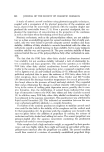
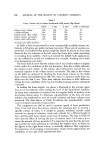
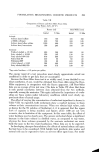
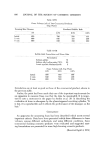
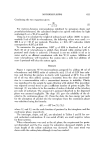
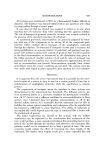
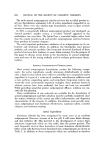
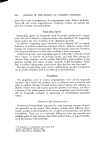
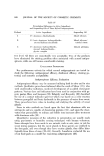
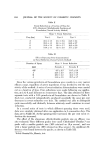
632 JOURNAL OF THE SOCIETY OF COSMETIC CHEMISTS Safety The criteria for evaluating safety of antiperspirant formulations include a consideration of the effect of the product on the skin and its aerosolized properties. Routine safety evaluation of a new formulation comprises deter- mination of acute oral and dermal toxicity, primary eye and skin irritation, acute and subacute inhalation studies in rabbits and monkeys, and sensitiza- tion in guinea pigs and in humans. Aerosol antiperspirants have received considerable publicity as a result of potential inhalation hazards that may be associated with low-level, long-term exposure to propellant gases and particulate aerosols in general. Recently, Drew (44) reported that persistent lung granulomas were observed in ham- sters exposed to an aerosolized liquid system based on a propylene glycol complex of ACH at 50 mg/m a for 6 hours a day for 10, 20, and 30 days. Antiperspirants are classified as drugs and are subject to the Food and Drug Administration's OTC review procedure. A request to provide safety and efficacy data for review by the OTC panel has been made (45) and heatings started in the early part of 1974. ANTIPERSPIRANT TEST PtESULTS From the earlier description of the two methods for evaluating antiperspi- rant efficacy used in our laboratory, namely, the normal activity method and the controlled environment method, it seemed plausible to hypothesize that since methodologies were basically similar, the results too would be of the same order of magnitude, or at least provide similar directional guidelines. Nominal Activity Method The result obtained when testing a standard powder-in-oil for•nulation on four different occasions spread over a period of a year and a half are shown in Table VII. The results are 3-day averages and are expressed with a con- fidence limit of 95%. Table VII Antiperspirant Efficacy of a 3.5% Aluminum Chlorhydrate Powder-in-oil Formulation (Normal Activity Method) Test Number Mean % Sxveat Reduction oe0.6 ___ 1.8 21.6 4- oe.6 oe1.0 4- oe.4 27.8 ___ oe.7

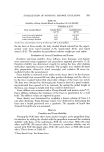
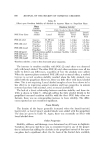
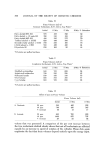
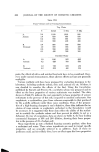
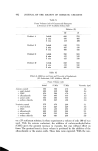
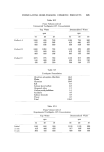
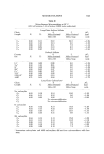
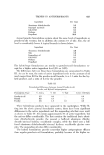
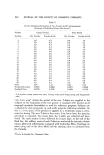
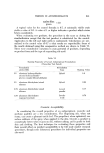
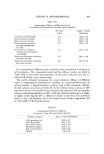
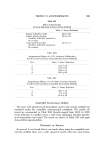
TRENDS IN ANTIPERSPIRANTS Table VIII Antiperspirant Efficacy of Different Actives in Powder-in-oil Formulations (Normal Activity Method) 633 Aluminum chlorhydroxide• Basic aluminum bromide Basic a]uminmn nitrate Basic aluminum bromide- zirconyl hydroxy oxy- bromide Basic aluminum hydroxy chloride-zirconyl hydroxy oxychloride Magnesium aluminum zirconium gluconate chloride Magnesium aluminum zirconium gluconate bromide Per Cent Mean % Sweat Active Reduction 3.5 22.8 ñ 2.7 3.5 23.6 + 4.0 3.5 23.2 + 3.9 3.5 25.5 ñ 4.0 3.5 25.1 ___ 3.1 3.5 22.4 +__ 4.0 3.5 22.7 ñ 2.9 In a second series, different active materials were examined in a powder-in- oil formulation. The compounds tested and the efficacy results are listed in Table VIII. It was found that regardless of the active material used, the re- sults all fell within a very narrow range. The results obtained comparing the sweat reduction efficacy of different types of antiperspirant formulations including an aerosol powder-in-oil, an aerosol powder, a hybrid formula, a roll-on, and a 20% aluminum chlorhy- droxide solution are shown in Table IX. In the solution forms (roll-on or 20% aqueous) between 35 and 40% sweat reduction was observed. The two powder versions reduced perspiration by 22%, while the hybrid formula gave a slight- ly higher result, namely 27%, a difference which is real from the statistical point of view, and probably due to the higher level of active ingredient (5% vs. 3.5% ACH ) of the hybrid version. Table IX Antiperspirant Efficacy of Different Formulation Types (Normal Activity Method) Product Category Mean % Sweat Reduction 3.5% powder-in-oil 22.8 ñ 2.7 3.5% dry powder 22.1 q- 3.3 20% ACH solution 39.9 ___ 4.0 Hybrid formulation 27.0 ñ 4.1 Roll-on formulation 37.5 ñ 2.6 Placebo 2.8 ñ 2.8
Purchased for the exclusive use of nofirst nolast (unknown)
From: SCC Media Library & Resource Center (library.scconline.org)