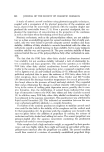
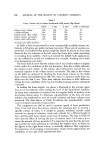
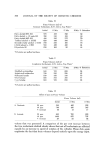
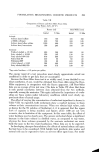
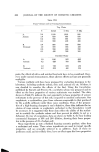
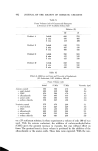
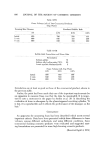
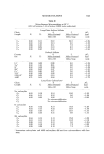
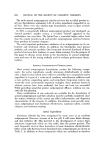
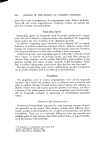
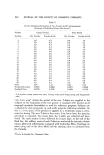
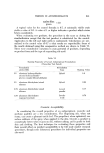
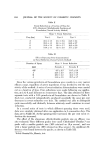
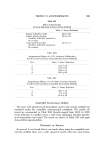
602 JOURNAL OF THE SOCIETY OF COSMETIC CHEMISTS Table X Foam Volumes (ml) ooe Commercial Shampoos in Presence of 3% Synthetic Sebum Soil Dilution (%) 2O 10 Product A Initial 600 570 2 min 450 405 5 min 435 400 Product B Initial 640 570 2 min 485 430 5 min 460 410 Product C Initial 580 500 2 min 435 345 5 min 425 330 Product D Initial 625 510 2 min 470 330 5 min 450 310 Table XI Effect of Additives on Foam and Viscosity of Surfactants (2% Surfactant, 0.2% Additive, 100 ml) Foam Volume (ml) Initial 2 Min 5 Min Anionic control 655 560 475 Viscosity (cps) 3.1 + cetyl alcohol 600 535 505 q- CMC 650 560 470 q- alkanolamide 720 605 475 q- amine oxide 690 580 550 q- sodium chloride 650 565 450 3.4 4.1 3.5 3.5 3.0 Nonionic control 575 470 280 q- cetyl alcohol 310 225 220 q- CMC 530 430 250 q- alkanolamide 660 565 500 q- amine oxide 630 530 500 q- sodium chloride 620 490 250 3.1 3.5 4.5 3.1 3.9 3.0 on a 2% surfactant solution. In these experiments a volume of only 100 ml was used. With the anionic surfactant, the addition of carboxymethylcellulose (CMC) gives the greatest increase in viscosity, but was without effect on foam. The greatest boost in foam volume is produced by the addition of the alkanolamide or the amine oxide. These data were expected. With the non-

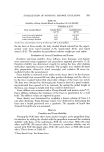
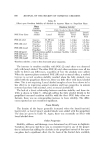
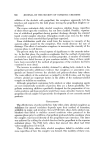
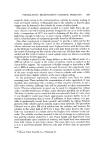
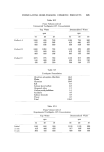
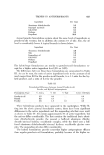
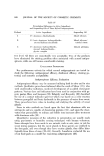
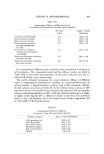
FORMULATING HIGH-FOAMING COSMETIC PRODUCTS 603 Table XlI Foam Volumes (ml) of Comlnercial Shampoos Demineralized Tap Water" Water 10% 1% 10% 1% Product A Product B Product C Product D Product E Initial 1025 880 1125 900 2 min 875 715 915 730 5 min 855 675 850 700 Initial 990 560 1050 825 2 min 815 405 860 660 5 min 800 400 775 625 Initial 1025 840 1100 1000 2 min 910 685 910 810 5 min 800 650 800 750 Initial 1025 870 1080 1000 2 min 870 725 870 800 5 rain 825 680 800 750 Initial 1000 920 1075 980 2 min 835 740 835 790 5 min 800 700 800 750 •6.5 grains per gallon hardness. ionic surfactant, the CMC again gave the greatest viscosity increase, but again had no positive effect on foam. The greatest increase in foam was produced by the addition of the amide or amine oxide. Although the addition of cetyl alcohol served to increase viscosity in both cases, it had no beneficial effect upon foam volume. It is possible that by the use of other ratios of additives to surfactants, or had a study been made of other concentrations and with other surfactants, still other effects on foam and viscosity would have been observed. The data do serve to illustrate the point that an increase in the viscosity of a surfactant system by an additive can have a negative, a positive, or zero effect on foam. Several leading commercial shampoos were evaluated for foam properties at two concentrations, 1% and 10%, in both tap water and soft (doubly de- mineralized) water. The foam data are shown in Table XII. There is very little difference among the five products at the 10% concentration level, but there is a noticeable difference at 1'%. The same is true under soft water con- ditions. The data also show that the foam volumes at the 10% concentration level are about double what were obtained in the presence of 3% sebum soil, shown previously in Table X.
Purchased for the exclusive use of nofirst nolast (unknown)
From: SCC Media Library & Resource Center (library.scconline.org)