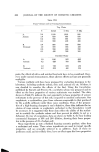
628 JOURNAL OF THE SOCIETY OF COSMETIC CHEMISTS using the panel for test purposes, their left-to-right axillary sweating ratio is determined 12 times over a 4-week period. The average result from these de- terminations is used as the control ratio for each panelist for the life of the panel. Before the start of any test, there is a 5-day period in which the panelists use no underarm products except a placebo soap. Following this are three consecutive days of antiperspirant testing. There are 15-20 people in a mixed-sex panel. Test material is applied only to the left axilla, the right axilla serving as the control. For roll-on formulations, 1 g of product is ap- plied with a soft brush. For aerosols, a 1-see spray from a distance of 6 in. is applied uniformly to the axillary vault. Sample application is made by a tech- nician, using a metronome to time the spray. After 5 rain, to permit evapo- ration of any volatile materials, a preweighed moisture collection pad is applied. These pads, measuring 2 in. x 2 in., are fashioned from sanitary napkins by stripping away several layers of cellulose filler in order to get a better axillary fit. Pads are held in place by strips of hypoallergenic tape. The exterior surface of the pad itself is covered xvith Saran Wrap in order to retain absorbed moisture. The panelists are then free to pursue normal activities for 4 hours. At the end of the 4-hour period, the absorbent pads are removed and placed in tared plastic ointment jars and weight of perspiration is determined by difference. Controlled Environment Method In the controlled environment method, approximately the same number of panelists are used. They are asked to abstain from the use of all antiperspirant materials at least one week prior to enrollment through the completion of the test. Controlled sweat collections are made on Monday and Tuesday of the test week. Post-treatment sweat collections are made on Wednesday, Thurs- day, and Friday. Test materials are assigned in such a way that samples are applied to the right axilla of half the panelists and to the left axilla of the remaining panelists. Axillae are rinsed with clear, warm water aud dried just before each application. For aerosol products, the axillae are sprayed from the distance of 6 in. for 2 sec. Materials are applied immediately following the controlled sweat collection on Tuesday, I hour prior to sweat collection on Wednesday, Thursday, and Friday. Sweating is induced by having the subject sit in a room maintained at 100 ø -+2øF and at a relative humidity of 35%. During the first 40 min of the sweat stimulation period, the panelists hold unweighed pads of Webril,* a nonwoven cotton, in their axil]ae. This preliminary warmup period is followed by two successive 20-rain collection periods during which panelists hold pre-weighed Webril pads in the axillae. Panelists are allowed to drink ice wa- *Kendall Co., Walpole, Mass.

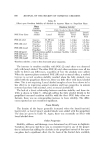
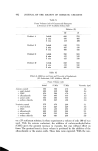
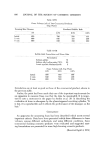
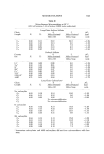
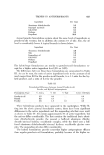
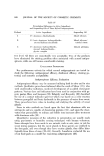
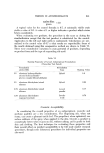
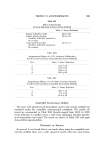
TRENDS IN ANTIPERSPIRANTS 629 ter as desired throughout the collection period. At the end of each collection period, the pads are removed and placed in tared bottles for reweighing. Antiperspirant activity is calculated as described previously. Deodorant EJficacy Evaluation Deodorant effectiveness is a recognized attribute of many metal salts (35-37). Efficacy is evaluated by comparison of the effect of one treatment in one axilla versus a second treatment in the other axilla of the individuals in panel groups (34, 38). Similar comparative methods may employ a crossover procedure. Product comparisons using a split axilla treatment without cross- over in a single group suffer in reliability because odor intensity of the axillae of an individual varies. However, when the test sites in a panel are random- ized by a crossover procedure, effects due to inherent differences in the axil- lae are minimized. Axillary odor may be judged by the panel participants themselves, by trained judges, or both. Length of deodorant effect is usually determined at various intervals during the test, or at cessation to treatment. Evaluation may bc made by estimating the degree of odor of both the axilhe and the under- garment at the side of contact. Odor judgments obtained are usually based upon arbitrary numerical scales (38-40). Because these are subjective evalu- ations, several investigators have attempted to eliminate sources of error through the use of osmometers (41). Utilizing a crossover method in which odor evaluatious were made by trained judges, a clear deodorant effect was shown for a powdertin-oil formu- lation and an aerosol powder formulation, both containing 3.5% alnminum chlorhydroxide. An odor scale of i (little or no odor) to 5 (strong or disagree- able odor) was used. The results are shown in Table V. The data from the test and control periods were subiected to Student's t test and were highly signifi- cant. A recent advance in evaluating deodorant efficacy is that developed by Dravnieks and coworkers (42, 43). Their method is based on the development of chromatographic patterns of axillary odors. Staining Potential Soon after the introduction of aerosol antiperspirants, it became apparent that fabric staining in the axillary area was a major problem. Initially, formu- lations were tested for staining propensity by applying the product directly to the fabric. It was found that this was not a satisfactory procedure since it did not reflect actual use conditions and a comparative procedure was developed. In this procedure, a panel is used made up of 10 •nen and 10 women. Sub- jects are required to abstain frown the use of all antiperspirants and deodor- ants or other products applied to the axillary area, and are required to use
Purchased for the exclusive use of nofirst nolast (unknown)
From: SCC Media Library & Resource Center (library.scconline.org)