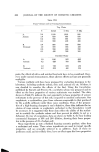
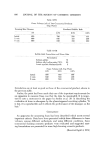
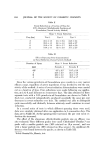
636 JOUBNAL OF THE SOCIETY OF COSMETIC CHEMISTS lations and the same active ingredients were tested. Because of these difflcul- ties, we have fewer results to report, and are continuing to investigate this technique. On the other hand, the normal activity method gave reproducible results nnder a variety of conditions. It did not show any real differences between the effectiveness of different active ingredients under the same formulation conditions. That did not mean that the normal activity method was insensi- tive, since it very effectively distinguished between powder-in-oil formula- tions and roll-ohs, and clearly indicated variations of antiperspirant efficacy as a function of time or concentration. The controlled environment method differs from the normal activity meth- od in several ways. The controlled method employs a g-see spray, whereas the normal method utilizes a 1-see spray. Treatment and collection times are different in particular, the time periods for collection between the normal and controlled methods differ in length (4 hours vs. 40 min) and conditioning i.e., the controlled method utilizes a conditioning period before the pads are applied for collection purposes. Another reason for the differences observed between the normal and the controlled testing techniques is possibly due to the conditions used in the con- trolled test. Going into a 100øF sweat chamber at 35% humidity can be a challenging stimulus to the body. Consequently, not only is perspiration elicited as a function of temperature, but also due to the challenge to the cen- tral nervous system (19) CONCLUSIONS We have concluded that the normal activity method is a more useful tool for providing guidance on the relative efficacy of different formulations and different active ingredients. The method also closely approximates what the consumer experiences in actual use and we have been able to correlate efficacy data with observations reported in large-scale, carefully designed constuner tests. Certain additional considerations must be kept in mind when considering gravimetric procedures for the determination of antiperspirant efficacy. Bakiewicz (48) has shown that when thermal stimulation is used to induce perspiration, results can vary with body position. Results can also be influ- enced by drinking cold liquids, variations in the relative humidity of the room, or even by selecting panelists who are "high sweaters" or "low sweat- ers." For example, Tronn•er and Rentschler (47) reported that the same prod- uct under controlled environmental conditions gave a 9•0% sweat reduction when applied to a low sweater, while there was a 50% reduction with a group of people classified as high sweaters. To summarize our views on antiperspirant test methodology: regardless of the methods used by us or reported in the literature, most of our results for

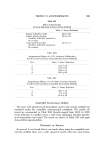
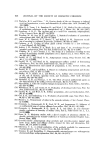
TRENDS IN ANTIPERSPIRANTS 637 sweat reduction ettlcacies for aerosol powder-in-oil and hybrid formulas fall between 20% to 30%. These figures can be restated by saying that a subject was sweating with a 70% to 80% ettlciency rather than his normal 100% ettlciency. Thus, even if laboratory procedures know how to measure these differences, it is debatable whether the consumer can distinguish between them. While not negating the use of these gravimetric methods to provide data to use as a guide to optimize formulations, or to coinpare new active ingredients, or to evaluate interaction of materials, care must be taken.when these numbers are used for promotional purposes. Sinall differences, even though statistically significant, should not be magnified out of proportion. It is important that management understands and appreciates the differences in testing inethods, and recognizes the limitations and specialized meaning of the data derived from these techniques. (Received April 2, 1974) REFERENCES (1) (2) (3) (4) (5) (6) (7) (8) (9) (lO) (11) (12) (13) (14) (15) (16) (•7) (18) (19) (20) (21) Klarmann, E.G., The cosmetic aspects of perspiration and its control, Amer. Per•um. Essent. Oil Rev., 52, 33-40 (1948). Salfield, H., The mechanism of perspiration, Ibid., 53, 385-7 (1949). deNavarre, M. G., The Chemistry and Manufacture of Cosmetics, 2, D. Van Nostrand• Princeton, N.J. 1962. Deodorants spraying up a storm, Progressive Grocer, 52 (8), 144-6 (1973). Reheis, Soon aerosol antiperspirants will dominate market, Drug Trade News (March 10, 1969). Bein, R. R., The action of antiperspirant creams on fabrics, Proc. Sci. Sec. Toilet Goods Ass., 4, 8 (1945). Papa, C. M., and Kligman, A.M., Mechanisms of eccrine anhydrosis. II. The antiperspirant effect of aluminum salts, J. Invest. Dermatol., 49, 139 (1967). Parma, C. M., The action of antiperspirants, J. $oc. Cosmet. Chem., 17, 789-800 (1966). British Patent 940,279 (1963). Helton, E.G., Daley, E. W., anti Erwin, J. C., Zirconlure oxychloride antiperspirant, Drug Cosmet. Ind., 80, 170 (1957). Grad, M., U.S. Patent 2,854,382 to Procter and Gamble (1958). Beckman, S. M., U.S. Patent 2,906,668 to Reheis Chemical (1959). Daley, E. W., U.S. Patent 2,814,584 to Procter and Gamble (1957). Daley, E. W., U.S. Patent 2,814,585 to Procter and Gamble (1957). Wainer, E., U.S. Patent 2,507,128 to National Lead (1950). Grote, I..W, U.S. Patent 3,009,860 to Chattanooga Medicine (1961). Givaudan Corp., private communication (1973). Minor, V., Eines neues Verfahren zu der klinischen Untersuchung der Schweissa- banderung, Deut. Z. Nervenh, 101, 302 (1927). Reller, H. H., Factors affecting auxfilary sweating, J. Soc..Cosmet. Chem., 15, 99-110 (1964). Zaheisky, •., and Rovensky, •., A comparison of the effectiveness of several exter- nal antiperspirants, Ibid., 23, 775-89 (1972). Govett, T., deNavarre, M. G., Aluminum chlorhydrate: a new antiperspirant in- gredient, Amer. Perpum., 49, 365 (1947). (22) Ukrami, C., and Christian, J. E., An evaluation of the effectiveness of antiperspi- rant preparations using frog membrane and radioactive tracer techniques, J. Amer. Pharm. Ass., Sci. Ed., 42, 179 (1953).
Purchased for the exclusive use of nofirst nolast (unknown)
From: SCC Media Library & Resource Center (library.scconline.org)