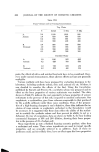
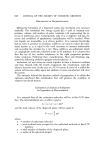
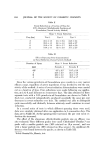
624 JOURNAL OF THE SOCIETY OF COSMETIC CHEMISTS chain fatty acids, homopolymers of polypropylene oxide, dibutyl phthalate, Tween 60, and certain organosilieones. Properties of these oils include low odor, low viscosity, and good stability. Suspending Agents Suspending agents are frequently used in aerosol powder-in-oil systems where the active material is dispersed rather than dissolved. The suspending agents reduce the rate of settling of the dispersed materials. An effective suspending agent commonly used is Bentone 34,* an organic derivative of hydrous magnesium aluminum silicate. Bentone requires batch heating and extensive homogenization. Homogenization causes the formation of hydrogen bonds between silica sites, resulting in lattice formation. Another frequently used suspending agent is Cab-O-Si],t a fire-dry fumed silica. Chains are formed via hydrogen bonds, and with shear mixing, an effective lattice structure can be created. Cab-O-Sil is quite sensitive to the presence and the ionic nature of other materials in the formulation. Syloid 244* is another high-porosity micron-sized silica that has also been used. The type of suspending agent used in antiperspirant powder formulations can be readily identified from X-ray diffraction determinations. Propellants The propellants used in aerosol antiperspirants serve several important functions: they deliver the product, serve as diluents and/or solvents, and assist in product "drying." General factors such as bounce and coldness are directly related. The colder sprays generally produce less bounce, and this is a function of the boiling points of the various propellants used. Several trade- offs are frequently necessary in optimizing an antiperspirant propellant system. POWDER-IN-OIL FORMULATIONS Powder-in-oil formulations represent the most important category of prod- ucts presently on the market. This category contains three different types: regular powder-in-oil formulations, the so-called aerosol powders, and hybrid formulations. There are very noticeable differences from the cosmetic and aesthetic point of view between these three product forms. A typical powder- in-oil formulation is the following: *NL Industries, 111 Broadway, New York, N.Y. ?Cabot, 125 High St., Boston, Mass. $W. R. Grace & Co., Baltimore, Mcl.

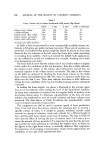
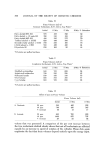
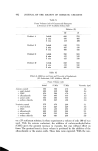
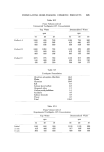
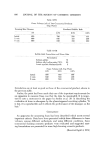
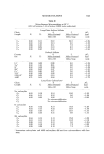
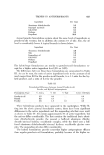
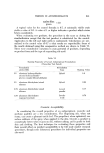
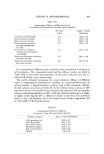
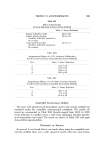
TRENDS IN ANTIPERSPIRANTS 625 Ingredient Per Cent Aluminum chlorhydroxide 3.5 Isopropyl myristate 6.0 Cab-O-Sil O.3 Perfume 0.2 Propellant 90.0 Aerosol powder formulations contain about the same level of ingredients as powder-in-oils versions, but in addition also contain 1% of talc. Also, the oil level is considerably lower. A typical formula is shown below: Ingredient Per Cent Aluminum chlorhydroxide 3.5 Talc 1.0 Suspending oil 1.5 Cab-O-Sil 0.3 Perfume 0.2 Propellant 93.5 The hybrid-type formulations are similar to powder-in-oil formulations ex- cept for a higher active ingredient level (5% vs. 3.5%). The differences between these three formulations are summarized in Table Ilk As can be seen, the ratio of active ingredient levels to the amount of oil used ranges from 0.6 for the powder-in-oil formula, to a 1.1 ratio for the hy- brid product, and a ratio of 2.3 for the powder. Table III Formulation Differences between Aerosol Powder-in-oil, Powder, and Hybrid Antiperspirants Formulation Type % Active % Oil % Talc Active: Oil Ratio Powder-in-oil 3.5 6.0 . .. 0.6 Hybrid 5.0 4.5 .. 1.1 Powder 3.5 1.5 1.0 2.3 Three hybrid-type products have appeared in the marketplace. While fit- ting into the above general formulation system, there have been significant differences in the active ingredients and the suspending oils that were used, as shown in Table IV. All contain approximately 5% of active ingredient, but the actives differ considerably. The first contains the traditional basic alumi- num chlorhydrox de powder, the second, a buffered aluminum ehlorhy- droxide/zirconyl hydroxy oxychloride complex, wh le the third uses a buf- fered aluminum chlorhydroxide/zirconyl hydroxy oxychloride glycine com- plex. The suspending oils also differ considerably. The hybrid formulations provide somewhat higher antiperspirant efficacy than regular powder-in-oil formulations, probably because of the higher ac-
Purchased for the exclusive use of nofirst nolast (unknown)
From: SCC Media Library & Resource Center (library.scconline.org)