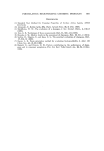
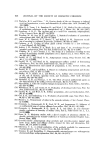
638 JOURNAL OF THE SOCIETY OF COSMETIC CHEMISTS (23) Wechs•er, H. L. and Fisher, '•. R., Eccrine glands of the rat: Response to induced sweat:n•, hypertension, u:'emia, and alternations of sodium state. Arch. Dermatol., 97, 189 (1968). (24) Alpin, R. S., Vocac, I. A., Saunders, D., and Ward, I. W., Method for the evaluation of antihidrotic substances in the anaesthetised cat, J. Pharm. Sci., 56, 449 (1967). (25) Lansdown, A. B. G., The rat foot pad as a model for examining antiperspirants, J. Soc. Cosmet. Chem., 24, 677-84 (1973). (26) Wooding, W. M., Jass, H. E., and Ugelow, I., Statistical evaluation of quantitative antiperspirant data, Ibid., 15, 579-92 (1964). (27) Segar, W. E., Hancock, C. I., Sawyer, T., and Bullard, R. W., Continuous record- ing of sweating by resistance hygrometry, Pediatric& 35, 693-8 (1965). (28) Custance, A. C., Cycling of sweat gland activity revealed by a new technique, J. Appl. Physiol., 17, 741 (1962). (29) Jenkins, J. W., Ouelette, P. A., Healy, D. J., and Lana, C. D., A technique for per- spiration measurement, Proc. Sci. Sect. Toilet Goods Ass., 42, 12-5 (1964). (30) O'Ma]ley, W. J., and Christian, J. E., The design of a continuous recording in vivo method of measuring sensible perspiration over a limited area, J. Amer. Pharm. A•s., 49, 398-401 (1960). (31) Fredell, W. G., and Read, R. R., Antiperspirant testing, Drug Cosmet. Ind., 69, 40-1, 111-5 (19•1). (32) Fredell, W. G., and Read, R. R., Anfiperspirant-axil]ary method of deterlnining effectiveness, Proc. Sci. Sect. Toilet Goods Ass., 15, 23-7 (1951). (•3) Uttley, M., Measurement and control ooe perspiration, ]. Soc. Cosmet. Chem., 23, 23-43 (1972). (34) Fredell, W. G., and Longfellow, 1., Report on evaluating antiperspirant and deodor- ant r•roducts. Ibid., 9, 108-11 (1958). (35) Shelley, W. B., Hurley, H. J., and Nichols, A. C., Axillary odor-experimental study of the role of bacteria, apocrine sweat, and deodorants, AMA Arch. Dermatol. Su•hilol., 68, 430-66 (1953). (36) Shehadeh, N.H., and Kligman, A.M.. The effect of topical antibacterial agents on the bacterial flora of the axilla, J. Invest. Dermatol., 40, 61-71 (1963). (37) Meyer-Rohn, J., Uber die ursachen lastigen korpergeruches, Fette, SeUen, Anstrichm., 67, 353-4 (1965). (38) Whitehouse, H. S., and Carter, R. O., Evaluation of deodorant toilet bars, Proc. Sci. Sect. Toilet Goods Ass., 48, 31--7 (1967). (39) Fredell, W. G., and Read, R. R., Axillary perspiration-odor and deodorization, Ibid., 25, 32-6 (1950). (40) Gee, A. H., and Seldenberg, I. L., Evaluation of germicidal soaps, Soap Chem. Spec., 30, 42-5, 159-63 (1954). (41) Barall, L. C., Measurement of odors in the cosmetic indust13•, ]. Soc. Cosmet. Chem., 2, 4 (10•0). (42) Dravnieks, A., Krotoszynski, B. K., Lieb, W. E., and Iungermann, E., Influence of an antibacterial soap of various effluents from axi]lae, Ibid., 19, 611-26 (1968). (48) Draynicks, A., Krotoszynskl, B. K., Casely, R. E., and Taber, D., Gas chromato- graphic evaluation of intensity of axillary odors, Part 2, Toilet Goods Ass. ]., 1, 1, 14-9 (1969}, (44) Drew, R. T., Inhalation studies with a glycol complex of aluminum chloride hy- droxide, presented at the Annual Conference of American Industrial Hygiene Assn., Boston, Mass., 1973. (45) Over-the-counter antiperspirant drug products and over-the-counter topical anti- biotic drugs. Safety and efficacy review request for data and information, Fed. Regist., 38, 173, 24391--3 (1973). (46) Bakiewicz, T. A., A critical evaluation of the methods available for measurement of antiperspirancy, ]. Soc. Cosmet. Chem., 24, 245-58 (1973). (47) Tronnier, H., and Rentschief, O., Experimentelle untersuchungen zur wirkungsweise a]uminiumhaltiger antipeispiranzien, Ibid., 24, 281-90 (1973).
Purchased for the exclusive use of nofirst nolast (unknown)
From: SCC Media Library & Resource Center (library.scconline.org)