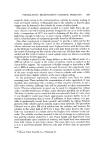
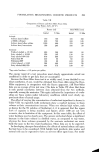
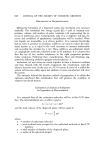
STABILIZATION OF NONIONIC AEROSOL EMULSIONS 583 lets and liquid crystalline surfactant-fatty alcohol complexes. Each would maintain its own individuality. A portion of the propellant probably would be solubilized in the interior of the complex. When the emulsion was dis- charged, disruption of the liquid crystal pearleseent structures could result [rom the turbulence created by vaporization of the propel]ant. This would be particularly true with solubilized propellant. The lower molecular weight fragments of the liquid crystal structure could then stabilize the foam. The fact that the foams were never pearlescent supports this explanation. If the formation of the POE fatty ether-fatty alcohol complexes were de- layed until the propellant was added, emulsion stability might be increased. This could be achieved if the fatty alcohols were dissolved in the propellant before it was loaded instead of adding the alcohols to the aqueous phase ini- tially. Thus, when the propellant-fatty alcohol solution was added to the aqueous surfactant phase, the complex would be formed at the propellant- water interface during the addition of the propellant. If the complex were formed directly at the interface, an increase in emulsion stability might result. This approach for increasing the emulsion stability of nonionic aerosol emul- sions is the subject of the present paper. EXPERIMENTAL Composition of the Aerosols The aerosols had a composition of 90% aqueous phase containing a poly- oxyethylene fatty ether surfactant, a fatty alcohol or alcohol blend, and 10% Propellant 12/114' (40/60). The concentration of both the surfactant and the fatty alcohol or alcohol blend in the aerosol was 0.05 molar. This assumes that the surfactants and fatty alcohols had molecular weights corresponding to their empirical formulas. The molar ratio of surfactant to alcohol was 1:1. Preparation of the Aerosols The aerosols were prepared by two procedures. In the first, or standard method, the fatty alcohols and surfactant were heated to about 55øC. Water at the same temperature was added to the melted mixture with agitation. The aqueous mixture was cooled to room temperature with stirring and the pro- pellant was pressure loaded. In the second procedure, the fatty alcohols were dissolved in the propellant initially. The solution of fatty alcohols and propellant was then added by pressure-loading to the aqueous phase containing the nonionic surfactant. The aqueous phase was prepared by heating the mixture of surfactant and water until the surfactant melted or dissolved. The aqueous phase was then allowed to cool to room temperature with stirring. * Freon, E. I. du Pont de Nemours and Co., Inc., Wilmington, Del., was used as the propellant in this study.

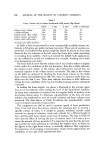
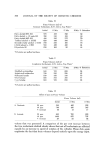
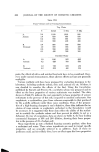
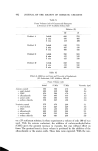
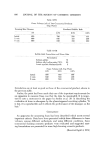
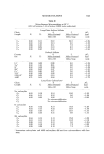
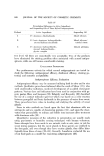
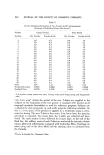
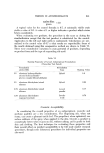
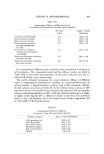
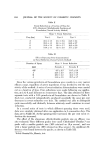
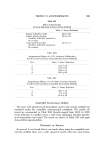
584 JOURNAL OF THE SOCIETY OF COSMETIC CHEMISTS Active Ingredients Nonionic Sur[actants Seven polyoxyethylene fatty ether nonionic surfactants were used. They are listed below in Table I along with their HLB values (12) and water solu- bilities. Table I Nonionic Polyoxyethylene Fatty Ethers Po]yoxyethylene Fatty Ether" HLB Value Solubility in Water ro(4)]auryl ether 9.7 Dispersible POE (23) lauryl ether 16.9 Soluble POE (2) cetyl ether 5.3 Insoluble POE (10) cetyl ether 12.9 Dispersible POE (20) cetyl ether 15.7 Soluble POE (10) stearyl ether 12.3 Dispersible POE (20) stearyl ether 15.3 Dispersible ""Brij" suroeactants, ICI America, Wilmington, Del. Fatty Alcohols and Alcohol Blends Lauryl alcohol alone and blends of lauryl alcohol with myristyl, cetyl, and stearyl alcohol* were used in combination with the surfactants. A concentra- tion of fatty alcohols in the aerosols of 0.05 molar was desired to equal that of the surfactants. This could be achieved with individual alcohols if they were placed initially in the aqueous phase. However, when the alcohols were added with the propellant, an alcohol solubility of at least 10 g alcohol/100 g pro- pellant was needed. Only lauryl alcohol had this high a solubility, as shown by the data in Table II. Therefore, in order to include myristyl, cetyl, and stearyl alcohols in the test, it was necessary to use them in combination with lauryl alcohol. The lauryl alcohol functioned as a solubilizing agent for the other alcohols in the propellant. Table II Solubilities of Fatty Alcohols in Propellant 12 / 114 (40/60) Fatty Alcohol _ Lauryl alcohol 15 Myristyl alcohol 4 •' ' Cetyl alcohol 0.1 0.3 Stearyl alcohol 0.1 0.3 Solubility at 21 ø C (g/100 g Propellant) Soluble Insoluble The solubility of mixtures of lauryl alcohol with myristyl, cetyl, and stearyl alcohols in Propellant 12/114 (40/60) is shown in Table III. •Lauryl, cetyl and stearyl alcohols were obtained from the Procter & Gamble Co., Cin- cinnati, Ohio. They were coded CO-12/98S, CO-16/95, and CO-18/95, respectively. The myristyl alcohol was obtained from Eastman Chemical Products, Inc., Kingsport, Tenn.
Purchased for the exclusive use of nofirst nolast (unknown)
From: SCC Media Library & Resource Center (library.scconline.org)