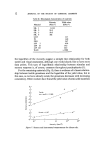
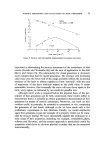
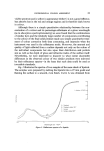
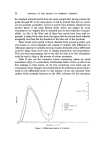
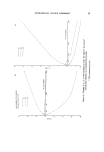
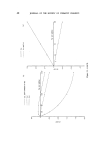
J. Soc. Cosmet. Chem. 27, 3-14 (1976) ¸ 1976 Society of Cosmetic Chemists of Great Britain Sensory perception and of hair greasiness evaluation G. C. DOBINSON* and P. J. PETTERt Presented at the Symposium on 'A Sensory Approach to Cosmetic Science' organized by the Society of Cosmetic Chemists of Great Britain at Manchester on 7-9th April 1975 Synopsis--The general principles of SENSORY EVALUATION are briefly discussed, with particular reference to the assessment of HAIR properties in the laboratory. Two procedures are described. The 'meter method' in which assessors place samples on a scale, is rapid, simple to analyse, and most useful for self-contained experiments. The 'ranking method' in which two or more samples are compared at a time, is slower but more sensitive and better suited to intercomparison of experiments using a common standard. The usefulness of sensory testing to the cosmetic chemist is illustrated by a study of hair greasiness, designed to relate sensory assessment of greasiness to the rheological characteristics of the grease. Films of oils, greases and waxes, covering a wide range of CONSISTENCY, were deposited onto hair switches for tactile and visual assessment. For the oils, both tactile and visual greasiness showed a positive linear correlation with the logarithm of viscosity, measured by cone-and-plate viscometer. For the greases and waxes, tactile greasiness was negatively correlated with yield value, measured by cone penetrometer, while visual greasiness showed a maximum in the centre of the consistency range. INTRODUCTION Sensory testing is well established in cosmetic science as a means of assessing flavours, fragrances, etc. Its application for the evaluation of physical properties is less well known, particularly in the laboratory where instrumental methods tend to predominate. In fact, it may be that the average cosmetic chemist would tend to regard sensory methods as in- * Present address: Central Electricity Generating Board, Sudbury House, London, E.C.1. ? Unilever Research, Isleworth Laboratory, 455 London Rd, Isleworth, Middlesex.

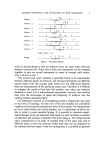
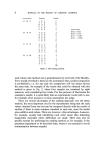
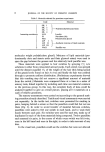
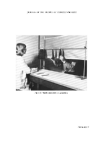
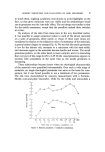
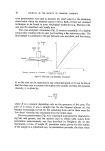
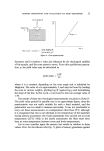
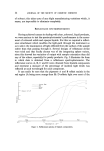
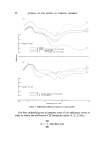
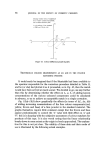
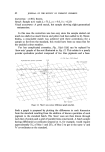
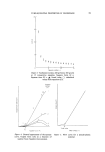
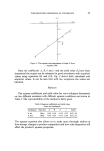
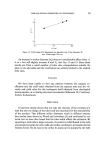
4 JOURNAL OF THE SOCIETY OF COSMETIC CHEMISTS herently less reliable than instrumental methods and only to be used where there is no obvious instrumental approach. It is possible, however, for a panel of assessors to function as a useful evaluation tool provided certain conditions are observed. Such a panel can be used not only for assessing complex properties such as 'body' or 'condition' of hair but also as an alternative to an instrumental measurement, for example, of combability. In this paper we shall briefly review some experimental approaches to sensory testing of hair properties and illustrate with some results obtained from a study of hair greasiness. It is generally convenient, although ob- viously less realistic, to carry out such evaluations under laboratory con- ditions using hair switches but, in principle, the methods can be applied in vivo. GENERAL PRINCIPLES OF SENSORY EVALUATION It is not intended to survey sensory evaluation fully: this topic has been well covered by Harper (1). In order to use human beings successfully as assessors for evaluation of some property, certain precautions should be taken: the test environment (light, temperature, humidity, etc.) should be kept constant distractions should be eliminated assessors in the same panel should be given identical instructions. The number of assessors required depends on several factors amongst which are the required accuracy of the results, the number of test items, the magnitudes of property differences between items and the skill of the judges. As assessors gain experience and confidence, their judgments usually become more consistent. No assessor should observe either the results of another's assessment or how that assessment was obtained. An assessor can be requested either to indicate the magnitude of some property of a test sample or to rank two or more samples for that property. When using the former of these alternatives, it is frequently convenient to place each sample on what has been designated as a meter for the test property. This meter, which may be, for example, a length of bench top or a horizontal rod, has no subdivisions and the assessor decides for himself what the range covers. How different assessors might use the meter is in- dicated in Fig. 1. Eight assessors have independently placed four test samples along a designated meter in order to indicate magnitudes of some defined property. This example demonstrates that assessors are using differ- ent mental scales (e.g. assessors 4 and 7) and of course do not necessarily agree on the rank order. All assessments, however, can be put on the same
Purchased for the exclusive use of nofirst nolast (unknown)
From: SCC Media Library & Resource Center (library.scconline.org)