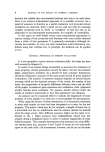
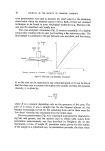
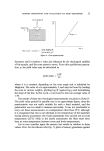
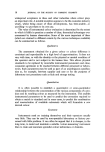
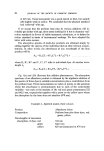
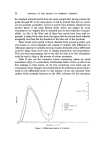
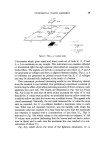
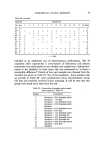
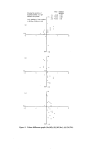
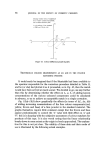
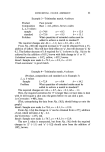
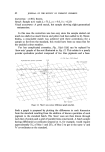
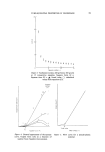
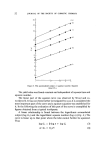
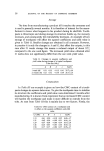
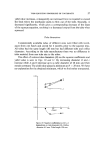
24 JOURNAL OF THE SOCIETY OF COSMETIC CHEMISTS the standard material and B from the same sample after having rotated the godet through 90 ø in the same plane. It will be noticed that the two curves are not precisely coincident. Curves C and D were similarly obtained from another batch of the same lipstick shade which was judged by visual assessment to be 'slightly blue to standard and on the borderline of accept- ability'. In Fig. 4, the 'blue' end of these four curves have been scale ex- panded it seems fairly clear from this figure that the second batch reflected marginally less than did the standard at the blue end of the spectrum. These results were typical of those obtained from pressed powders, gels and creams as well as lipsticks and seemed to indicate that differences in reflectance spectra for samples showing visually detectable colour differences could be larger than errors due to sample preparation and presentation. This was most encouraging, but it was still not clear how this information could be used to help in the process of colour correction. Table II sets out the successive colour corrections (made by visual assessment only) of a particularly troublesome batch of face powder from first makings to final match. In all, five corrections were made and the consequent colour changes were monitored by the reflectance spectraphoto- meter in the differential mode. In this manner of use, the standard white surface which normally functions as the 100•o reference for the instrument i'•!", It A Standard •,!• i"i• B Standard rotated 90 ø ß • • C Sample •., •',,, .• • D Sample rotated "•--. C ..•:' D I division 3.5 5 Wavelength nm x I0 -2 Figure 4. Reflectance spectra of a lipstick.

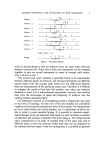
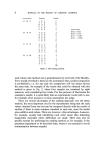
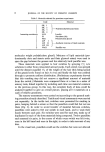
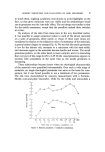
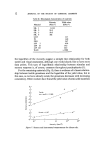
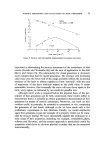
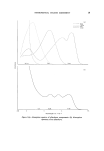
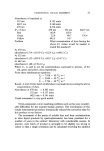
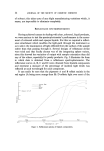
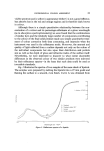
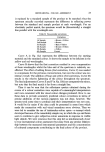
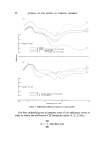
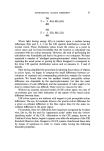
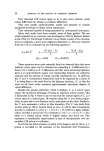
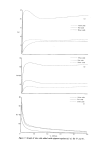
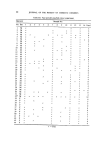
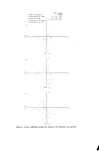
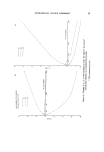
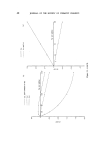
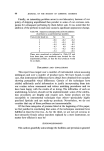
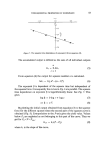
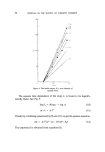
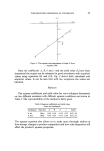
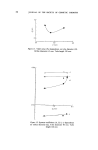
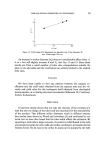
INSTRUMENTAL COLOUR ASSESSMENT 25 is replaced by a standard sample of the product to be matched: thus the spectrum actually recorded represents the difference in reflecting power between the standard and sample product at each wavelength. For an absolutely perfect match, the spectrum would be (theoretically) a straight line parallel with the wavelength axis. Table II. Face powder corrections Correction 1st Sample q, Brown q, Yellow 2nd Sample + Brown 3rd Sample q- Base + Yellow 4th Sample + Brown + Yellow 5th Sample +Yellow 6th Sample Correct Curve A in Fig. 5(a) represents the difference between the starting material and the standard colour. It shows the sample to be deficient in the yellow and red wavelengths. Curve B shows that the first correction resulted in over compensation at these wavelengths whilst the blue end of the spectrum is relatively un- affected. The effect of adding brown (2nd correction, Curve C) was needed to compensate for the previous overcorrection, but now the colour was too intense overall. The addition of base and yellow (3rd correction, Curve D) results in the relative lightening of the colour throughout the spectrum. The final adjustments (Curves E and F in Fig. 5(b)) are comparatively minor, but note that the final match is far from a straight line. Thus it can be seen that the reflectance spectra obtained during the course of a colour correction were capable of a meaningful interpretation and were consistent with the visual colour changes produced. How to use these data to provide accurately predicted colour corrections in terms of precise additions of the various pigments was not clear, however. The spectra took some time to produce and their interpretation was not easy. It would be far easier if the data could be presented in some form which made the connection with real visual sensations more obvious. Thus we were led to consider the use of tristimulus colour space--a concept which developed because of the remarkably simple way in which the eye and brain seem to combine to give subjective colour sensations in response to visible light stimuli. We were concious that this step led us simultaneously closer to true instrumental colour assessment but away from any precise relation- ship between the measured instrumental parameters and the concentration of coloured components contributing to the final colour of the product.
Purchased for the exclusive use of nofirst nolast (unknown)
From: SCC Media Library & Resource Center (library.scconline.org)