J. Soc. Cosmet. Chem. 27, 47-61 (1976) ¸ 1976 Society of Cosmetic Chemists of Great Britain A method to evaluate the tube- squeezing properties of toothpaste BENGT NORFf_,N* Synopsis---A method has been evolved to evaluate the tube-squeezing properties of TOOTH- PASTE using a simple inexpensive squeeze device. A toothpaste tube on squeezing shows the rheological properties of a PSEUDO-PLASTIC material. A squeeze equation has been derived and used to estimate the output from a tube under different squeeze conditions to give good correlation with empirical results. Both toothpaste and tube contribute to the squeeze behaviour of the product and consequently both must be taken into consideration when the product is evaluated. Examples are given of the changes of squeeze property with storage and the effect of variable gain content and tube dimensions. INTRODUCTION The tube has been used as packaging material for more than a century. The first tube patent was registered in London as early as 1841 by John Rand. At this time the tubes were made of lead or tin and it was not until just before the Second World War that aluminium tubes appeared on the market. New tube materials are still being developed and today's various plastic tubes are being superseded by plastic-aluminium laminated tubes. Many household products besides toothpaste are packed in tubes. Any tube product must have a suitable viscosity, neither too stiff to make it • Research Department, Kabi Group, S-104 25 Stockholm, Sweden. 47

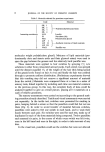
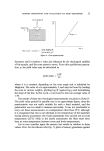
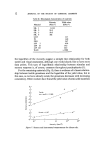
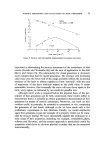
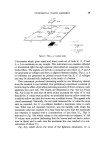
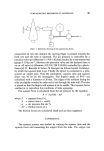
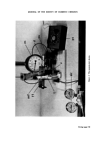
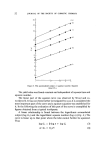
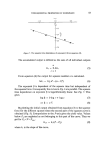
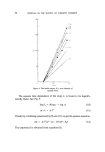
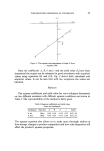
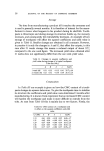
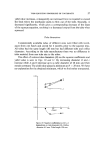
48 JOURNAL OF THE SOCIETY OF COSMETIC CHEMISTS difficult to get it out of the tube, nor so soft that it runs out when the tube is opened. Besides the viscosity of the tubed product, the tube material and tube and orifice diameters may have an influence on extrudability. Many methods are used to measure the viscosity of the tube contents from simple penetrometry to more advanced rheological measurements with structure viscometers. Although these give an indication of the flow be- haviour of the content of the tube it only gives a hint of the product's squeeze properties when used by a consumer. A better way to characterize this is to measure the extrusion force necessary to extrude the product through some kind of orifice. This has been done for extrusion of pastes and creams and other semi-solids from tubes and bottles (1-3). Block (4) described an extrusion method used to evaluate toothpaste. By using an Instron tensiometer he measured the extrusion force by extruding the toothpaste from its original tube. He also found that the ease of extrusion was related to the initial force of extrusion. Wood et al. (5) described a method that more accurately simulated the way the con- sumer squeezes a plastic bottle or tube. They made a small test device using a 'thumb' to press tubes and plastic bottles. The methods mentioned here are rapid and thus suitable for product control where relative figures are sufficient. However, they do not permit any calculation of the output from the tube or bottle when squeezed with a known force and during a known period of time, simply because they do not take into consideration all forces involved in the squeeze process, eg the force required to deform the packaging or to redistribute the product within the container when not entirely filled. One exception is the method described by Wood and coworkers. The intention of this work was to develop a method, which would simulate tube-squeezing as it is performed by a consumer and to have the possibility of calculating the output from the tube under different conditions. An attempt was made to find a relationship between squeeze properties and viscosity. EQUIPMENT The device is seen in Figs 1 and 2 and works as follow. The tube (t) is placed between two 'fingers' opposite each other, one fixed finger (if) and the other moving (mO. The moving finger is mounted on the axis of a pneumatic dashpot (d) (Mecman, series 1300, piston diameter 20 mm). By letting
Purchased for the exclusive use of nofirst nolast (unknown)
From: SCC Media Library & Resource Center (library.scconline.org)