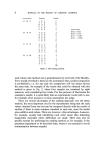
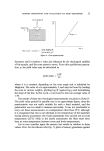
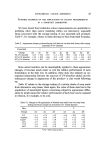
SENSORY PERCEPTION AND EVALUATION OF HAIR GREASINESS 7 APPLICATION OF SENSORY TESTING TO HAIR In applying sensory testing to the measurement of hair properties, the hair switches used will depend on the properties under study. In this work the test samples were straight switches prepared from European hair so that each switch was 24 cm long by 2 cm wide and contained 0.4 g cm 4 of hair along its length. Additional precautions are necessary in order to ensure that error is not introduced into the experimental work because of initial switch differences. The hair to be used should be carefully randomized and cleaned to remove any surface deposits. When the switches have been pre- pared they should be stored carefully to avoid contamination. When assessors examine such hair switches--either to rank or estimate property magnitudes--it is usually convenient to hang the switches from a horizontal bar by means of hooks attached to their clamped-root ends. APPLICATION IN A STUDY OF HAIR GREASINESS The example we have chosen to illustrate sensory evaluation of hair is taken from a study of the problem of hair greasiness. The factors controlling hair greasiness and its perception are complex, but must include the physical properties of the greasy film of lipid material on the hair surface, and, more specifically, its rheological characteristics. The experiments to be described were aimed at establishing how people's sensory assessment of hair greasiness correlates with the rheological parameters of the grease. Tactile and visual judgments were studied separately, since both modes were believed to be important in the self-assessment of greasiness. While the relevance of rheology to the feel of greasy hair is clear, a possible connection with appearance is perhaps less obvious. However, the most important visual clue to the presence of grease on hair, apart from changes in gloss, is the so-called 'rats-tail' effect, when the hairs tend to adhere together in bundles, and it was this aspect which was studied. The general plan of the work was to take a number of materials covering a wide range of consistency, from thin mobile oils through greases to solid waxes, to characterize them rheologically and to assess them by sensory testing on hair switches for their greasiness, either tactile or visual. The 11 materials selected are shown in Table I. The series began with four silicone oils of increasing viscosity, ranging from a nominal '100 centistokes' up to 'one million centistokes'. Next came semi-solid materials which would normally be thought of as 'greasy': lanolin, petroleum jelly and a high

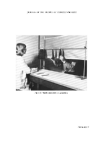
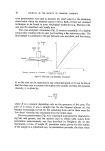
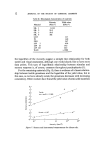
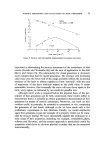
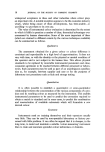
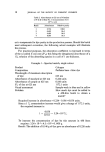
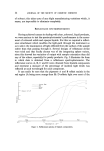
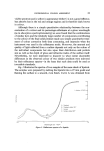
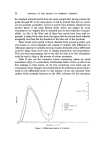
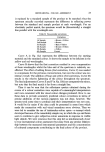
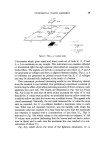
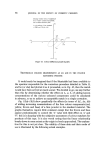
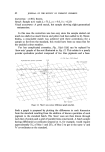
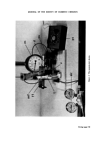
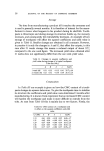
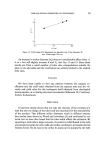
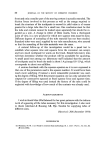
8 JOURNAL OF THE SOCIETY OF COSMETIC CHEMISTS Table I. Materials selected for greasiness experiments Code Material Increasing consistency SIL 1 •] SIL 2 •--Poly(dimethylsiloxane) fluids SIL 3 SIL 4 • LAN Lanolin PJ Petroleum jelly PEG Poly(ethylene glycol) LIP I } LIP II --Synthetic mixtures of lipid materials LIP III WAX Paraffin wax molecular weight poly(ethylene glycol). Mixtures of lipid materials (pre- dominantly oleic and stearic acids and their glycerol esters) were used to span the gap between the greases and the relatively hard paraffin wax. These materials were applied to hair switches by spraying 1•o w/w solutions in ether from pressurized aerosol packs. Each switch was sprayed until the deposit equalled 1 }/o of the weight of the hair (this being typical of the grease levels found on hair in vivo) and finally the hair was combed through to promote uniform distribution. (Preliminary experiments showed that this combing step did not remove a significant amount of material from the switch.) Materials were compared three at a time in a series of sensory tests, linked together by including each time one material common to the previous group. In this way, the complete body of data could be analysed together to give an overall picture, placing all 11 materials on a scale of relative greasiness. The sensory assessments were carried out according to the general rank- ing procedure already described. Tactile and visual assessments were carried out separately. In the tactile test, switches were presented for ranking in pairs, hanging behind a screen so that the panellists could feel but not see them (Fig. 3). In order to avoid transfer of material between switches, panellists were asked to feel one switch in each hand, and to wash their hands between each pair. Six switches were used for each test, made up of duplicates for each of the three materials being compared. Twelve panellists each assessed six pairs, in the course of which every switch was felt twice, once in the left hand and once in the right, in order to take account of any bias. In the visual test, panellists could see the switches but were not allowed
Purchased for the exclusive use of nofirst nolast (unknown)
From: SCC Media Library & Resource Center (library.scconline.org)