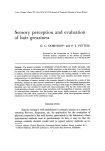
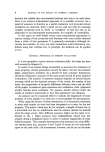
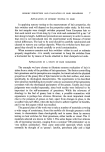
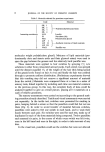
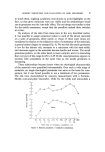
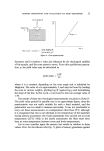
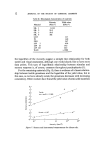
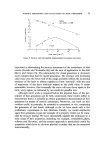
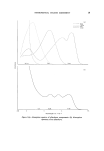
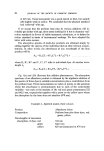
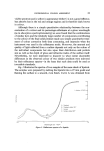
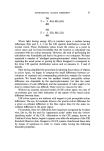
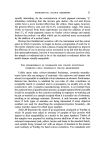
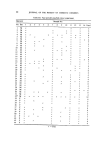
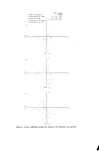
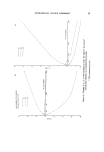
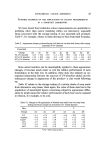
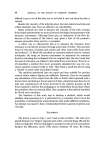
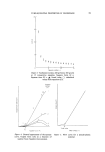
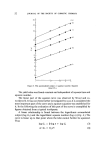
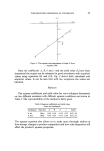
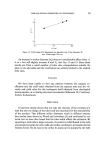
52 JOURNAL OF THE SOCIETY OF COSMETIC CHEMISTS 50 7- P(/V) 92 2 :3 4 5 Figure 6. The accumulated output vs squeeze number. Squeeze time 0.5 s. The yield value was found constant and independent of squeeze time and squeeze number. The linear part of the squeeze curve was observed by Wood and co- workers (5). It has now been further investigated by us as it is considered the most important part of the curve and a squeeze equation was established for it. In the following the evaluation of this part of the curve is exemplified by figures obtained from a typical toothpaste. A linear relationship is found between the logarithmic accumulated output (log G.) and the logarithmic squeeze number (log n) (Fig. 6.) The curve is linear up to that point where the tube cannot further be squeezed. Thus log G. = I•'1og n + log G• (3) or G. = Gfn •. (4)

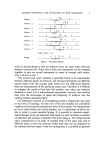
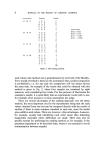
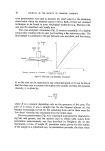
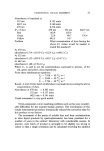
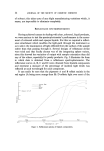
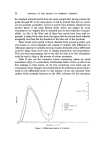
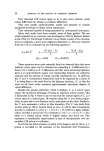
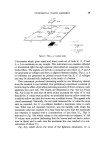
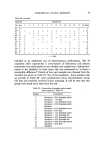
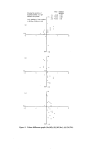
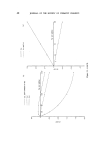
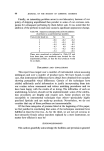
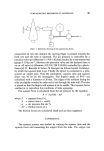
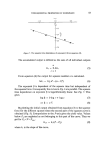
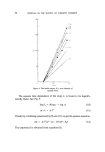
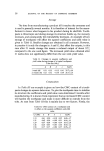
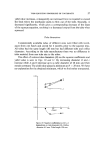
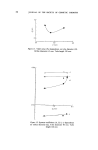
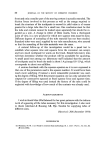
TUBE-SQUEEZING PROPERTIES OF TOOTHPASTE 53 log ! -0.5 0'0 0.5 Figure 7. The squeeze time dependence of exponent l] from equation (7). The accumulated output is defined as the sum of all individual outputs n Gn = • AG• i=1 (5) From equation (4) the output for squeeze number n is calculated. AG, = Gx{.n•--(n--1)•}. (6) The exponent [• is dependent of the squeeze time but independent of the squeeze force. Consequently the curves in Fig. 6 are parallel. The squeeze time dependence on exponent [• is logarithmically linear. See Fig. 7. This gives log [• = b.log t + log c (7) or [3 = c't b. (8) By plotting the initial output obtained from equation (3) vs the squeeze force for the different squeeze times the second part of the squeeze curve is obtained (Fig. 8). Extrapolation to the P-axis gives the yield value. Values below P0 are neglected as not belonging to this part of the curve. Thus we get for Po PPm•x' = O) where k, is the slope of the curve.
Purchased for the exclusive use of nofirst nolast (unknown)
From: SCC Media Library & Resource Center (library.scconline.org)