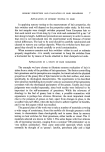
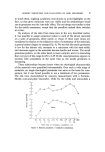
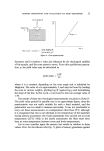
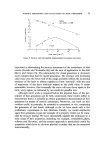
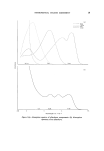
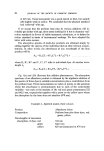
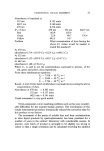
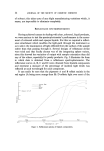
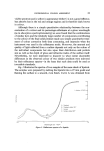
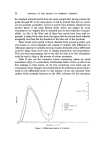
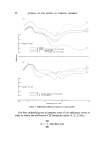
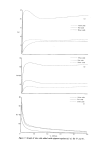
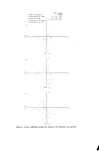
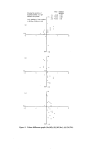
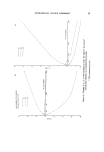
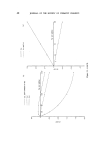
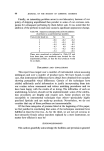
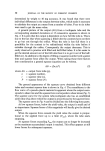
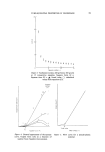
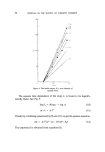
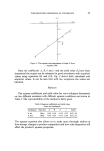
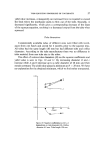
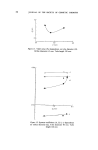
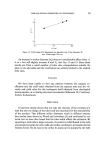
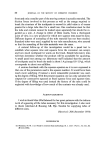
.......... Yellow oxide 15 j ............. Red oxide I0 i,.""" :::::::::::::::::::::::::::::::::::::::: [" ii / qO ........... Yellow oxide 30 &• 2o .......... Red oxide ........... Brown oxide / / I i I I i I I I i , ...................................................................................... i .• ........................................................................... l.i 1'1 ,, 801 ........... Yellow oxide ............. Red oxide • ............ Brown oxide øiii 0 20 40 60 80 % Additions Figure 7. Graph of talc with added oxide pigment against (a) 'a' (b) 'b' (c)'L'. loo

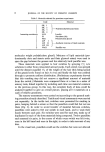
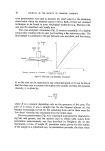
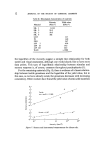
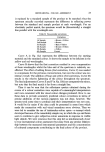
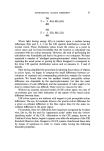
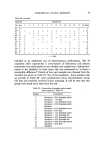
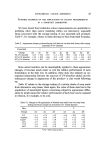
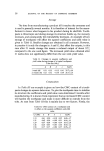
INSTRUMENTAL COLOUR ASSESSMENT 31 equally interesting. As the concentration of each pigment increases, 'L' diminishes indicating that the mixture gets darker--the red and brown oxides have a more marked effect than the yellow. Once again, however, the greatest effect is seen over the 0-5•o concentration range. The lesson which we learned from these experiments was that the addition of more than 5•o of oxide pigments causes no further colour change and merely darkens the product--an effect which can be achieved more economically by the addition of a neutral black. Having thus familiarized ourselves with the instrument and the colour space in which it operates, we began to devise a programme of work for it. Our prime objective was to find a means of using the instrument to improve the efficiency of our in-process colour correction as we did with the absorp- tion spectrophotometer, but first it was necessary to discover just how close the sample co-ordinates had to be to the standard co-ordinates before the match became visually acceptable. THE ESTABLISHMENT OF TOLERANCES FOR COLOUR FUNCTIONAL COSMETICS USING TRISTIMULUS COLOUR MEASUREMENT Unlike many other colour-orientated businesses, cosmetics manufac- turers have only one category of customer--the unknown and unseen with whom it is impossible to establish colour tolerances in advance. Each manu- facturer has therefore to establish his own idea of what constitutes an acceptable match to standard and in consequence, he usually errs on the conservative side. Cosmetics manufacturing, however, is not exempt from the common laws of good business practice a sample rejected when it actually would be acceptable to the customer resulting in expensive re-working can be just as wasteful as a sample accepted when it is actually out of tolerance, resulting in an unhappy customer. However, it only becomes possible to know if both types of mistakes are being minimized if some objective numbers are used for describing the acceptance/rejection boundary--the colour matcher cannot be relied upon unaided. Table III illustrates the result of an experiment conducted at Yardley in which 56 people were asked to evaluate 14 samples of face powder with respect to their acceptability as a match to the same standard. Twelve of the samples were prepared by making known additions of one of the four coloured components (red, yellow, brown and base) to the standard batch, each sample being 'pressed out' with an aliquot of standard in the manner used routinely at Yardley for batch colour correction, Two standards were
Purchased for the exclusive use of nofirst nolast (unknown)
From: SCC Media Library & Resource Center (library.scconline.org)