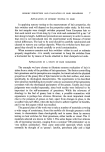
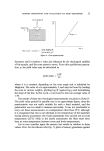
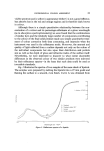
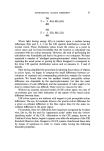
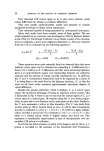
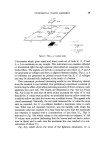
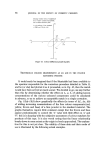
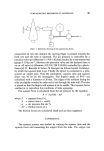
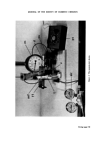
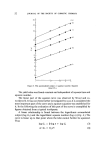
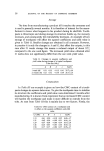
TUBE-SQUEEZING PROPERTIES OF TOOTHPASTE 49 Figure 1. Schematic drawing of the squeeze-test device. pressurized air into the dashpot the moving finger is pressed towards the fixed one and the tube is squeezed. The air pressure is controlled by a precision valve (pv) (Mecman 11-918-110) and checked by a manometer (m) (gauge 0-10 kp cm-L) Between the precision valve and the dashpot there is an on-off valve (v) (Mecman, 412/310, 220 V/50 Hz) controlled by a photo- timer (pt) (T. Baeuerle & Sohne, St Georgen im Schwartzwald, Germany), by which the squeeze time is set. Finally the device is connected to a pres- surized air supply (air). Thus the parameters--squeeze time and squeeze force--can be set by the investigator. The fingerswmade of PVC--are cylindrical with a diameter of 20 mm. The edges of the surfaces facing the tube are slightly rounded in order not to cut through the tube wall. The tube is placed so that the fingers will squeeze it in its middle. This squeeze device enabled us to reproduce the conditions of tube squeezing. The squeeze force is calculated from the air pressure by the equation. P = A.qo.9.81--AP (1) where P = squeeze force (N), A = piston area (= r•cm'•), q = air pressure (kp cm-U), AP = friction forces (N). The friction forces are considered small and are thus neglected. EXPERIMENTAL The squeeze process was studied by varying the squeeze time and the squeeze force and measuring the output from the tube. The output was

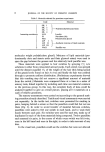
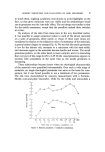
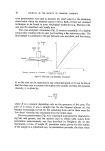
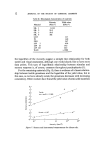
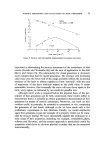
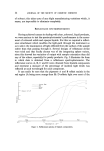
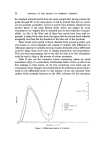
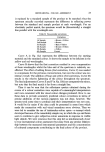
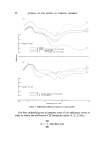
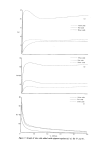
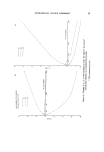
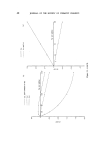
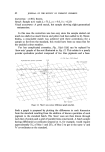
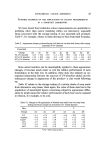
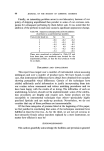
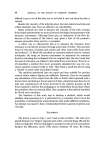
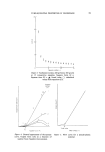
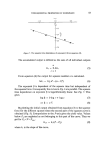
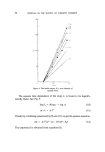
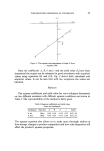
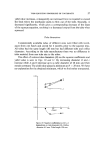
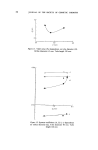
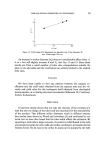
50 JOURNAL OF THE SOCIETY OF COSMETIC CHEMISTS determined by weight to 10 mg accuracy. It was found that there were individual differences in the outputs between tubes, which made it necessary to calculate the output as a mean from a number of tubes. Four to six tubes were used to get the mean value. A general picture of the output (AG) from a toothpaste tube and the corresponding standard deviations at 15 consecutive squeezes is shown in Fig. 3. It is seen that the output is dependent on how full the tube is. This is due to the fact that when squeezing a filled tube the contents have nowhere to go but out through the orifice. When the tube is less full there is a possibility for the content to be redistributed within the tube before it extrudes through the orifice. Consequently the output decreases. This is easily observed in practice with filled and half-filled tubes. It is far easier to get the desired amount out of the full tube than it is to get it out of the half- filled one. In addition to the degree of filling or squeeze number both squeeze time and squeeze force affect the output. When taking those three factors into consideration a general squeeze equation can be written. AG = f(n,t,P) (2) where AG -- output from tube (g), n -- squeeze number, t = squeeze time (s), P = squeeze force (N). The general appearance of the squeeze curve obtained from different tubes and constant squeeze time is shown in Fig. 4. The resemblance to the flow curve of a pseudo-plastic material is apparent where the output corre- sponds to shear rate and the squeeze force corresponds to shear stress (Fig. 5.) The squeeze curve for the system tube-toothpaste also has an established yield value (P0) above which the output is proportional to the squeeze force. The squeeze curve in Fig. 4 can be divided into the following three parts: At low squeeze forces, below the yield value, the output is small and of no importance. Squeeze forces of this magnitude will hardly give the desired output. When the squeeze force exceeds the yield value the output is propor- tional to the applied force up to a limit (Pmax), where the tube starts emptying. At squeeze forces exceeding Pm•x the output can no longer be increased as the maximum accumulated output is reached. This effect appears at still lower forces for subsequent squeezes.
Purchased for the exclusive use of nofirst nolast (unknown)
From: SCC Media Library & Resource Center (library.scconline.org)