16 JOURNAL OF THE SOCIETY OF COSMETIC CHEMISTS widespread acceptance in these and other industries where colour plays an important role. A notable exception appears to be the cosmetics industry which, whilst being aware of these developments, has been unable--or unwilling--to put them to its own use. The value of instrumental colour evaluation is determined by the extent to which it fulfils in practice a number of clear, theoretical advantages over assessment by human observation. Some of the more important of these (which are claimed to different extents by the various techniques available) can be summarized as follows. Qualitative The assessment obtained for a given colour or colour difference is consistent and reproducible to a high level of approximation. It does not vary with time, or with the identity or the physical or mental condition of the operator and is not subject to his human bias. This allows physical standards to be replaced by invariable instrumental parameters and close, consistent agreement to be reached between different personnel or labora- tories. Such parameters may be used as part of an unambiguous specifica- tion as, for example, between supplier and user or for the purposes of laboratory test procedures such as fade and storage testing. Quantitative It is often possible to establish a quantitative or semi-quantitative relationship between the concentration of the various components of a pro- duct and its resulting colour as measured by the instrument. This enables instrumental parameters to be used to predict the correction required to obtain a match to standard and in some cases, to predict the combination and concentration of available colourants which will formulate a new desired colour. Economic Instruments need no training themselves and their operators usually very little. They can be used by non-specialist laboratory or factory per- sonnel with little problem. It can often be argued that it is cheaper, in the long term, to instal and maintain a suitable 'colour-measuring' instrument than to train and maintain specialist colour technicians or chemists.

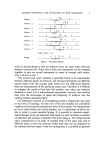
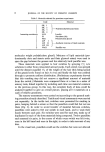
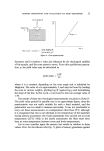
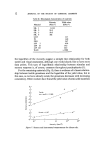
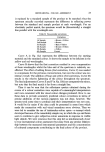
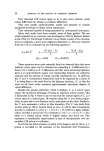
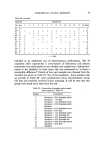
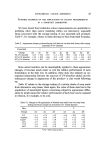
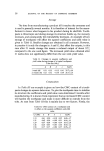
INSTRUMENTAL COLOUR ASSESSMENT 17 Since 1971, one or more of the authors have been engaged in investigat- ing the extent to which these promises are fulfilled in practice when applied to cosmetic materials and products. Whilst it is true that the list of tech- niques and apparatus investigated is far from exhaustive and the extent to which they have been tested far from complete, it is the authors' belief that the experiences which are reported here might prove interesting to those who are concerned with colour assessment in the cosmetics industry. USE OF AN ABSORPTION SPECTROPHOTOMETER FOR COLOUR MATCHING CLEAR, COLOURED, LIQUID PRODUCTS It is a common observation that two coloured solutions are indis- tinguishable if they are composed of identical solvents and dyes in identical concentrations. This applies no matter how many dyes are used to produce the colour. In such cases, therefore, colour matching resolves itself into the problem of incorporating into the sample, the same dyes in the same con- centration as in the colour standard. The human operator attempts this by subjective assessment, but the modern spectrophotometer represents a means of measuring the concentrations of substances in solution with great accuracy and precision and therefore commands considerable advantages in speed and accuracy--particularly in dealing with colours produced by two or more dyes (which are very dit•cult to handle for the human operator). The measured parameter, absorbance (A) is linearly related to the concen- tration of a light absorbing species (C) and the path length of the light through the solution (L) by the familiar Beer-Lambert equation: A = KCL where K is a statistical probability factor (the absorption coefficient). This equation holds true for a given light absorbing species at a specified wave- length. The first benefit to be expected from absorption measurements is a simple means of checking each fresh delivery of soluble dye for purity. Table I relates to four deliveries of the same dye. The absorbances obtained for a standard concentration of each--which would be identical for pure dyes--are given in the second column, whilst the third column indicates the relative purity of each delivery (delivery one being used as standard). In our laboratory, each delivery of dye is checked and associated with a correction factor by which the formula quantity of dye is multiplied so
Purchased for the exclusive use of nofirst nolast (unknown)
From: SCC Media Library & Resource Center (library.scconline.org)